WCA Public Outreach: 2025-26 Year in Review
We're taking a moment to look back at some of the most exciting events from the WCA's community outreach over the past 12 months!
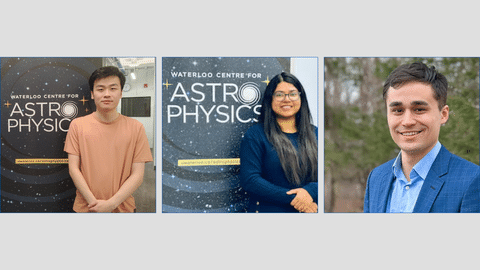
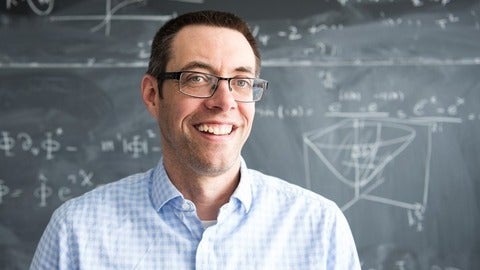
The Waterloo Centre for Astrophysics (WCA) is delighted to welcome three exceptional early-career researchers who have chosen to bring prestigious national fellowship awards to the WCA. Drs. David Dayi Li, Syeda Lammin Ahad, and Nicholas Kern join the WCA after securing highly competitive fellowship support. Drs. Li and Ahad were awarded the new Canada Postdoctoral Research Award (CPRA), while Dr. Kern brings a five-year SKA Fellowship to Waterloo.
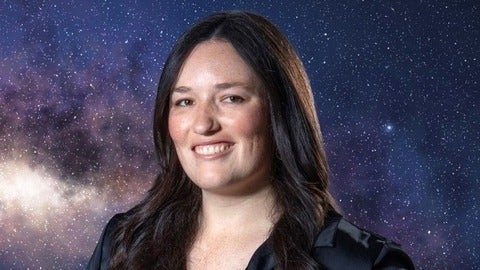
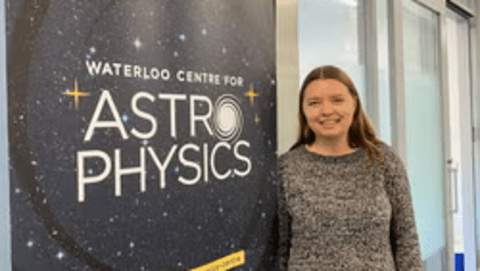
The Waterloo Centre for Astrophysics is delighted to welcome Skylar Grayson as our new Postdoctoral Fellow and Outreach Coordinator. We are excited to have Skylar join our community and bring her enthusiasm for both astrophysics and science communication to WCA
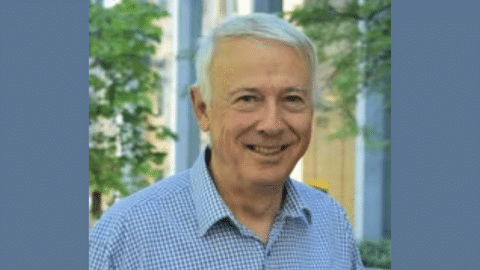
Prof Robert Mann has been elected as a Fellow of the Royal Society of Canada.
NASA’s Nancy Grace Roman Space Telescope has successfully launched aboard a SpaceX Falcon Heavy rocket from Kennedy Space Center in Florida, marking the start of a landmark mission to explore dark energy, dark matter, and distant exoplanets. The observatory lifted off on August 30, 2026, and is now traveling toward the Sun-Earth L2 Lagrange point, roughly one million miles from Earth.
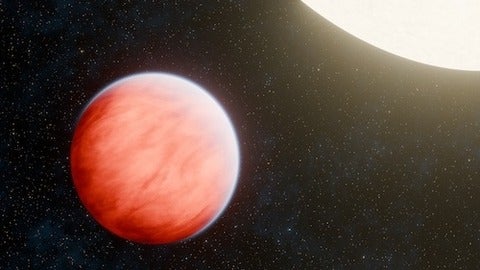
A distant, scorching planet with its hot spot in the wrong place has puzzled astronomers for nearly a decade. New research led in part by the Waterloo Centre for Astrophysics's Assistant Professor Lisa Dang and her PhD student Ying (Zoe) Shu has turned up the strongest evidence yet for what's behind it, and a hint that our models of these extreme worlds may need to change.
Image credit: Artistic impression of CoRoT-2b | Keith Miller (Caltech/IPAC - SELab)
After 10 years of observing the shapes of 61 million distant galaxies, the UNIONS (Ultraviolet Near Infrared Optical Northern Survey) collaboration is sharing data that provides strong evidence supporting the standard model of cosmology that the universe is dominated by dark matter and dark energy.
This is the first survey of this scale conducted in the Northern Hemisphere. By measuring how gravity from dark matter distorts the appearance of the galaxies across the northern sky, an effect called weak gravitational lensing, the collaboration has revealed how matter is distributed across the Universe. Dr. Mike Hudson leads the UNIONS weak lensing team.
Banting Postdoctoral Fellow Emily Deibert has joined the Waterloo Centre for Astrophysics to advance research on planets beyond our solar system.
Will Percival has been awarded funding through the New Frontiers in Research Fund (NFRF) 2025 Exploration Competition for research into Dark Energy. Over the next two years, Percival and his interdisciplinary team will adapt methodological expertise from the fields of biostatistics and computational statistics and apply these tools to cosmological data.
Exploration grants through the NFRF are intended to support high-risk, high-reward research. They support projects that push boundaries into new and exciting areas by bringing disciplines together and exploring new concepts that, while bold, have potential for significant impact.
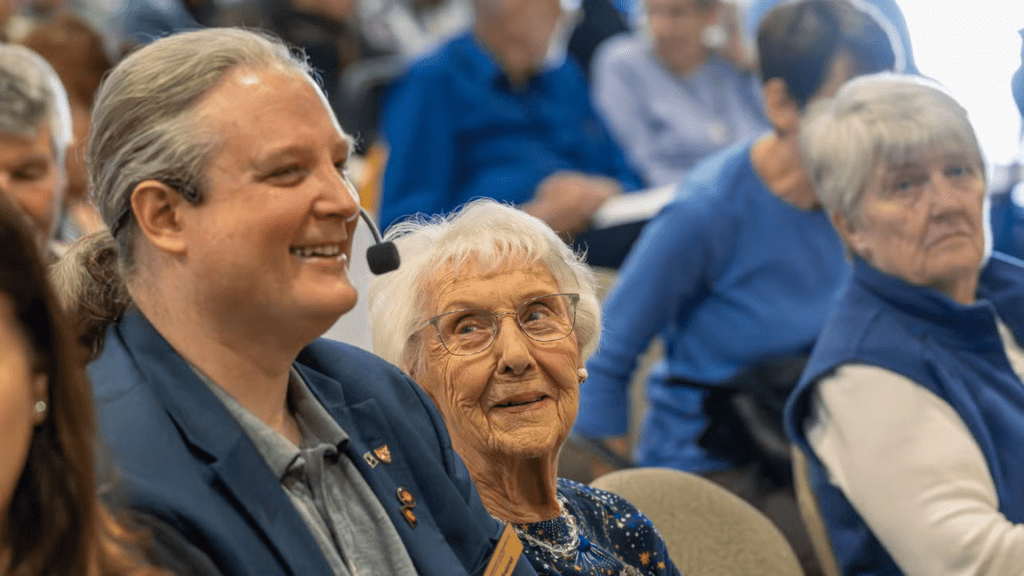
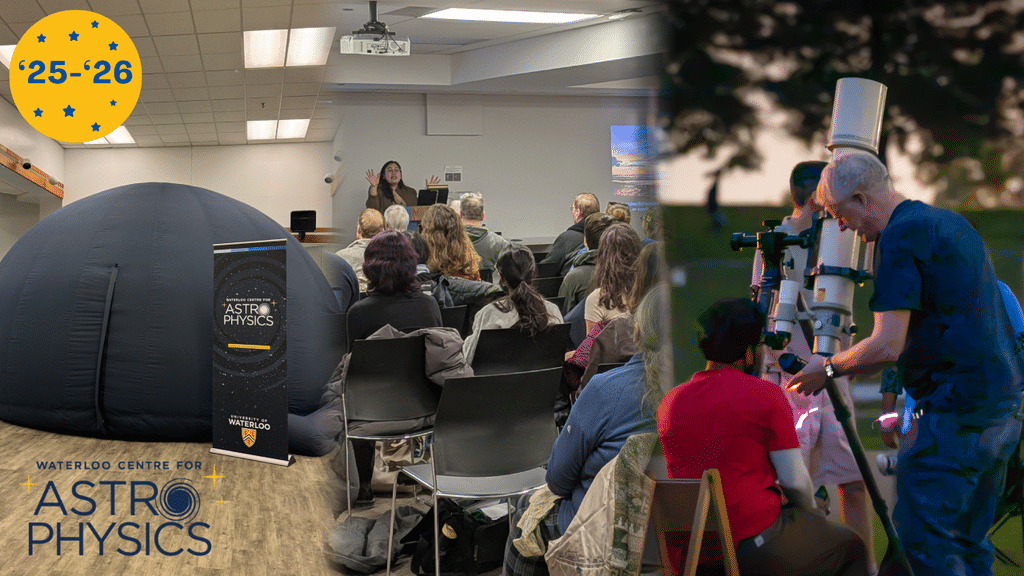
On April 30, residents of Luther Village on the Park stepped into the cosmos without leaving home. The retirement home hosted the Waterloo Centre for Astrophysics (WCA) to an afternoon that paired cutting-edge astrophysics with an immersive journey through space inside Waterloo’s portable planetarium, the Astro-Bubble.