News

Filter by:

Limit to news where the title matches:
Limit to items where the date of the news item:
Date range
Limit to news items where the audience is one or more of:

An alumnus of Waterloo Engineering has been recognized by an industry publication as one of the 100 leading women in the North American automotive industry.

Erin Buchanan (BASc ’98, chemical engineering), general manager of Toyota Motor Manufacturing Canada in Cambridge, made the Automotive News list for 2025 alongside CEOs, engineers, founders, marketers and financiers described as “visionaries, problem-solvers and catalysts for change.”

In a story about the winners, Buchanan credited Waterloo and its co-op program with leading her into the auto industry.

“Through the co-op program, I was able to gain insight into some manufacturing supply chain companies. I spent several co-op terms working for a few automotive suppliers,” she said.

“That gave me insight into how competitive the industry is, how fast-paced the industry is, how quickly models are changing, how integrated the supply chain can be, how important the relationships are between an OEM and their supplier partners.”

Buchanan was one of only 11 Canadian women named to the list, which is announced by the weekly, Detroit-based newspaper every five years.
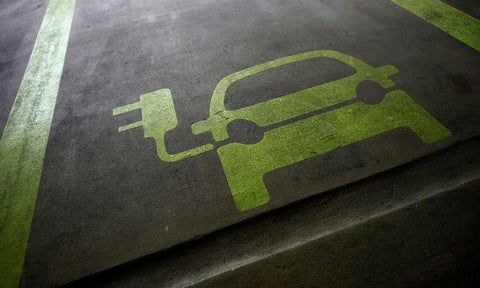
Batteries with triple the range of those that currently power electric vehicles could be on the horizon after researchers at the University of Waterloo in central Ontario made a significant breakthrough in the technology.

A new process discovered there uses negative electrodes made of lithium metal, a material with the potential to dramatically increase battery storage capacity.

New research at the University of Waterloo could lead to the development of batteries that triple the range of electric vehicles.

The breakthrough involves the use of negative electrodes made of lithium metal, a material with the potential to dramatically increase battery storage capacity.

“This will mean cheap, safe, long-lasting batteries that give people much more range in their electric vehicles,” said Quanquan Pang, who led the research while he was a PhD candidate in chemistry at Waterloo.

The University of Waterloo is Canada’s most innovative university, according to a reputational survey from Maclean’s magazine.

Maclean’s annual ranking of Canadian universities, released today, also named Waterloo second for best overall, highest quality, and leaders of tomorrow out of the 49 universities surveyed.

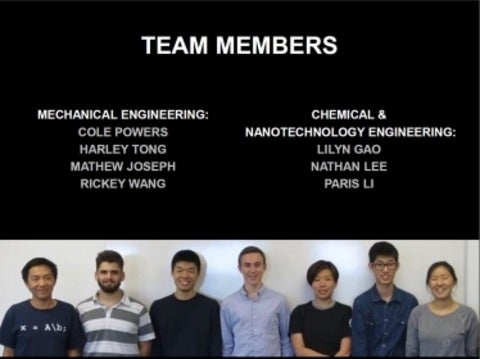
A Waterloo Engineering Team  won the 2015 Electric Mobility Canada Student Competition, an event co-sponsored by AddÉnergie and Electric Mobility Canada. The award came with a $4,500 charging station for Waterloo.

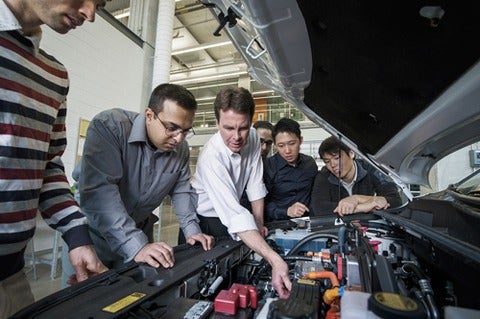
In April, construction crews began stripping down an old laboratory tucked among the engineering buildings on the University of Waterloo campus.

They are creating a research facility with three different labs, or cells, working toward a common objective: smarter, more energy-efficient automobiles, with reduced emissions.