Current students

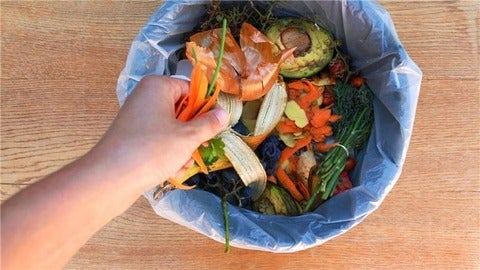
Researchers at the University of Waterloo are developing biodegradable plastics from food waste using bacteria. This innovative method produces eco-friendly plastics that degrade naturally and could be cheaper to manufacture. The team, including Waterloo Climate Institute member Dr. Trevor Charles and Dr. Tizazu Mekonnen, is working on cost-effective extraction techniques for large-scale production. These bioplastics have potential applications in food wrap, drug delivery, and tissue repair, supporting a circular economy by transforming waste into valuable resources. The study was recently published in ACS ES&T Engineering.

Researchers at the University of Waterloo are collaborating with Maple Ridge Acres to transform alpaca waste into a sustainable compost. By combining waste fiber, manure, and biochar, they aim to create a natural alternative to chemical soil amendments. This innovative approach not only improves soil health and nutrient content but also addresses waste management issues. The project is led by Waterloo Climate Institute member Dr. Maren Oelbermann and post-doctoral fellow Augustine Kwame Osei.

Friday, February 7, 2025 10:00 am - 4:00 pm EST (GMT -05:00)

Student Climate Con

Join the Waterloo Climate Institute's Student Climate Action Program for Student Climate Con 2025 on February 7th at Federation (FED) Hall. This full-day convention features inspiring keynotes, panels, workshops, and a student showcase addressing climate anxiety and hope. Highlights include interactive sessions, poster awards, networking, and lunch. The event's objectives are fostering climate action, building community, and supporting climate emotions. Themes like Climate Hope and Youth Climate Anxiety take centre stage, empowering attendees as catalysts for change. 

Shahan Salim, a PhD candidate at the University of Waterloo, is advancing air quality research through collaborations formed at COP28 and COP29. By securing funding for early warning systems in low-income countries, Salim's work focuses on using low-cost sensors and AI to monitor air quality. His efforts aim to protect vulnerable populations from harmful pollutants, enhancing health equity and climate resilience globally.

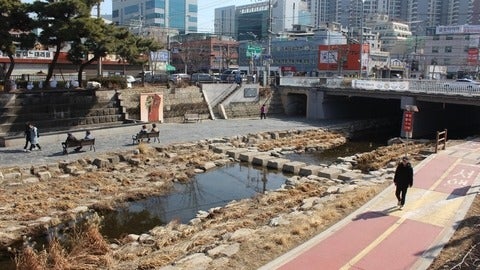
The UN-Habitat's World Cities Report 2024 highlights the urgent need for climate-resilient urban planning as 2 billion city dwellers face climate change impacts by 2040. Co-authored by Dr. Luna Khirfan from the University of Waterloo, the report emphasizes nature-based solutions, such as urban green spaces and flood defenses. It calls for inclusive, people-centered approaches to address vulnerabilities and promote equitable outcomes. The report aims to inspire cities to integrate climate action into their planning frameworks.

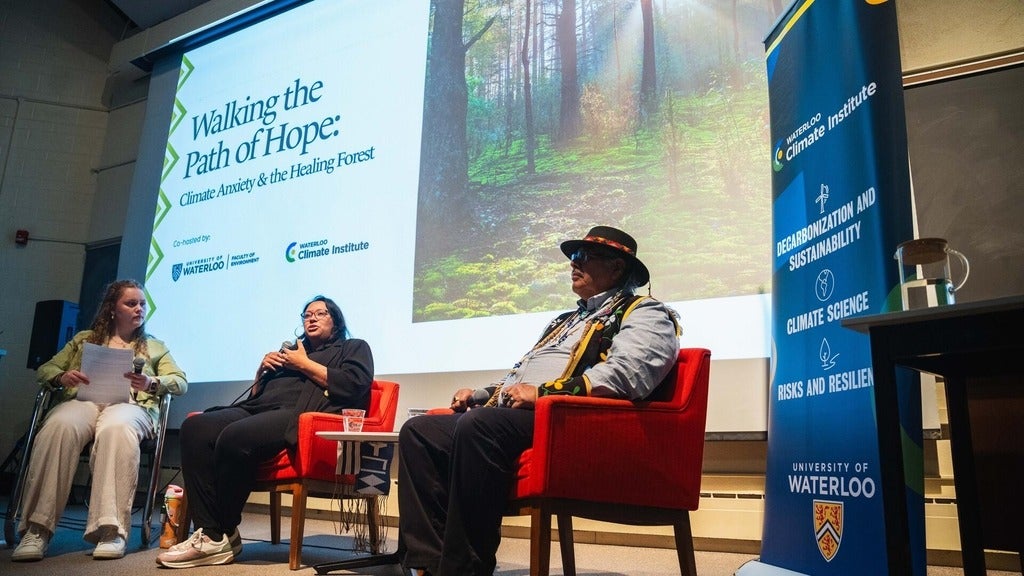
On November 14, the University of Waterloo hosted "Walking the Path of Hope," focusing on climate anxiety, Indigenous healing, and reconciliation. Amanda St. Marie introduced speakers, including Elder Myeengun Henry and Dr. Kelsey Leonard, who discussed land stewardship and wellness. They emphasized reconnecting with nature and honoring treaties as pathways to healing. The Healing Forest, designated a national Healing Forest, symbolizes reconciliation and community responsibility. The event highlighted that "We are all treaty people," urging collective environmental stewardship. It served as a call to action, integrating Indigenous knowledge to address contemporary challenges and foster resilience.

The Waterloo Climate Institute's new brief discusses the Global Stocktake's impact on climate action during COP29 in Baku. It emphasizes the need for nations to revise their Nationally Determined Contributions (NDCs) by 2025, integrating renewable energy strategies. Dr. Marie-Claire Cordonier Segger highlights the GST as a pivotal moment in climate law, urging collective action for a sustainable future.

Kwaku Owusu Twum, an Environment student and member of the Student Climate Council at the University of Waterloo, is making significant strides in agriculture with his startup, Mapmate. Alongside co-founder Daniel Buston Yankey, Twum aims to connect small-scale farmers with food manufacturers through a digital platform that enhances communication and collaboration. Inspired by his experiences in Ghana, where climate variability impacts food security, Twum's vision empowers farmers with data analytics and innovative tools, even in areas with limited internet access. His recent win at the Velocity Pitch Competition underscores Mapmate's potential to transform agricultural practices and improve livelihoods.

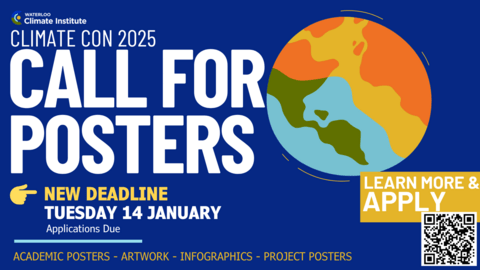
Tuesday, January 14, 2025 11:59 pm - 11:59 pm EST (GMT -05:00)

Climate Con: Call for Posters

Calling all undergrad and grad students! You are invited to submit a proposals to present at the Student Showcase at this year’s Climate Con 2025 hosted on Friday February 7th 2025. The Climate Con is an annual climate change convention, organized to showcase the contributions of students across all disciplines that tackle climate change.