Faculty

Tuesday, October 8, 2024 4:00 pm - 6:00 pm EDT (GMT -04:00)

How to be a Climate Optimist: A talk by Chris Turner

Join the Climate Institute and the Faculty of Environment for an evening with Chris Turner, the award-winning author of How to Be a Climate Optimist. Turner will share insights from his groundbreaking book, which offers a refreshing and optimistic perspective on the climate crisis. 

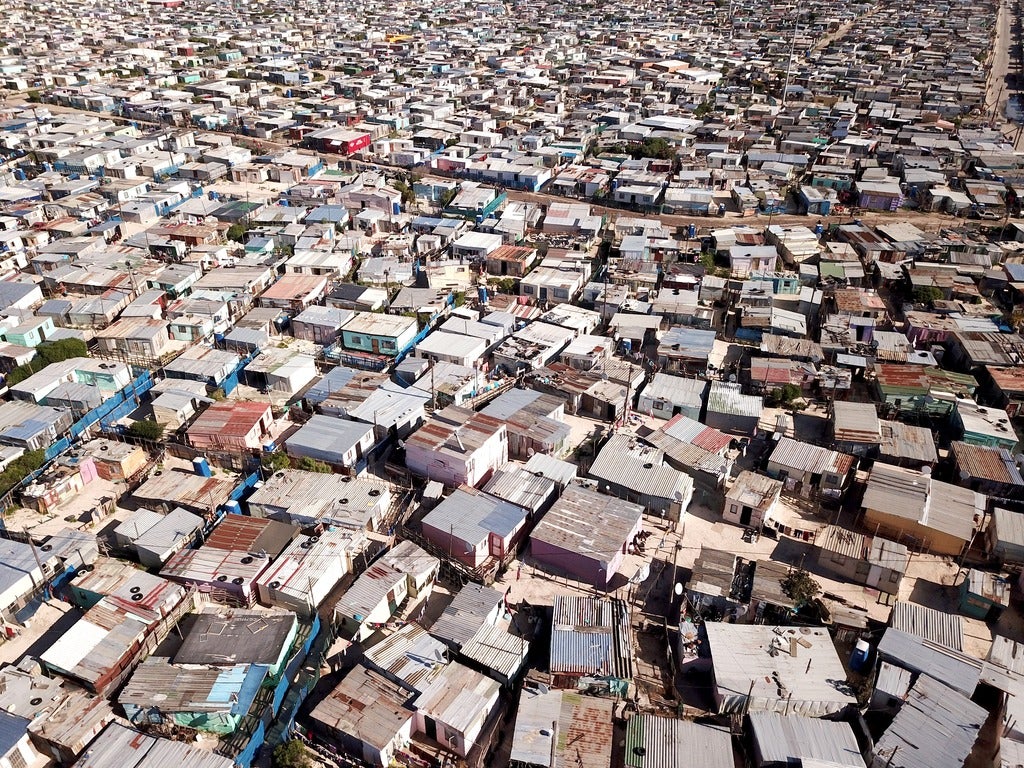
A School of Public Health Sciences research team, co-directed by Drs. Craig Janes and Warren Dodd, is to receive more than $1.5 million through the federal government’s New Frontiers in Research Fund, which supports interdisciplinary and transformative research led by Canadians working with international partners. 

“Nature-based solutions, like increasing vegetation and tree canopies, are crucial in urban settings for cooling,” Crank explains. “It's essential to tailor these solutions to local climates, as what's effective in one region may not work in another. Additionally, engineered shade structures, such as bus stop shelters and fabric shade sails, also play a significant role in mitigating heat impacts.”

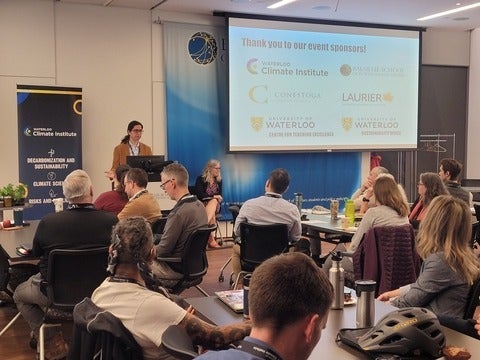
The Climate Pedagogy Symposium brought together educators from higher education institutions across the Waterloo region to share innovative approaches to climate change education (CCE). Hosted collaboratively by the Waterloo Climate Institute at the University of Waterloo, Conestoga College, and Wilfrid Laurier University, the event facilitated discussions on decolonizing CCE, active learning strategies, reflective and reflexive teaching, interdisciplinarity, and addressing climate emotions. 

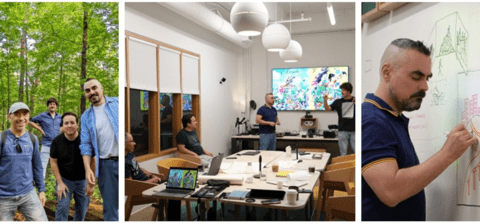
A project with Waterloo Climate Institute Executive Director, Sarah Burch, launched a new pilot experimental project using field research data on community disaster risk and strategies to explore visualizations of possible futures using digital design and augmented reality. The pilot will explore different facets of transformation due to global environmental change and extreme weather events.

Three reports share a snapshot of climate action and opinion at the global, national and local level. The People's Climate Vote 2024, shares insight into global opinions on climate action, while the Pembina Institute's report 'All Together Now' details climate action in Canada, and the GHG Inventory for Waterloo Region shows reductions across GHG contribuint categories.

University of Waterloo researchers, in partnership with universities and key stakeholders in Mauritius, Maldives and Fiji, are co-creators of the Resilience to Climate Vulnerability and Environmental Risk (RECOVER) project, recipients of $1.2 million in funding. Together, they will identify each island’s exposure and risk to climate change and determine scalable strategies to address challenges that impede the availability of resources, materials and critical services, such as food, water, energy and health care. 

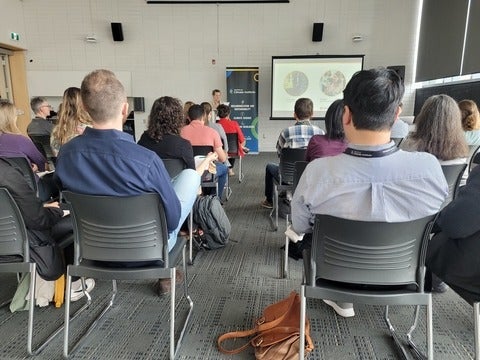
Researchers, faculty, students, and staff gathered on May 29th to hear about the transformational changes that have been taking place at the City of Waterloo. Ena Ristic, Senior Sustainability Officer and Sandy Little, Director of Strategy at the City of Waterloo shared how the Corporate Climate Action plan has reshaped how the municipality approaches sustainability and climate action.