Editor:
Brandon Sweet
University Communications
bulletin@uwaterloo.ca
Habitat improvements to the University of Waterloo Environmental Reserve
This article was originally published on the Sustainability Office's website.
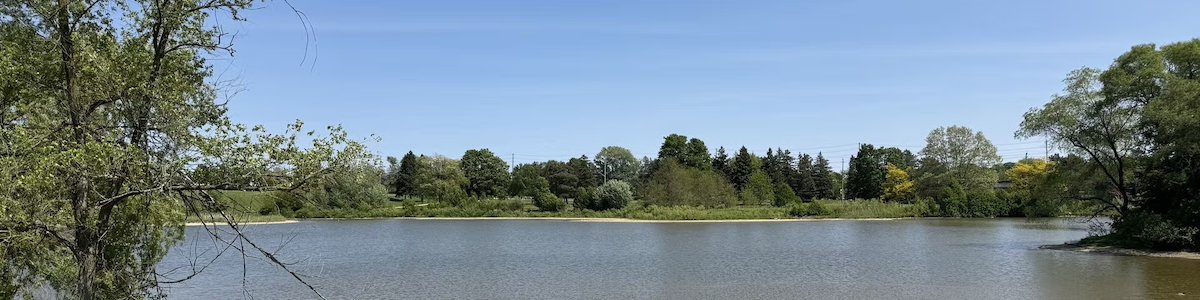
The University of Waterloo’s Environmental Reserve is one of the most biodiverse habitats in the Region of Waterloo, with over 235 bird species, 755 insect species and 410 plant species recorded. As part of ongoing conservation and restoration efforts, the University has installed a variety of artificial habitats to support native wildlife and help address habitat loss affecting several local species, including 30 tree swallow nest boxes, 10 bat boxes, 2 wood duck nest boxes, and a multi-compartment Purple Martin hotel.
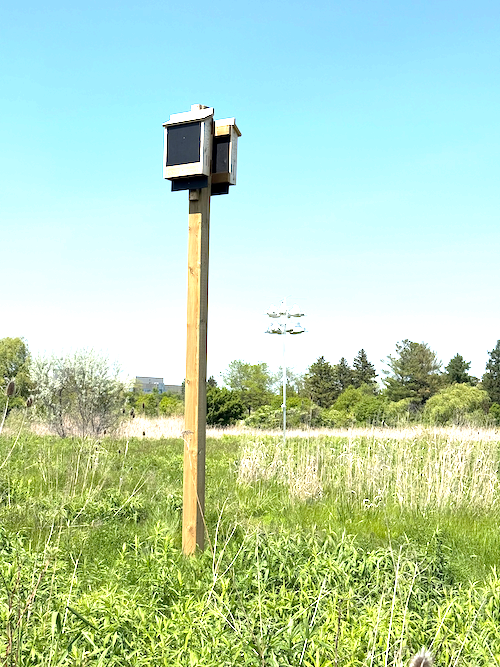
Purple Martins (Progne subis), North America’s largest swallow, are aerial insectivores-birds that have declined by nearly 90 per cent in southern Ontario over the past 50 years. In eastern North America, they now rely almost exclusively on human-made structures for nesting. The newly installed Purple Martin hotel at Columbia Lake provides space for these birds to nest and raise young.
Tree Swallows (Tachycineta bicolor), another aerial insectivore, have experienced a 45% population decline in Canada over the last 50 years. These cavity-nesting birds typically depend on old tree hollows for nesting but readily use nest boxes when natural options are scarce. This year, five tree swallow nests were observed, and seventeen nestlings were banded by Professfor Liam McGuire's lab.
Wood Ducks (Aix sponsa) are cavity-nesting waterfowl that rely on mature trees with natural cavities formed by woodpeckers or tree decay, which have become increasingly unavailable. The two wood duck nest boxes installed near Columbia Lake mimic these natural hollows, offering safe locations for egg laying and duckling rearing.
Bats also benefit from these habitat improvements. Bats serve a crucial role in ecosystems by controlling insect populations. However, seven of Ontario’s eight bat species are endangered, largely due to habitat loss. To support Waterloo’s bat population, 10 bat boxes have been added to the reserve, designed to replicate natural tree cavities and provide safe roosting areas. A big brown bat has been spotted using one of the bat boxes to roost.
These additions strengthen the Environmental Reserve’s role as a hotspot for protecting wildlife and reflect the University of Waterloo’s commitment to sustainable land care. These ongoing conservation efforts contribute to protecting existing populations and maintaining the ecological balance of one of the region’s most diverse natural areas for future generations.
This project was a collaboration between the Department of Biology and the Sustainability Office. The University of Waterloo gratefully acknowledges the financial support of the Community Environmental Fund administered by the Regional Municipality of Waterloo for this project.
Promising new method could treat inherited diseases

A news release from the Media Relations team.
An innovative method that uses modified versions of a bacterial virus effective at delivering treatments to human cells shows promise as a more inexpensive and efficient way to treat some deadly genetic diseases.
Researchers from the School of Pharmacy at the University of Waterloo use a modified version of a bacterial virus called M13 to target specific human cells while carrying only the genes they want delivered, with no unwanted virus or bacteria. Scientists can fine-tune the modified M13 to deliver different therapeutic genes for the treatment of many different diseases.
About one person in 25 has an inherited disease. Despite the need, many conditions lack accessible treatments and do not have a cure. The Waterloo researchers expect the method can be used for many different types of genetic disorders, some of which are inherited, but others that may develop, such as cancer.
“There is a real need for customizable gene therapies to address the gap in treatments,” said Dr. Roderick Slavcev, a professor in Waterloo’s School of Pharmacy and the principal investigator of the study. "What’s exciting about M13 is that it is very simple genetically and structurally, a single-stranded DNA phage. This simplicity allows for a cost-effective, efficient, and controllable approach to gene therapy that may represent a step towards personalized gene therapy.”
Scientists already use gene therapy to successfully treat certain diseases of the eye and immune system. They used modified versions of viruses that are good at delivering treatments to human cells to either replace, turn off, or fix damaged genes to produce functional proteins and restore the cells back to good health.
Although effective, these methods are costly to produce and can trigger toxic side effects, including unintentional immune reactions, limiting them to a single use per patient. And non-viral gene therapy, while generally safer and cheaper to produce, tends to be less efficient at delivering genetic material to target cells.
“At scale, this platform can lead to treatments that could cost as low as one-millionth the cost of current viral gene therapies,” Slavcev said. “Genetic medicine is poised to be the most powerful curative approach for our global future, and we hope this technology is a move in that direction.”
Slavcev is a part of Team iNeuron, currently working on applying the new system as a potential treatment to replace damaged or dead neurons, as in the case of stroke or Alzheimer’s disease.
The study appears in Molecular Therapy Nucleic Acids.
This work is supported by the Government of Canada’s New Frontiers in Research Fund.
WUSA Volunteer Award profile - Radha Vyas
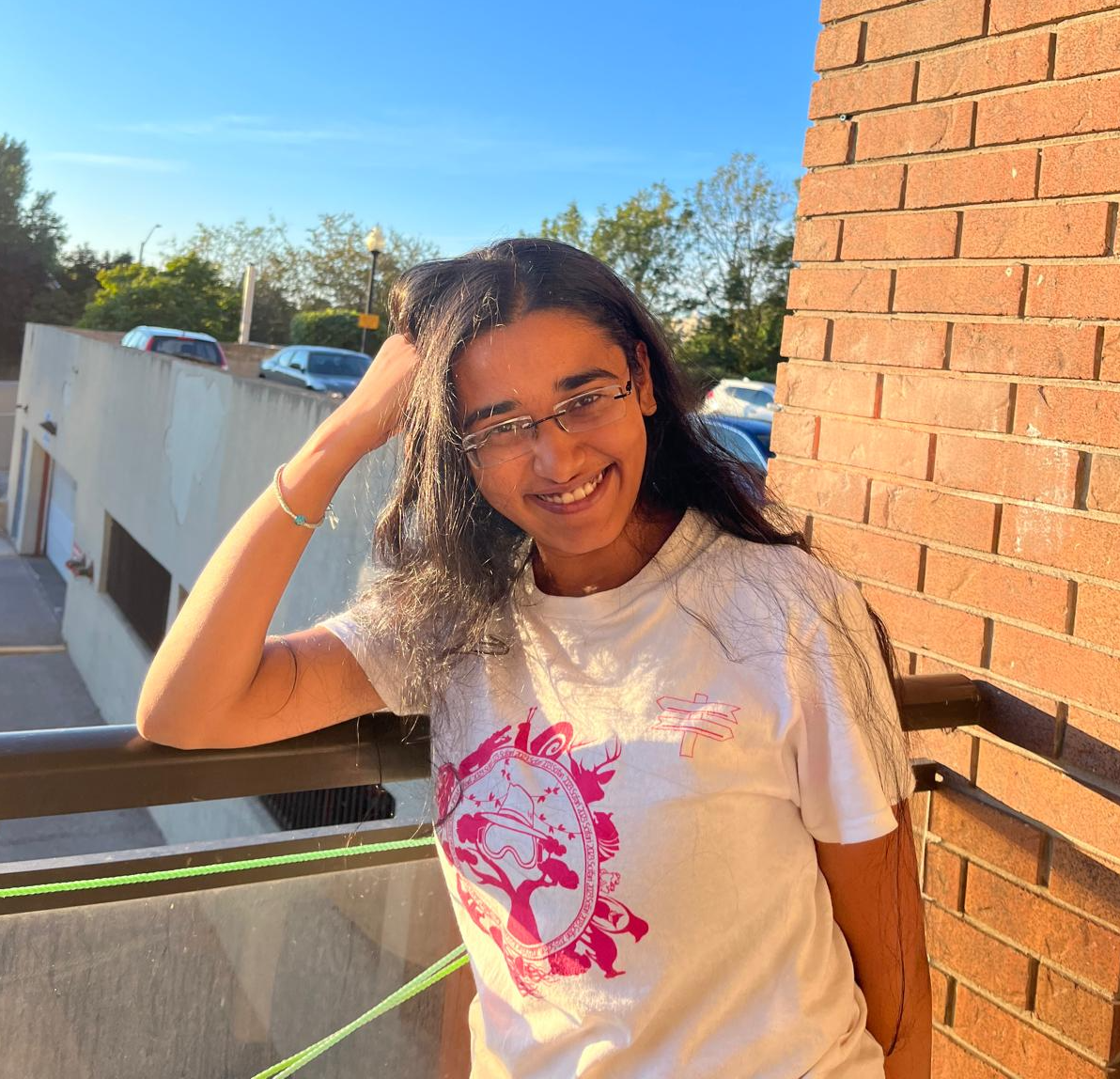
Radha Vyas, a second-year Biomedical Science student at the University of Waterloo, shares how volunteering has shaped her university experience and led to her recognition with a WUSA Volunteer Award.
After arriving in Canada at a young age to pursue her studies, Radha quickly realized that navigating university life required both resilience and support. She discovered that volunteering was a way to connect with her community, build skills, and make a meaningful impact on campus. Through her involvement with WUSA initiatives, including the Women’s Centre, she contributed to events and programs that supported students’ well-being, inclusivity, and engagement.
Volunteering allowed Radha to develop leadership skills, gain confidence, and strengthen her sense of belonging within the UW community. Her dedication and impact were recognized when she received the WUSA Volunteer Award, which honours students who demonstrate outstanding commitment and service. The award particularly highlighted her work at the Women’s Centre, where her contributions helped create supportive spaces and resources for students across campus.
Radha hopes her story encourages other students to seek out volunteer opportunities. She emphasizes that even small contributions can create meaningful change, while also providing personal growth and skill development. By getting involved, students can enhance their academic and social experience, form connections, and contribute to a thriving campus community.
Reflecting on her journey, Radha shares a message for other students: “Volunteering not only helps others but also empowers you — it’s a chance to learn, grow, and be part of something bigger.”
Learn more about the WUSA Volunteer Awards and Radha’s recognition on WUSA's website.
Link of the day
How Baldur’s Gate saved the computer RPG
When and where
The Campus Wellness Student Medical Clinic offers healthcare visits with Physicians and Nurse Practitioners to current undergraduate and graduate students. Services include: vaccinations, immunity testing, naturopathic services and more. Counselling Services offers appointments with counsellors in person as well as via phone and video. Students can book appointments for these services by calling Campus Wellness at 519-888-4096.
The privately-run Student Health Pharmacy (located in the lower level of the Student Life Centre) is now offering new COVID booster shots and flu shots. Covid booster shots are available by appointment only – please call ext. 33784 or 519-746-4500. The Student Health Pharmacy’s summer hours are Monday to Friday, 9:30 a.m. to 4:30 p.m. Naloxone kits are still available – pick them up in the pharmacy at no charge.
International Orientation, Thursday, August 28 and Friday, August 29.
Fall move-in, Thursday, August 28 to Sunday, August 31.
TBH: To Be Honest premiere performance, Thursday, August 28, 3:00 p.m., Humanities Theatre. Ppen to all; encouraged for members of the campus community (staff, faculty, cast family and friends).
TBH: To Be Honest premiere performance, Friday, August 29, 7:00 p.m., Humanities Theatre. Open to all; encouraged for Orientation volunteers and Off-Campus Dons.
Orientation Week, Sunday, August 31 to Saturday, September 6.
Labour Day holiday, Monday, September 1, most University operations closed.
Fall co-operative work term begins, Tuesday, September 2.
Fall term lectures and classes begin, Wednesday, September 3.
Free Try-it Opportunities (fitness classes), Wednesday, September 3 to Tuesday, September 9. Find out more.
Warrior Rec Club registration, Wednesday, September 3 to Monday, September 15.
NEW - Warriors Football Black and Gold Day vs. Carleton, Saturday, September 6, 1:00 p.m., Warrior Field. Pregame Orientation Carnival, W Store Pop Up Shop and Pass, Punt, Kick Student Contest for $5,000. Purchase tickets.
Velocity Innovation Open House, Tuesday, September 9, 4:00 p.m. to 6:00 p.m., Federation Hall.
Velocity Presents Cornerstone Idea Session, Wednesday, September 10, 5:30 p.m. to 7:30 p.m., 2nd floor Ideas Clinic, E7 2409.
NEW - Warrior Rec Intramurals registration deadline,- Monday, September 15, 11:00 a.m. New and improved registration system this term, over 15 leagues to choose from. Find out more and sign up today!
NEW - Warrior Rec Instructional Programs registration deadline, Monday, September 15, 12noon. Dance, Martial Arts, Skating, Skipping and Climbing lessons available. Find out more and register today.
NEW - Manulife presents CareNext Collective: The potential of robotics in health care, Monday, September 15, 12 noon to 1:00 p.m., online. Register now.
PhD oral defences
Physics and Astronomy. Alexander Hickey, “Fluctuation-induced order and thermal transport in frustrated quantum magnets.” Supervisors, Dr. Michel Gingras, Dr. Anton Burkov. Visit the Faculty of Science Thesis Submission Notices website for details on requesting a copy, Oral defence Tuesday, September 9, 10:30 a.m., PHY 352 and remote via MS Teams.
Biology. Valentina Wong Benito, “Impact of Temperature on the Antigen Presentation pathway in VHSV-infected Rainbow Trout (𝘖𝘯𝘤𝘰𝘳𝘩𝘺𝘯𝘤𝘩𝘶𝘴𝘮𝘺𝘬𝘪𝘴𝘴).” Supervisor, Dr. Brian Dixon. Visit the Faculty of Science Thesis Submission Notices website for details on requesting a copy, Oral defence Wednesday, September 10, 1:00 p.m., B1 266.
School of Environment, Enterprise and Development. Ibrahim Bamidele Jimoh, "Driving Higher Education Sustainability: Investigating Practices, Cultural Influence and External Pressures in Nigerian Higher Education Institutions.” Supervisors, Dr. Olaf Weber, Dr. Amr ElAlfy. Available upon request from the Faculty of Environment, Administrator, Graduate Studies. Oral defence Thursday, September 11, 9:00 a.m., remote.
Mechanical and Mechatronics Engineering. Ali Zardoshtian, “Functionally graded additive manufacturing of Inconel625 and CuCrZr alloys.” Supervisor:, Dr. Ehsan Toyserkani. Thesis available via SharePoint – email eng.phd@uwaterloo.ca to request a viewing link. Oral defence Thursday, September 11, 12:00 noon, E5 – 3052.
Upcoming service interruptions
Stay up to date on service interruptions, campus construction, and other operational changes on the Plant Operations website. Upcoming service interruptions include:
- Chemistry 2 roof replacement, Monday, August 25 to Friday, August 28, partial closing of path between C2 and ESC, loading dock area of C2, parking disruptions between C2 and DC loading dock - please note this process will be extremely loud and disruptive.
- Engineering 3 west wing electrical panel shutdown, Thursday, August 28, 7:00 a.m. to 8:00 a.m., temporary power outage for all receptacles and a few lights on 2nd and 3rd floors.
-
Optometry water shutdown, Thursday, August 28, 7:00 a.m. to 3:00 p.m., kitchens and bathrooms in the older sections of the building on the 2nd, 3rd, and 4th floors will be without water as modifications are made to the domestic hot and cold water piping. The newer laser clinic side of the building will not be affected.
- Engineering 3 electrical panel shutdowns, Friday, August 29, 6:00 p.m. to Monday, September 1, 7:00 a.m., power will be shut off to the entire E3 addition, no occupants will have access to the building during this time.
- Engineering 3 panel shutdown, Monday, September 1, 7:00 a.m. to 4:00 p.m., will affect power to x-ray machine in 3179, panel PP-6AI, panel PP-6A2.
-
Optometry washroom closure, Tuesday, September 2, 7:00 a.m. to 3:00 p.m., men's and women's washrooms 307 and 308 will have their water turned off during a sanitary drain tie-in, alternate washrooms on the 2nd and 4th floors will remain operational.
-
School of Pharmacy, Integrated Health Building, Innovation Arena fire alarm testing, Wednesday, September 3, 6:30 a.m. to 8:15 a.m.
-
University Club, Bauer Warehouse, Avril fire alarm testing, Wednesday, September 3, 10:00 a.m. to 11:00 a.m.
-
Energy Research Centre, Math 3, Burt Matthews Hall fire alarm testing, Friday, September 5, 6:30 a.m. to 8:15 a.m.
-
Minota Hagey, Mackenzie King Village, Ron Edyt Village fire alarm testing, Friday, September 5, 1:00 p.m. to 2:30 p.m.