
Our lab investigates interactions and relationships between people from diverse groups. What makes our initial encounters, partnerships, and friendships with individuals from different cultural backgrounds stagnate or succeed? What steps can individuals (and institutions) take to build or repair trust in intergroup interactions? How can we maintain interpersonal trust when facing intercultural conflicts?
We take a social psychological approach to understanding the interpersonal dynamics of intergroup interactions and relationships. We attempt to clarify how both situational and individual factors interact in ways that enable people to connect and bridge cultural divides. Our work addresses questions related to antiracism, gender inclusion, networks, nonverbal behaviour, cooperation, social support, and trust.
Treaties Recognition
The Diversity and Intergroup Relations Lab acknowledges that we live and work on the traditional territory of the Attawandaron, Anishinaabeg, and Haudenosaunee peoples. The University of Waterloo is situated on the Haldimand Tract, the land promised to the Six Nations that includes six miles on each side of the Grand River. To date, only 5% of the promised land of the Haldimand Tract is available to the Six Nations of the Grand River. We recognize our role in ongoing colonialism through living on this promised land and commit to working toward reconciliation, justice, and trust in intergroup relations.
News
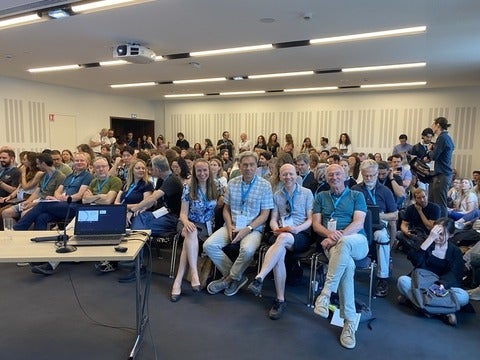
Dr. Bergsieker Presents to a Packed Crowd at EASP 2026
At the triennial EASP general meeting, Hilary Bergsieker and Vincent Yzerbyt co-chaired a symposium entitled "Mediation analysis in social psychology: Persistent problems, recent advances, and practical solutions.” Over 400 people registered to attend — the largest symposium audience of the conference — and for those who were turned away for lack of space the four speakers (also including Felix Thoemmes and Markus Brauer) have posted their slides in the conference app.
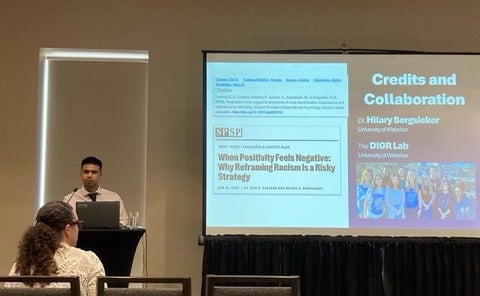
Lab Members Present at CPA 2026
Congratulations to DIGR lab graduate students and alumni for successfully presenting multiple posters, data blitzes, and symposium talks at the CPA 2026 conference in Montreal!
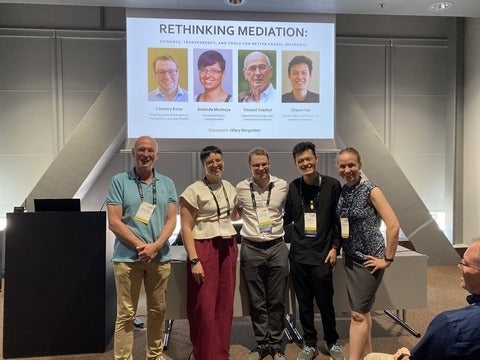
Lab Members Present at APS 2026
Congratulations to Dr. Hilary Bergsieker, Shawn Yee, and Connery Knox for presenting talks at APS 2026 in a symposium entitled “Rethinking mediation: Evidence, transparency, and tools for better causal inference.”