Monica Emelko
Biography
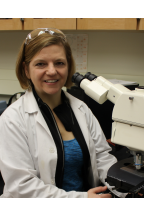
Monica B. Emelko is a Professor in the Department of Civil and Environmental Engineering and Canada Research Chair in Water Science, Technology & Policy. She is also the Director of the Water Science, Technology & Policy Group. She is also cross-appointed in Biology, Geography & Environmental Management, Systems Design Engineering, and the School of Planning.
Professor Emelko's research interests focus on drinking water supply and treatment, source water protection, microbial risk assessment, public health policy, and stormwater and advanced wastewater treatment. She focuses on sustainable technology development and deployment, integrated resource management, climate change adaptation, and the protection of public health. Professor Emelko’s research is currently funded by many organizations including the Natural Sciences and Engineering Research Council (NSERC) of Canada, the Canadian Foundation for Innovation (CFI), the Water Research Foundation, and Alberta Innovates as well as several industry and government partners.
She co-leads the Southern Rockies Watershed Project team, which evaluates the initial effects of natural disturbance by wildfire on hydrology, water quality, and aquatic ecology; and monitors the recovery of these values in front range headwater streams of the high water yielding eastern slopes of the Rocky Mountains. Professor Emelko's team was among the first cited by the Intergovernmental Panel on Climate Change (IPCC) for identifying climate change-associated threats from wildfire to drinking water security through water quality and treatability. Her ongoing work involves active participation from over 3 dozen utilities and conservation authorities across Canada and the United States. Professor Emelko has served as a technical advisor to the U.S. National Academies of Engineering, Science, and Medicine as well as several federal and provincial/state agencies in Canada, the United States, and Australia regarding regulatory development related to drinking water treatment, source water protection, public health policy, and integrated resource management.
Research interests
Water treatment, Wildfire, Water quality, Pathogens, Climate change, Filtration, Land disturbance, Environmental & Water Resources, Water and Land Management, Nanoparticle Removal during Drinking Water and Wastewater Treatment, Quanititative Microbial Risk Assessment, Water Protection, Smart Infrastructure
Education
2001, Doctorate Civil Engineering, University of Waterloo, Canada
1995, Master's Civil Engineering, UCLA, USA
1994, Bachelor's Environmental Engineering Science, MIT, USA
1993, Bachelor's Chemical Engineering, MIT, USA
Awards
1997 Sir Sandford Fleming Foundation Teaching Assistantship Award, University of Waterloo
1997 OWWA/OMWA Annual Conference - Best Presentation Award
1999 U.S. NSF Program for the Retention of Engineering Educators (Invited)
2002 AWWA Academic Achievement Award (2nd place) for best doctoral dissertation in N. America
2004 University of Waterloo, Faculty of Engineering Distinguished Performance Award
2006 Ontario Early Researcher Award for Research Excellence
2007 Graduate Student Supervision Recognition for AWWA Larson Aquatic Research Scholarship
2009 NSERC Discovery Accelerator Supplement grant for Outstanding Research Program
2009 Graduate Student Supervision Recognition for American Water Works Association (AWWA)
Teaching*
- CIVE 670 - Physico-Chemical Processes of Water and Wastewater Treatment
- Taught in 2021, 2022, 2023, 2024, 2026
- CIVE 770 - Topics in Environmental Engineering
- Taught in 2025, 2026
- ENVE 176 - Microbial Biology for Environmental Engineers
- Taught in 2026
- ENVE 497 - Special Topics in Environmental Engineering
- Taught in 2025, 2026
* Only courses taught in the past 5 years are displayed.
Selected/recent publications
Adrian L. Collins, Martin Blackwell, Pascal Boeckx, Charlotte-Anne Chivers, Monica Emelko, Olivier Evrard, Ian Foster, Allen Gellis, Hamid Gholami, Steve Granger, Paul Harris, Arthur J. Horowitz, J. Patrick Laceby, Nuria Martinez-Carreras, Jean Minella, Lisa Mol, Kazem Nosrati, Simon Pulley, Uldis Silins, Yuri Jacques da Silva, Micheal Stone, Tales Tiecher, Hari Ram Upadhayay & Yusheng Zhang, Sediment source fingerprinting: benchmarking recent outputs, remaining challenges and emerging themes, Journal of Soils and Sediments, 4160, 2020
Emmerton CA, Cooke CA, Hustins S, Silins U, Emelko MB, Lewis T, Kruk MK, Taube N, Zhu D, Jackson B, Stone M, Kerr JG, Orwin JF, Severe western Canadian wildfire affects water quality even at large basin scales, Water Research, , 2020
Chik AHS, Emelko MB, Blaschke AP, Schijven JF, Illuminating Subsurface Microbial Water Quality Patterns Using Adenosine Triphosphate and Dynamic Time Warping Approaches, Groundwater Monitoring & Remediation, 55, 2020
Chik, A.H.S., M.B. Emelko, W.B. Anderson, K.E. O’Sullivan, D. Savio, A.H. Farnleitner, A.P. Blaschke, and J.F. Schijven, Evaluation of Groundwater Bacterial Community Composition to Inform Waterborne Pathogen Vulnerability Assessments, Science of the Total Environment, , 0000
, , , , 0000
Schmidt PJ, Emelko MB, Thompson ME, Recognizing Structural Nonidentifiability: When Experiments Do Not Provide Information About Important Parameters and Misleading Models Can Still Have Great Fit, Risk Analysis, 352, 0000
In the news
Graduate studies
I am currently seeking to accept graduate students. Please submit your graduate studies application and include my name as a potential advisor.