Current undergraduate students

Thursday, November 7, 2024 7:00 pm - 9:30 pm EST (GMT -05:00)

The Changing German Political Landscape

Elections in 2024 to the European Parliament and in three German provinces have cemented the success of the far-right Alternative for Germany and witnessed the rise of other non-mainstream parties. The German Academic Exchange Service’s (DAAD) alumni organizations in the US and Canada, in conjunction with the Waterloo Centre for German Studies, are pleased to sponsor a panel discussion that brings together leading scholars in the field for an in-depth examination of these recent elections that have changed Germany’s political landscape.

Tuesday, October 29, 2024 9:00 am - 3:00 pm EDT (GMT -04:00)

Transmission Electron Microscopy (TEM) Open House

The Quantum - Nano Fabrication and Characterization Facility (QNFCF) and Transformative Quantum Technologies (TQT) will be hosting a TEM Open House on Tuesday, October 29, from 9:00 AM - 3:00 PM at QNC 0101 to celebrate one year of QNFCF's launch of advanced S/TEM capabilities. Join us for a series of engaging presentations covering the latest advancements in TEM technology, sample preparation techniques, and data analysis methods.

Thursday, October 31, 2024 10:00 am - 5:00 pm EDT (GMT -04:00)

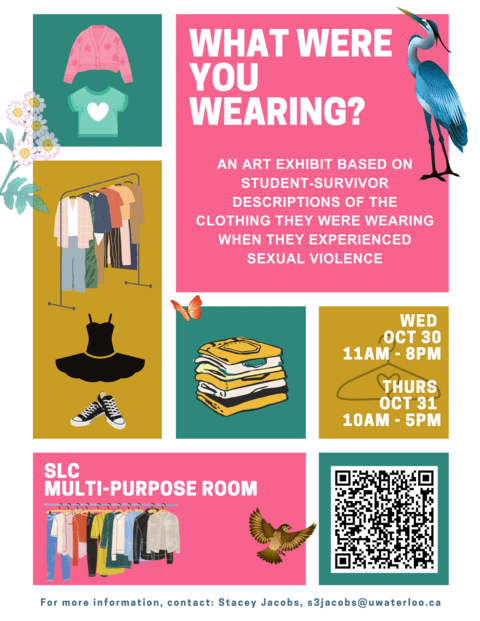
What Were You Wearing? Survivor Art Exhibit

The Sexual Violence Prevention and Response Office - SVPRO - is bringing the What Were You Wearing? Survivor Art Exhibit back to the University of Waterloo, October 30-31. The art exhibit is based on student-survivor descriptions of clothing they were wearing during an experience of sexual violence.

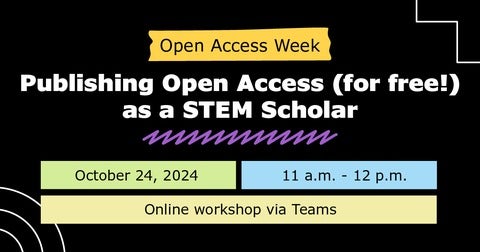
Thursday, October 24, 2024 11:00 am - 12:00 pm EDT (GMT -04:00)

Open Access Week: Publishing Open Access (for free!) as a STEM Scholar

Navigating Open Access (OA) publishing can be challenging and is often very expensive. This online workshop, a combination of presentation and question & answer period, will help demystify OA and provide solutions on how to reduce or eliminate the cost of publishing OA as a STEM scholar.

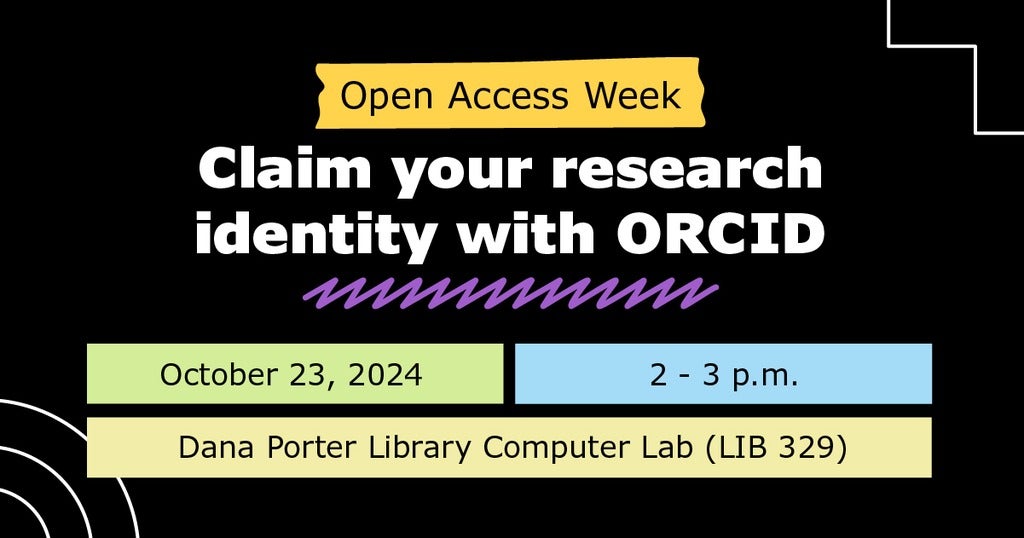
Wednesday, October 23, 2024 2:00 pm - 3:00 pm EDT (GMT -04:00)

Open Access Week: Claim your research identity with ORCID

Are you a graduate student looking to establish your research identity?

Open Researcher and Contributor Identifier (ORCID) is a persistent identifier that points to an individual researcher, helping to reduce the administrative burden associated with manually managing a scholarly profile.

This workshop, a combination of presentation and question & answer period, will introduce research IDs and how to create one using ORCID, as well as how to increase an ORCIDs credibility by affiliating the record to an institution, such as the University of Waterloo.

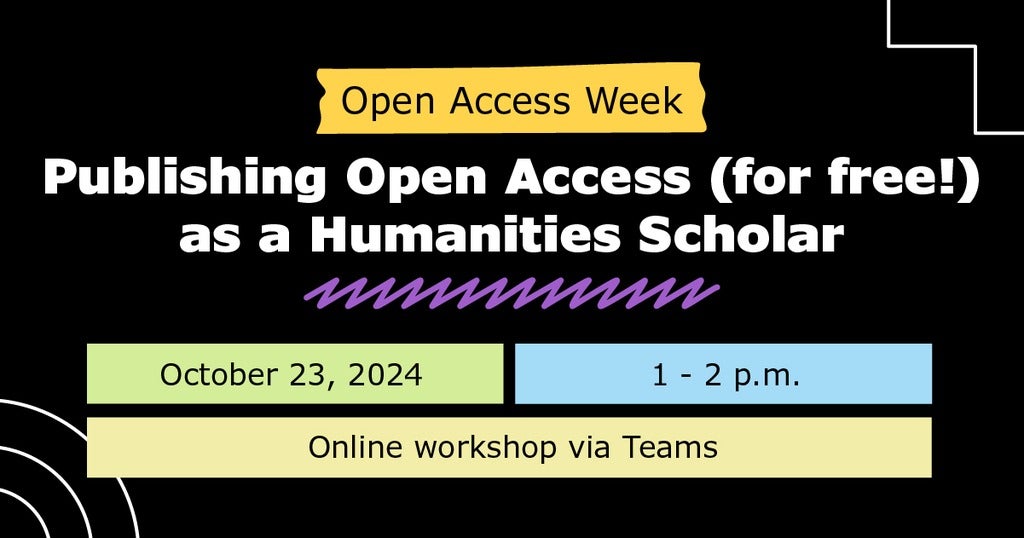
Wednesday, October 23, 2024 1:00 pm - 2:00 pm EDT (GMT -04:00)

Open Access Week: Publishing Open Access (for free!) as a Humanities Scholar

Navigating Open Access (OA) publishing can be challenging and is often very expensive. This online workshop, a combination of presentation and question & answer period, will help demystify OA and provide solutions on how to reduce or eliminate the cost of publishing OA as a humanities scholar.

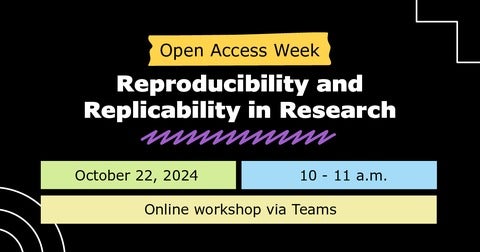
Tuesday, October 22, 2024 10:00 am - 11:00 am EDT (GMT -04:00)

Open Access Week: Reproducibility and Replicability in Research

As the world deals with a replication crisis in academic literature, it is important to ensure your own research practices are transparent and credible, further contributing to research excellence. This workshop, a combination of presentation, discussion and question & answer period, will explore the essential concepts of reproducibility and replicability in research, two critical pillars of scientific integrity, and what it means to create reproducible and replicable research.

Thursday, October 3, 2024 12:00 pm - 1:00 pm EDT (GMT -04:00)

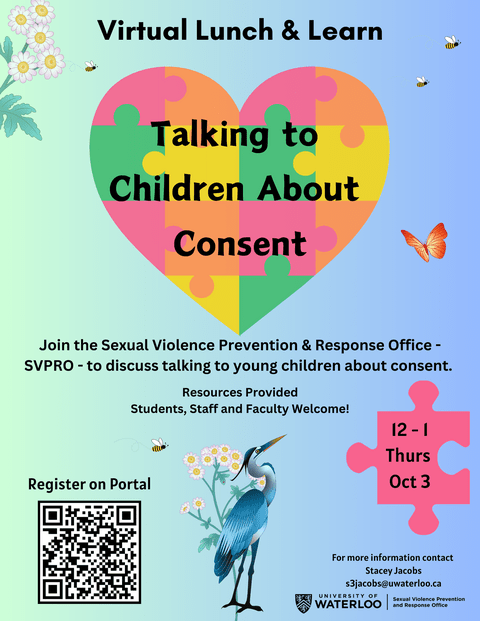
Talking to Children about Consent

Talking to Young Children (age 0-6) about Consent. This virtual session will discuss and answer questions about the importance of talking to young children about consent, setting boundaries, and using the proper names for body parts to help build a culture of respect and consent.