Introduction to GIS: Using ArcGIS for Research
- Understand how the usual datatypes and spatial datatypes are used together Learn the advantages of spatial components in datasets
- Understand the importance of projections

Registration is Open! Sign up here by October 14th.
University of Waterloo faculty members are invited to join corporate and industry professionals on campus for Academic Industry Meeting Day (AIMday). Established in 2008 at Uppsala University, Sweden, AIMday has been implemented and refined by leading universities around the world.
Join us on November 18th to discuss industry challenges in sustainable aeronautics that spans several different areas and disciplines.
AIMday is a unique and highly effective program for university-based researchers and organizations to connect, build partnerships and bring world-class research to life. By matching academic expertise with the needs of organizations, AIMday furthers understanding and enables new perspectives on real-world problems.
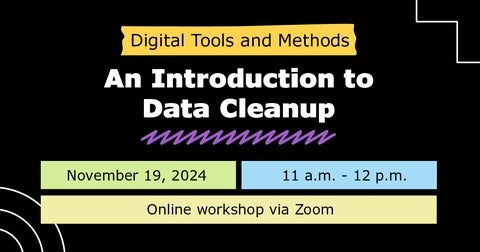
Learn the basics of cleaning up tabular data using OpenRefine. In this workshop, a combination of presentation, hands-on demonstration and question & answer period, data cleanup will be explored within the broader context of using data to answer a research question. No prior coding knowledge or web scraping skills are required to participate.
By the end of this workshop, participants will be able to:
Identify problems in a dataset and steps to fix them
Use the open-source software OpenRefine to perform basic data cleanup tasks
Please register to receive the online event link and help us understand specific disciplinary considerations.
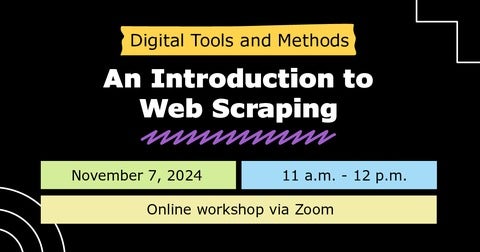
Learn the basics of obtaining data from the web using a browser plugin. In this workshop, a combination of presentation, hands-on demonstration and question & answer period, web scraping will be explored within the broader context of gathering data to answer a research question. No prior coding knowledge or web scraping skills are required to participate.
By the end of this workshop, participants will be able to:
Analyze a website’s structure to plan the best way to scrape its data
Understand web scraping in the context of the research process
Use a browser plugin to obtain data from a website
Please register to receive the online event link and help us understand specific disciplinary considerations.
Elections in 2024 to the European Parliament and in three German provinces have cemented the success of the far-right Alternative for Germany and witnessed the rise of other non-mainstream parties. The German Academic Exchange Service’s (DAAD) alumni organizations in the US and Canada, in conjunction with the Waterloo Centre for German Studies, are pleased to sponsor a panel discussion that brings together leading scholars in the field for an in-depth examination of these recent elections that have changed Germany’s political landscape.
The Quantum - Nano Fabrication and Characterization Facility (QNFCF) and Transformative Quantum Technologies (TQT) will be hosting a TEM Open House on Tuesday, October 29, from 9:00 AM - 3:00 PM at QNC 0101 to celebrate one year of QNFCF's launch of advanced S/TEM capabilities. Join us for a series of engaging presentations covering the latest advancements in TEM technology, sample preparation techniques, and data analysis methods.
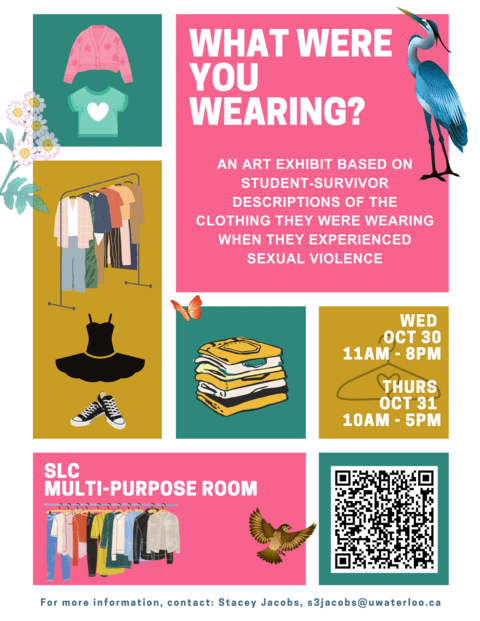
The Sexual Violence Prevention and Response Office - SVPRO - is bringing the What Were You Wearing? Survivor Art Exhibit back to the University of Waterloo, October 30-31. The art exhibit is based on student-survivor descriptions of clothing they were wearing during an experience of sexual violence.
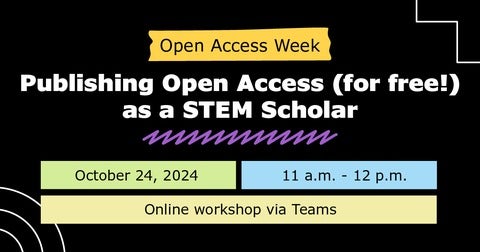
Navigating Open Access (OA) publishing can be challenging and is often very expensive. This online workshop, a combination of presentation and question & answer period, will help demystify OA and provide solutions on how to reduce or eliminate the cost of publishing OA as a STEM scholar.
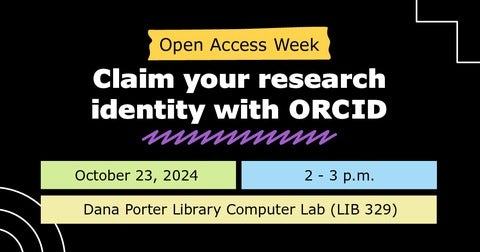
Are you a graduate student looking to establish your research identity?
Open Researcher and Contributor Identifier (ORCID) is a persistent identifier that points to an individual researcher, helping to reduce the administrative burden associated with manually managing a scholarly profile.
This workshop, a combination of presentation and question & answer period, will introduce research IDs and how to create one using ORCID, as well as how to increase an ORCIDs credibility by affiliating the record to an institution, such as the University of Waterloo.
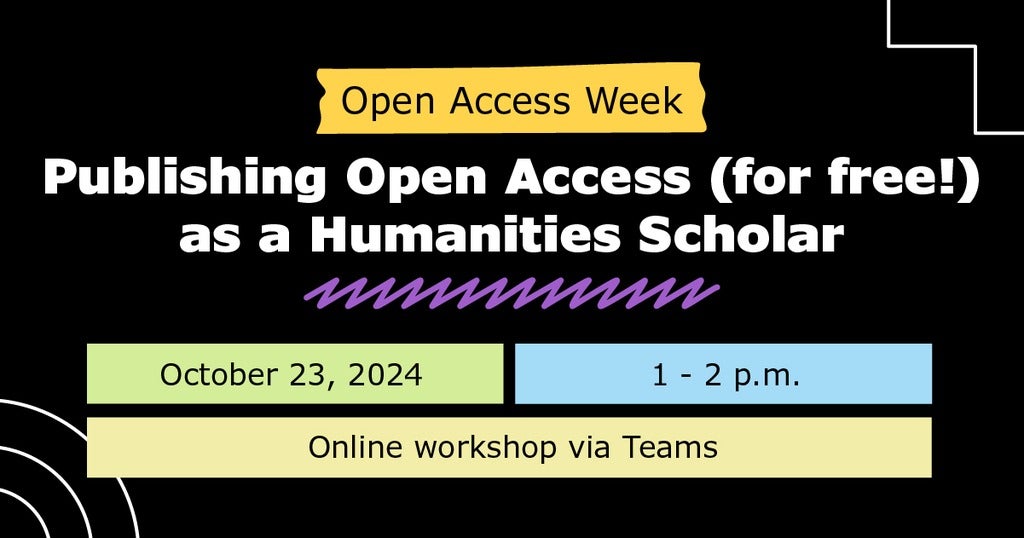
Navigating Open Access (OA) publishing can be challenging and is often very expensive. This online workshop, a combination of presentation and question & answer period, will help demystify OA and provide solutions on how to reduce or eliminate the cost of publishing OA as a humanities scholar.