News

Filter by:

Limit to news where the title matches:
Limit to items where the date of the news item:
Date range
Limit to news items where the audience is one or more of:

RECLICKS by the Purnomo Yusgiantoro Center (PYC), in collaboration with the FINCAPES Project, hosted a one-day short course titled “Designing and Conducting Climate Finance Policy Research for Indonesia’s Energy Transition” on January 20, 2026, in Jakarta. Part of the Climate Change Knowledge Sharing (CLICKS) platform and linked to the RECLICKS Call for Proposals 2026, the course brought together government officials, researchers, academics, NGOs, and practitioners to strengthen climate finance policy research capacity in Indonesia. Participants explored Indonesia’s climate finance architecture, policy instruments, and research gaps while gaining practical skills in qualitative and quantitative research methods through sessions led by Indonesian and University of Waterloo experts. The initiative highlighted the importance of evidence-based and policy-relevant research in supporting Indonesia’s energy transition and reflected the shared commitment of PYC, RECLICKS, and FINCAPES to strengthening climate finance knowledge, fostering collaboration, and advancing gender-responsive and sustainable policy solutions.

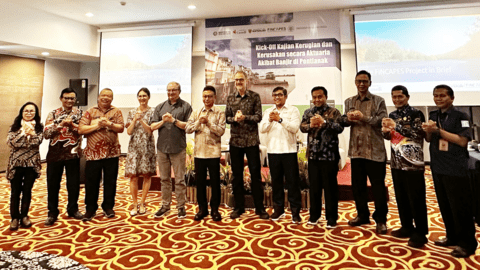
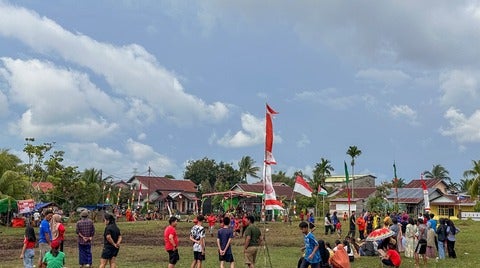
The FINCAPES Project has launched a new actuarial study in Pontianak to better understand the financial, social, and economic costs of flooding in one of Indonesia’s most flood-prone coastal cities. Building on earlier flood hazard modelling, the study combines catastrophe modelling with gender-responsive and socio-economically inclusive analysis to support more equitable and forward-looking urban planning, disaster preparedness, and risk financing. Led by Universitas Gadjah Mada and supported by local partners, the initiative marks an important step toward helping Pontianak move from responding to floods toward planning for long-term climate resilience.

Indonesia is increasingly facing severe urban flooding driven by climate change and rapid urbanization, with disproportionate impacts on women and low-income communities. A FINCAPES report led by the University of Waterloo examines how gender equality and socio-economic inclusion (GESEI) can be integrated into social protection systems to improve flood response and recovery. Drawing on global case studies and practical policy tools, the report offers guidance for strengthening inclusive, gender-responsive safety nets that can enhance resilience in Indonesia’s flood-prone urban areas.

Pontianak, Indonesia – November 13-14, 2024 – The Flood Impacts, Carbon Pricing, and Ecosystem Sustainability (FINCAPES) project recently hosted a two-day workshop titled "From Risks to Resilience Through Flood Risk Modeling for Pontianak City." This workshop brought together key stakeholders, including government officials, environmental experts, academics, and community representatives, to foster collaborative solutions to the city's pressing flood concerns.

FINCAPES, a collaborative initiative funded by the Government of Canada, is working to enhance Indonesia's capacity to adapt to and mitigate climate change. This workshop reflects the project's commitment to supporting informed decision-making through scientific research and multi-stakeholder engagement.

Prof. Stefan Steiner, FINCAPES Project's Principal Investigator, presented insights on integrating scientific data into urban planning and disaster mitigation strategies. He showcased successful international case studies, demonstrating the power of flood modeling to guide effective interventions.

A key study presented at the workshop, facilitated by FINCAPES, revealed that 84% of Pontianak's total area is vulnerable to flooding. Factors contributing to this vulnerability include the slow flow of the Kapuas River and the projected sea level rise, which could reach up to 2.20 meters by 2124 under a high emissions scenario.

Participants emphasized the need for a comprehensive approach to flood mitigation, encompassing modernized drainage systems, improved waste management, nature-based solutions, community-based initiatives, and cross-sector collaboration. Dr. Sri Mastuti, FINCAPES Project's GESI Expert, stressed the importance of incorporating Gender Equality and Social Inclusion (GESI) perspectives into flood management strategies to address the unique vulnerabilities of marginalized groups.

The workshop, facilitated by FINCAPES, fostered a productive dialogue among stakeholders, culminating in a call for collaborative action to build a safer, more sustainable, and resilient Pontianak. By integrating scientific knowledge, innovative solutions, and community engagement, the city can effectively mitigate flood risks and adapt to the challenges of a changing climate.

Find more information about the workshop: here

A joint FINCAPES and IPB University field visit to Jambi in July 2024 marked an important step toward identifying sites for community-based peatland restoration and biodiversity conservation. Visiting locations across Tanjung Jabung Timur and Muaro Jambi Regencies, researchers worked closely with local communities to assess ecological conditions, restoration potential, and opportunities for gender-responsive and sustainable land management using paludiculture and agroforestry approaches. The visit laid the foundation for future conservation activities, technical training, and long-term collaboration aimed at restoring peatland ecosystems while strengthening local livelihoods and community ownership.

The FINCAPES Project is partnering with the Pasir Sakti community in East Lampung to restore 20 hectares of mangrove ecosystems in Purworejo Village through a Nature-based Solutions initiative focused on climate resilience, biodiversity conservation, and sustainable livelihoods. By combining ecological restoration with community participation, the project aims to strengthen coastal protection, improve ecosystem services, and empower local residents to become long-term stewards of their environment. The initiative positions East Lampung as a living example of how healthy mangroves can support both environmental sustainability and stronger, more resilient coastal communities.