Anvil Group

Anvil logo

The University of Waterloo subscribes to third-party provider Anvil Group to provide travel assistance and advice for both University-related and personal travel. This resource is available to students, faculty, and staff as they travel abroad.

Anvil app

The Anvil App provides real-time alerts about emerging threats or live incidents in your locality that could impact your safety. The Anvil App is available for iOS and Android smartphones.

Features include: 

  • Receiving real-time alerts about emerging threats and live incidents occurring in your immediate vicinity  

  • Ability to research comprehensive risk information for every destination around the world, including details of the latest restrictions imposed by governments concerning Covid-19

  • Foreign travel advice provided by Australia, Canada, New Zealand, the UK and US

  • Trip itineraries and 'check-in' functions to let the Safety Abroad team know you have arrived safely at your destination

  • SOS Alerts and direction on how to speak with a specialist about a medical or security concern 

Download the Anvil app

The following is a step-by-step process of setting up Anvil on your mobile device:

  1. Download the app in the app store of your device
  2. Enter member code: uw1957

  3. Login with Single Sign On (SSO) using your WatIM credentials

  4. Confirm Profile & Login

    • Validate verification email from Anvil

    • Either tap link within registration screen to login OR login using registered email address, member code, and password

    • Select ‘Destination Country’ 

Begin using the app!

How to use the ANVIL app

Travel and security

Travel 

  • When the app is opened, you will first see the ‘Travel’ screen

  • This screen displays summary information for your next trip

  • The ‘Travel’ menu icon is automatically displayed for travellers with upcoming trips 

Safety security 

  • If Anvil does not detect any upcoming trips, the app will display the ‘Safety’ Security’ screen based on the user’s current location (if location services are enabled)

  • If location services are disabled or unavailable, the app will indicate the user's current location as ‘Unknown’

  • If device’s location is available, the app will display relevant incidents for user’s location based on proximity settings

  • If there are no upcoming trips, users will see the ‘Safety’ Security’ icon 


Incident reporting

Incidents 

  • Incidents are displayed based on proximity (can be set between 10km and 100km for cities)

  • At the country level, the app displays all related incidents for the given country

  • Proximity range can be modified on the incident setting page

  • Tapping on the map overlay icon displays the location of reported incidents on a Google map 

Incident reports and alerts 

  • To read a specific incident report, tap the headline on the 'Incidents’ screen or tap the incident threat level icon on the map view

  • It is possible to add additional locations of interest to the ‘Incidents’ screen by using the following instructions:

    • Tap the + sign at the top of the right corner of the screen

    • Type in the location, which will automatically subscribe you to push notification alerts for that location (customize the incident threat level alerts you wish to receive for the new location by tapping the coloured buttons labelled 1 [low] to 5 [high])

    • To delete a location, slide left to reveal the delete function (iOS) or tap and hold the location (Android) – you will be automatically unsubscribed from push notification alerts.

    • You cannot delete locations that have been automatically added by the system based on your itinerary

    • Proximity range can be adjusted at any time – any changes made within the ‘Incidents’ settings screen will render apply a global setting that applies to the whole app 

Safety brief (country and city risk information) 

  • Comprehensive safety information for country and major cities is available within the app

  • Users can toggle between country and city to view relevant safety information for their location

  • At the country level, the app displays detailed information about the country as well as government travel advice, embassy messages, vaccination requirements, etiquette advice, embassy contact information, etc.

  • At the city level, the app displays detailed information about the city, including security overview, emergency contact phone numbers, information about crime, civil unrest, getting from the airport to the city centre, how to get around and seek help, etc. 


Notifications

You can subscribe to receive push notification alerts for locations of interest (country and/or cities).  

  • Once a new location has been added, the app will automatically notify you of any new incidents affecting your locations of interest. By default, you are automatically signed up for alerts based on your device’s GPS location.

  • When an incident has the potential to impact your safety and your device is within 5km/3.1mi of the incident, ANVIL will automatically send a push notification alert to your device 

  • By default, this alert will be triggered for all threat levels (1 to 5), but you can change preferences under Settings>Incident Alerts

  • Anvil recommends that you set your location services to ‘Always’ for the Anvil App, as this will improve the accuracy of the GPS coordinates for your device 


Health 

The Anvil App offers several health-related features within the health screen. 

  • You can view country-level health overviews and vaccination requirements to quickly ascertain medical and COVID-19 risk levels for countries of interest. 

  • Performing a search for any country more than once will automatically display that country under the ‘Favorite Panel’ within the health screen

  • It can display up to five favourite countries


SOS and call assistance

The SOS feature is available to all University of Waterloo users.  

  • Once activated, the SOS feature sends a notification with your device’s location to the Safety Abroad team

  • You have 5 seconds to cancel this action before a notification is sent

  • Location services are required to derive the device's current location

  • If you send an SOS without location services enabled, the app will send your SOS distress message via email to the Safety Abroad team without location information

  • The accuracy and tracking intervals work best with the app open in the background/foreground as opposed to when the app is closed.

  • Within the SOS screen, you can call for assistance. You can also call for assistance within the ‘Comms’ area of the app where you will see the Assistance Line to ANVIL dedicated to members of the University of Waterloo

  • The Anvil App supports 3D touch – pressing down and holding the Anvil App icon on the home page of your device will display three options: Send SOS, Check-In or Call/Dial Assistance, which allows quick access to the selected functionality

  • Selecting a Check-In message sends an alert with your device’s location (if enabled) to the Safety Abroad team and displays the information, location, and time of check-in under ‘Comms’

  • Itinerary Check-In’s are available for users with upcoming trips

  • They are used to confirm that you have arrived safely at your destination

  • There is a button labelled ‘I’m here’ next to each journey leg – tapping the button will send a notification to the Safety Abroad team and display the check in message, location, and time of check in Comms 


Settings

You can access the settings area of the app by clicking the three dots on the top right corner of each major screen within the app. ‘Show profile’ reveals your pre-captured profile information submitted by the Safety Abroad team.

To change your information, tap the ‘Edit’ button on the Profile screen. For security purposes, you will be asked to re-authenticate to access editable profile information.  


Anvil website

The Anvil website contains features useful to any traveller abroad such as travel risk briefs and personal incident alerts. These features are not available on the Anvil app.

How to create a travel risk brief

Destination Information 

Step 1

  • Log into the Anvil Group portal with your userid@uwaterloo.ca address and WatIAM password.  

Step 2

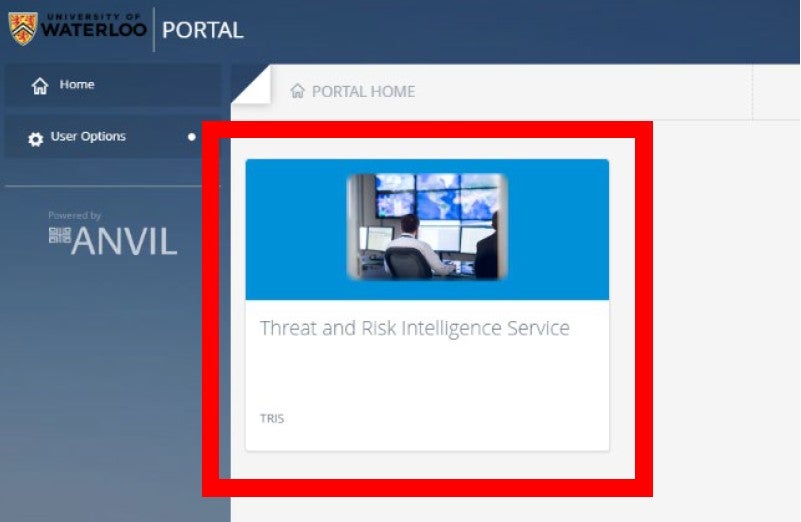
  • Click ‘Threat and Risk Intelligence Service.’ 
Destination Information screenshot step 2

Step 3

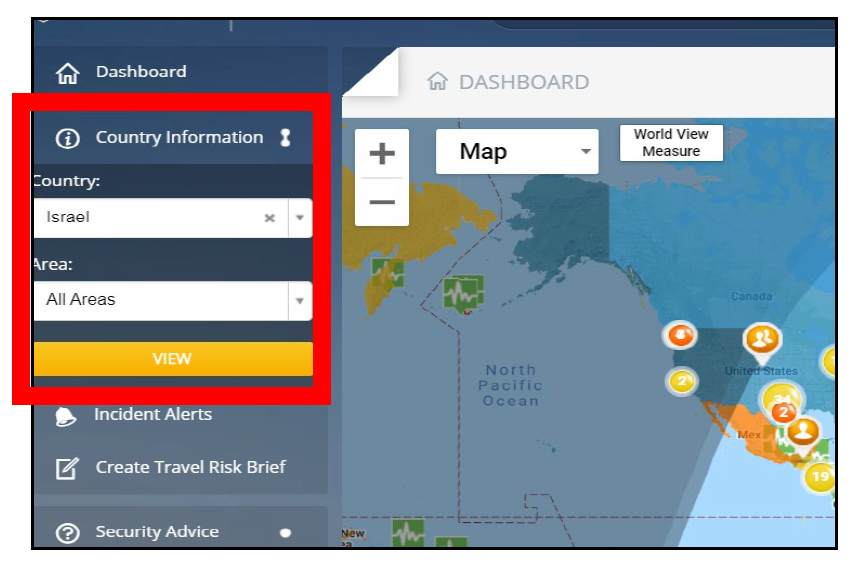
  • Select the destination you want to research from the 'Country' dropdown menu.
  • Select the area (city) of interest or leave the area as ALL AREAS for destination-level information only.
  • Click 'VIEW.'
Destination Information screenshot step 3

Step 4

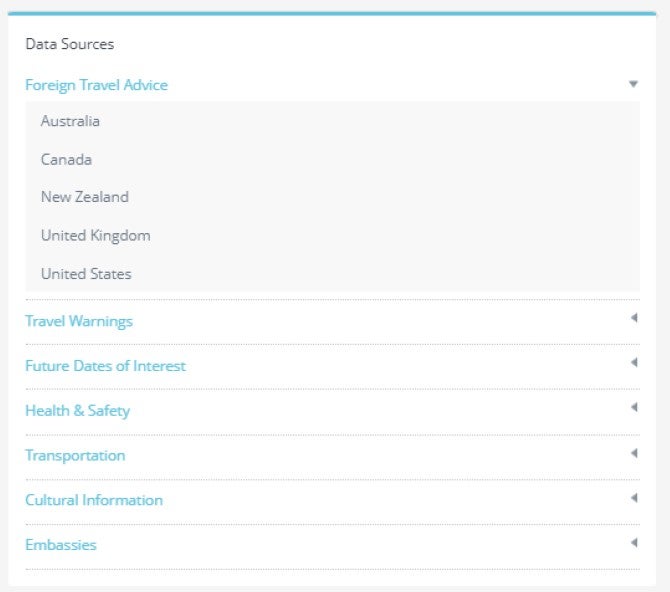
  • Select any of the 'Data Sources' for more information on your destination. 
Destination Information screenshot step 4

Travel Risk Brief  

Step 1

  • Log into the Anvil Group portal with your userid@uwaterloo.ca address and WatIAM password.

Step 2

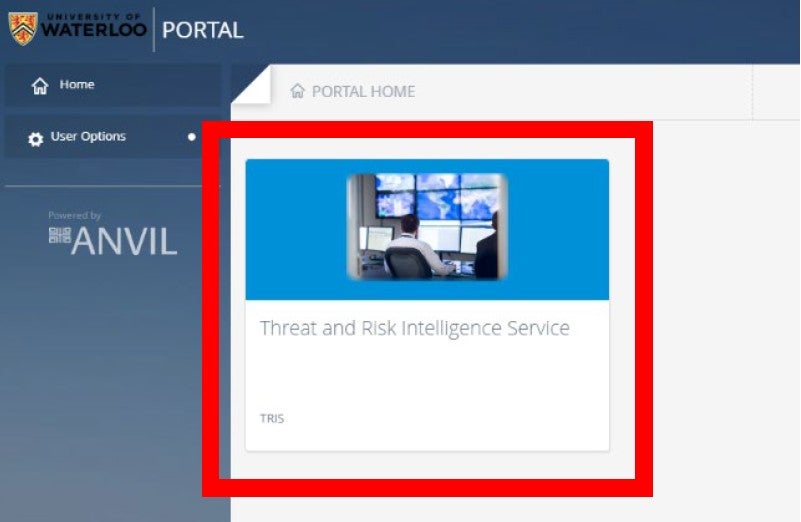
  • Click ‘Threat and Risk Intelligence Service.’ 
Travel Risk Brief screenshot step 2

Step 3

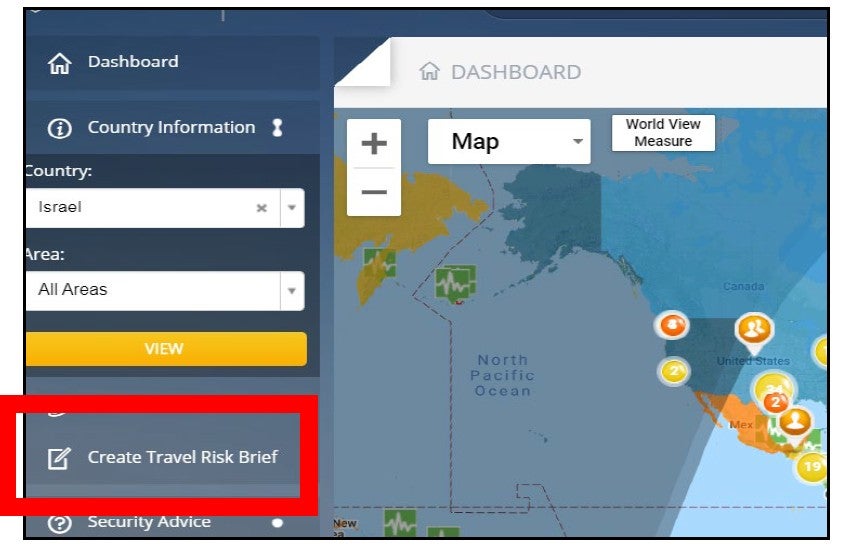
  • Click on ‘Create Travel Risk Brief.’
Travel Risk Brief screenshot step 3

Step 4

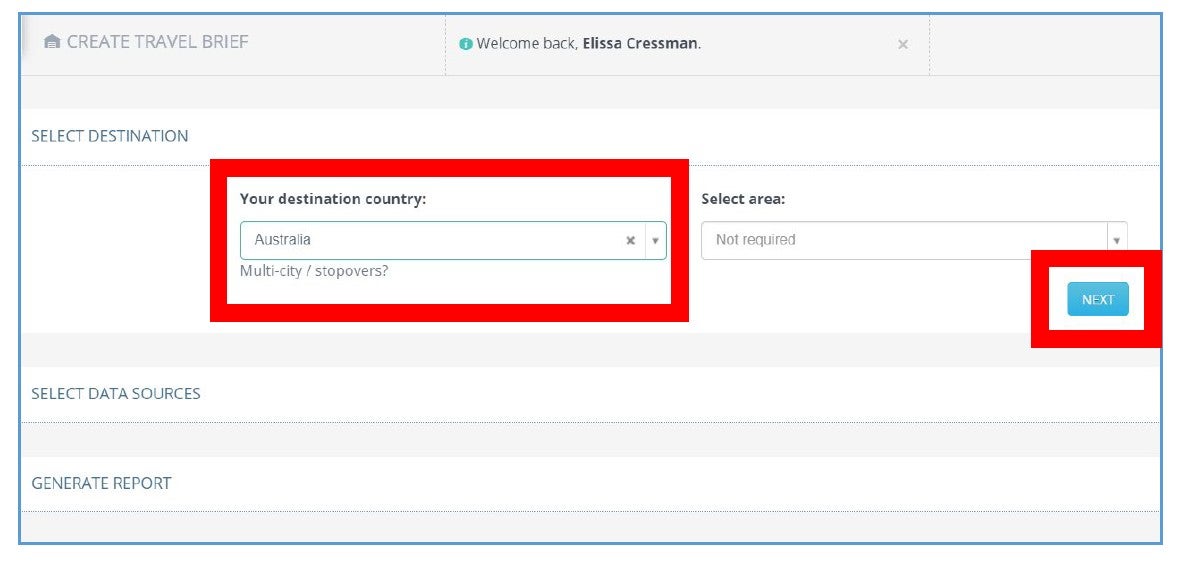
  • Use the drop-down to select your destination.
  • Select ‘Multi-city/stopover’ if you wish to create a Travel Risk Brief for more than one destination.
  • Click NEXT. 
Travel Risk Brief screenshot step 4

Step 5

  • Select the data that you would like to include in your Travel Risk Brief.
  • Include Foreign Travel Advice from all available entities for an in-depth Travel Risk Brief.
  • Click NEXT. 

Step 6

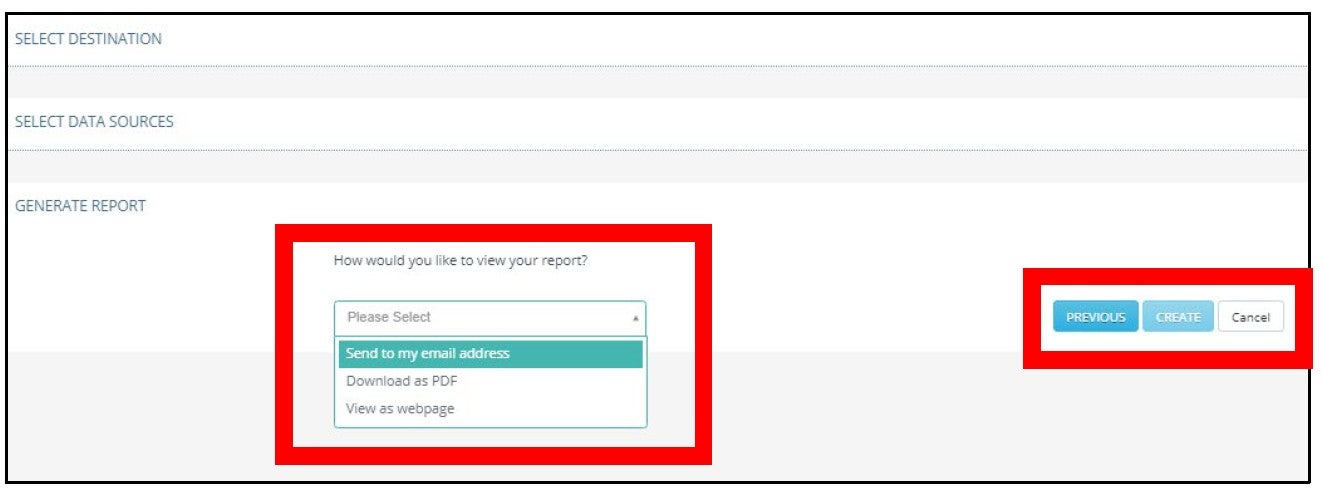
  • Select how you would like to view your Travel Risk Brief.
  • Click CREATE.
Travel Risk Brief screenshot step 6

How to create a personal incident alert profile

Travellers who register their trip with Safety Abroad will automatically be enrolled to receive incident alerts from Anvil for their stated destination(s) for the duration of their travel dates. The default settings will include receiving incident alert at levels 4 and 5.  

To change incident alert settings related to your travel destination or to add incident alerts for other risk levels or geographical areas, click Incident Alerts on the left-hand menu of the dashboard. 
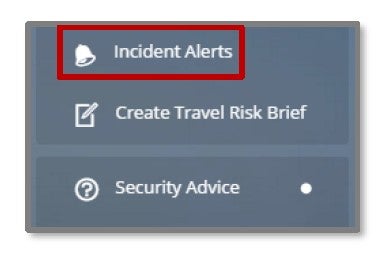
Personal incident alert screenshot - change setting

You can set up alert profiles in two ways.

Option 1

To receive alerts for all countries, select a pre-defined template from the list available in the Create from template drop-down menu and click SAVE.
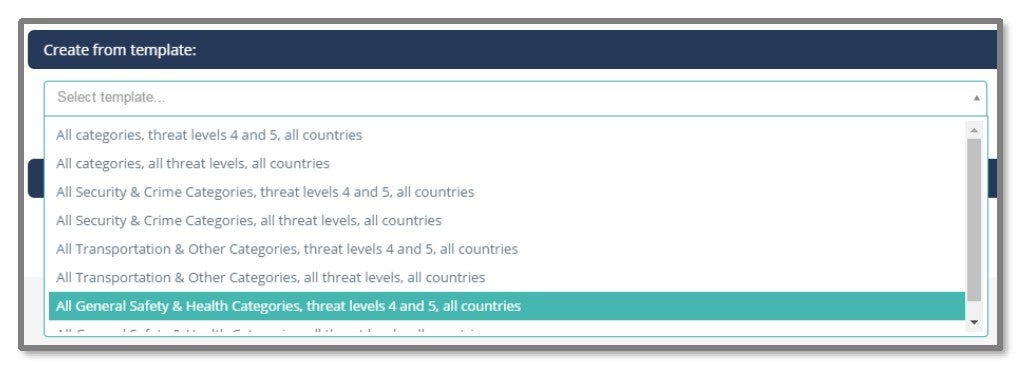
Personal incident alert screenshot - option 1

Option 2

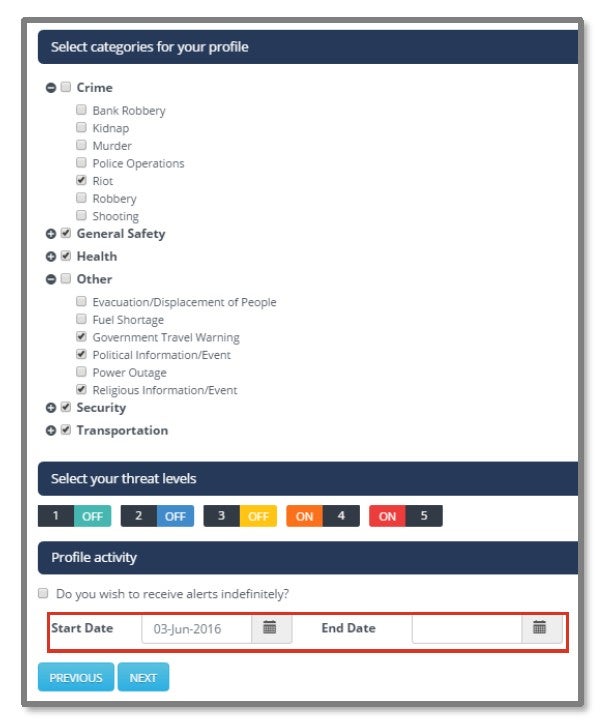
To create a customized alert profile, enter a name for your Custom alert profile (ie. France 2023 trip) and click NEXT.

Personal incident alert screenshot - option 2

Step 1

  • Select the categories you wantto receive alerts for.  

  • Use the + to narrow your search results further. 
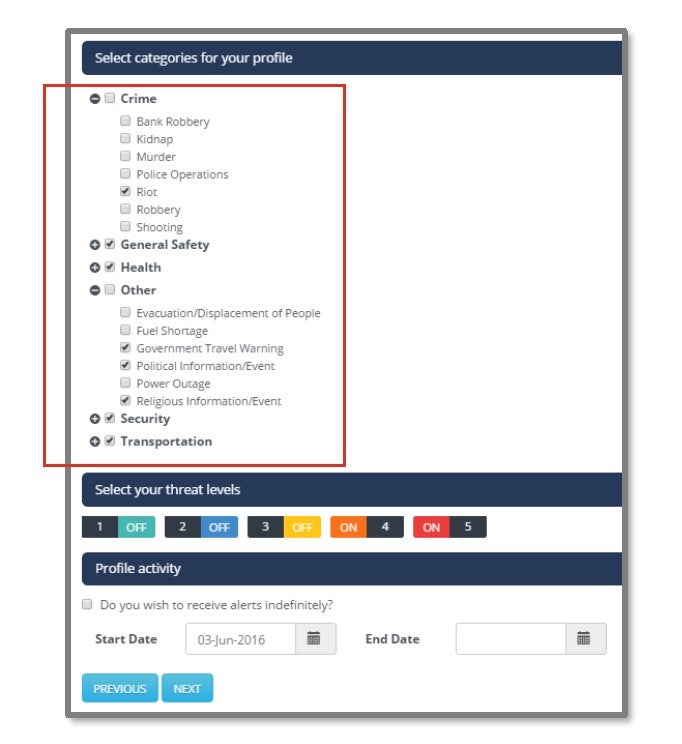
Personal incident alert screenshot - step 1

Step 2

  • Toggle on threat level options of your choice. You are automatically sent Level 4 and 5 threat level alerts. This step is necessary only if you want to receive Level 1, 2 or 3 threat level alerts. 
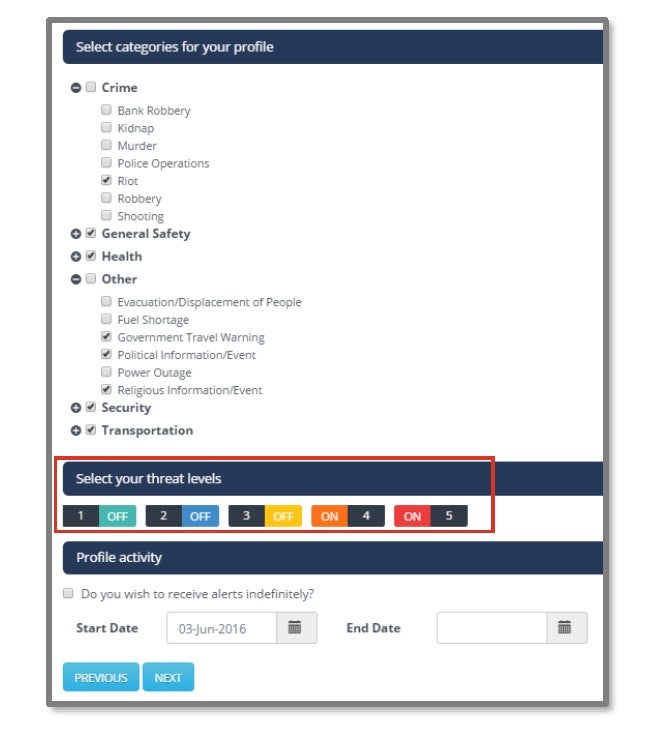
Personal incident alert screenshot - step 2

Step 3

  • You have the option to receive alerts indefinitely or for a defined period. The checkbox is ticked by default, but unticking it reveals a date range selector. This tool is helpful if you only want to receive alerts during a period of travel. 
  • Click NEXT
Personal incident alert screenshot - step 3

Step 4

  • The next screen allows you to select your countries and cities of interest. Clicking on a country will reveal all the cities associated with the country (and States if the United States of America is selected). You may select all countries by ticking the Select All checkbox at the top of the screen.
  • When you are satisfied with your selection, click SAVE.
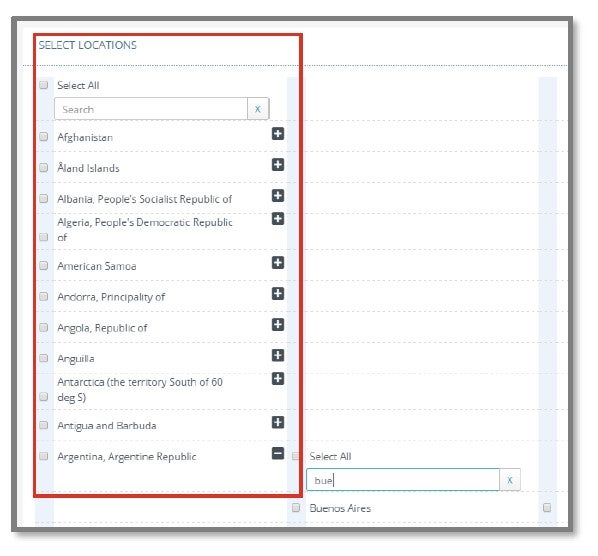
Personal incident alert screenshot step 4
  • Set up of your alert profile is now complete. Your alert profiles can be viewed at any time by clicking Incident Alerts on the dashboard.
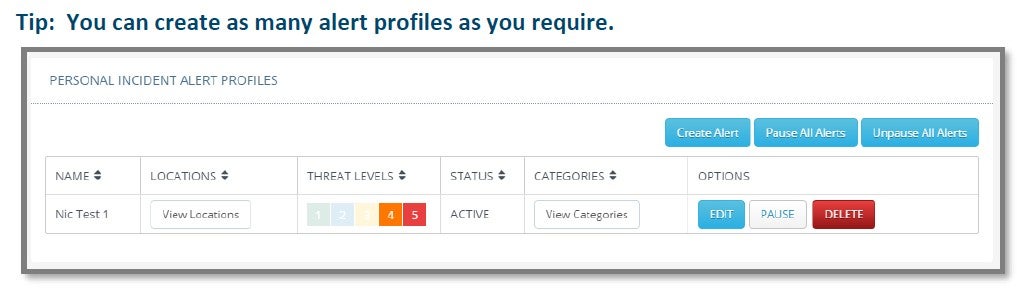
Personal incident alert screenshot tip