News

Filter by:

Limit to news where the title matches:
Limit to items where the date of the news item:
Date range
Limit to news items where the audience is one or more of:

The Water Institute has published a new article on Dr. Rooney's contributions to microplastic research, highlighting the risks that microplastics pose to the Laurentian Great Lakes.

While evidence of concern is quickly mounting, there is still a lot of uncertainty. We cannot yet say how much pollution is too much, or what monitoring thresholds and alerts should be. We also have not collectively agreed on the best monitoring approach, explained Rooney, “but the efforts of the Microplastics Work Group took us a big step closer to this for the Great Lakes.”
This position has been filled.

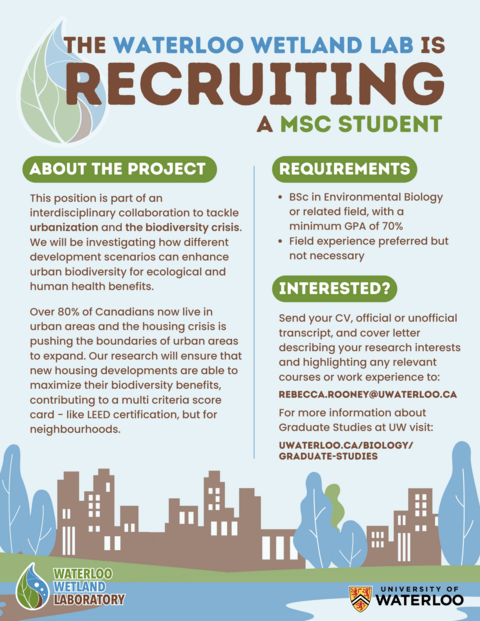
The Waterloo Wetland Lab is looking to recruit a Master's Student for an upcoming project! If you are interested, please send a CV, your unofficial or official transcript, and a cover letter describing your research interests and highlighting any relevant courses or work experience to rebecca.rooney@uwaterloo.ca.

This position has been filled.

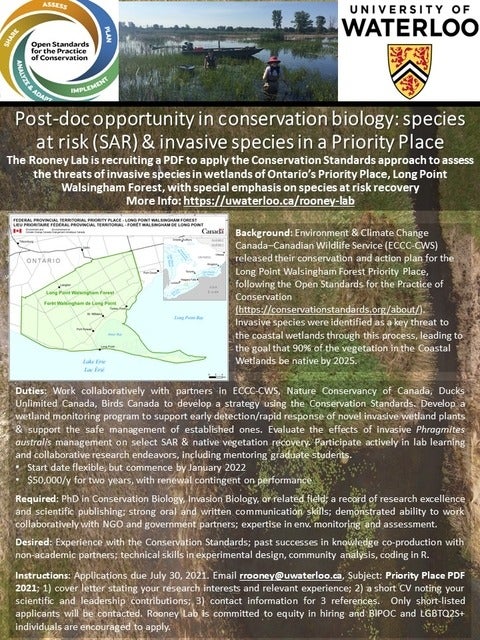
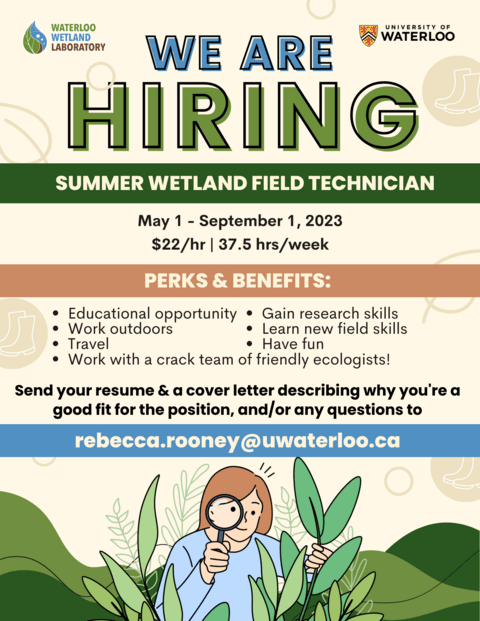
The Waterloo Wetland Lab is looking to hire Summer Wetland Technicians for the upcoming field season!

If you are interested, please send your resume and cover letter describing why you're a good fit for the position to rebecca.rooney@uwaterloo.ca. Questions may also be directed to the same email address.

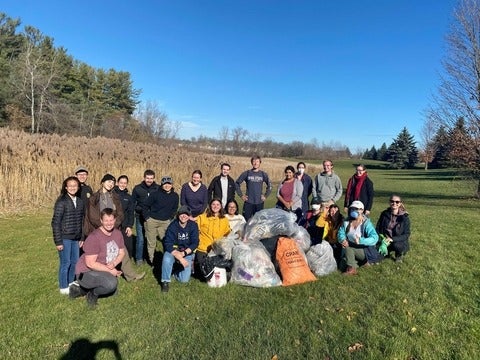
On November 9, 2022, the Waterloo Wetland Lab led a team of volunteers in a wetland cleanup event with the intention of emphasizing the importance of urban wetlands. The wetland, located near Fischer-Hallman Road and Columbia Street in Waterloo is one of WWL member, Claire Schon's, research sites.

Friday, January 12, 2018

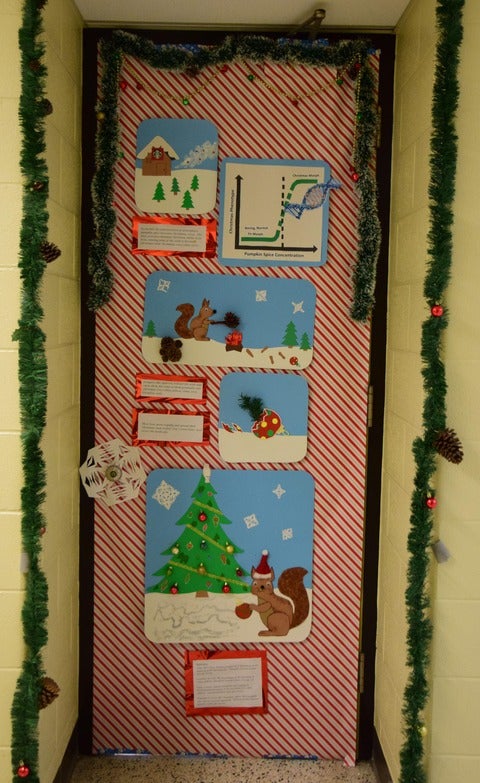
We are the champions!

Rooney Lab defends their title as door decorating champions in 2017 against fierce competition!

This year our design traced the environmental drivers (namely pumpkin spice pollution) leading to the increased expression of the XMAS gene and resulting increase in Christmas Morph relative abundance in the fir tree population.  As you'd expect, there were bottom-up effects on the squirrel population.  Very scientific.

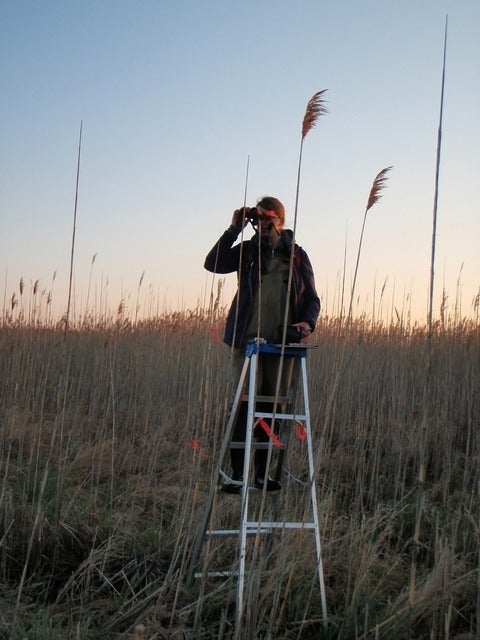
A new paper by Rooney Lab PhD student, Courtney Robichaud, was just published in the Journal for Great Lakes Research!  This article explores some of the more subtle effects of invasion by Phragmites australis on the wetland bird community.  Through a comparison with a study done in 2001/02, her work suggests that a time lag exists between the initial invasion and the realization of some of these effects. You can access it free at this link until July 8th, 2017.    

Abstract: