To effectively design treatment for a virus, scientists must first understand its structure and dynamics at the molecular level. COVID-19, which is caused by the SARS-CoV-2 virus, is no exception, and has been the object of intense study by scientists around the world over the last year.
Aravindhan Ganesan, a pharmacy professor, and Subha Kalyaanamoorthy, a chemistry professor, are two of these scientists. The husband-and-wife team are new to the University of Waterloo, joining just months before COVID-19 sent students and faculty alike to remote learning and working. In a recent publication, they showed how drug design methods can be refined to target the main protease, or Mpro , a part SARS-CoV-2 which contributes to viral replication.
“Despite working from home, we knew we’d be able to conduct research to support the global fight against COVID-19,” says Ganesan. “We identified important physical aspects of the SARS-CoV-2 Mpro structure so that we’d have a better idea of how to design effective drugs to treat the disease.”
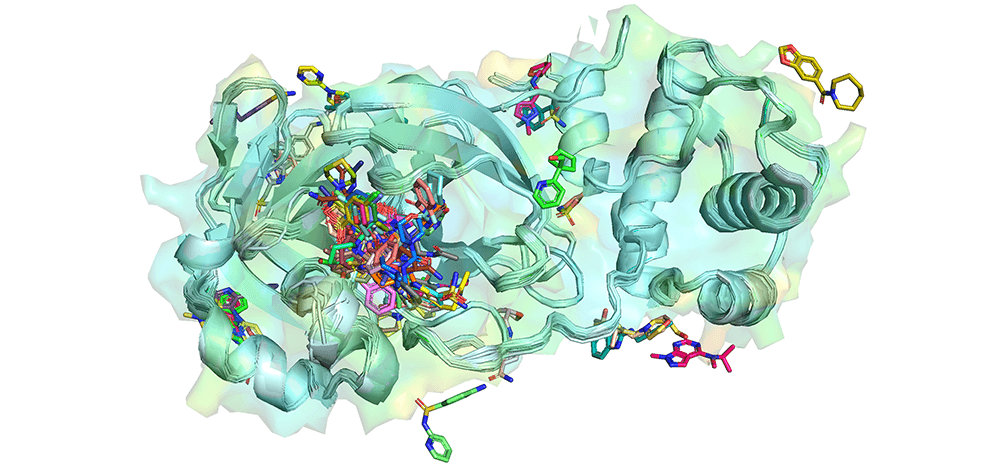
A 3D rendering of several small molecule-bound Mpro structures overlapped over each other.
The study was published in the Nature Scientific Reports journal and the research teams received support from the CFREF-Transformational Quantum Technologies and the Centre for Biotechnology and Bioengineering, out of the University of Waterloo.