

Quantum computation
The TQT team of physicists, computer scientists, engineers, material scientists, and early adopters are exploring the most promising physical systems from which quantum processors will be built. Our team collaborates to build experiments, organize new fault-tolerant architectures, design for ‘extensibility’ and robustness, explore applications, and develop the means to test processors.
Along the way, we are forging new connections across disciplines and industry sectors. The goal? A quantum computer sufficiently complex to serve as a testbed for quantum computation, simulation development, and a means to start a bootstrap process. We expect these efforts will bring us closer to a quantum computer that will power accurate simulations of physical systems.

Quantum communication
The transmission of information using quantum technologies leads to new efficiencies and protocols with no classical counterpart. Here, entanglement is an important resource, from beams to fibres.
The TQT team is creating and controlling quantum entanglement over long distances. Their work connects them with other academic centres and stakeholders. At the same time they are addressing key technical challenges like transduction, and advancing new communication technologies such as quantum repeaters.

Quantum sensing
Quantum states are extraordinarily sensitive to environmental changes. Quantum sensors use this sensitivity to outperform their classical counterparts. We have the opportunity to extend the applications of quantum sensors by integrating entanglement into their operation to increase sensitivities and provide selectivity.
There is a rich opportunity for new sensors where quantum processes lead to improved performance, and even to simpler and less expensive sensors. For example, TQT research teams are targeting quantum sensors that can report on specific parameters such as in vivo glucose in tissue separate from blood; chemically specific low concentration metabolites to enable personalized medicine; interferometers with superior signal-to-noise performance; and miniaturized magnetometers to detect magnetic anomalies for defense applications.

New ideas
Quantum effects can be used to tune the properties of electron transport and surpass the standard quantum limits of measurement and communication. The same effects may also be used to innovate broadly, leading to new directions and technologies in the biological sciences, efficiencies of solar cells, and spintronics, as just a few examples.
We expect there to be many unforeseen systems and applications that may employ quantum phenomena for commercial and/or societal benefit. Through the Quantum Quest Seed Fund and early adopter engagement we aim to catalyze efforts that will unlock these opportunities.
Quantum Innovation Cycle (QuIC)
Delivery of quantum technology requires a new innovation cycle. The quantum innovation cycle leads to improved materials, new devices, and new computers.
TQT Supported Research
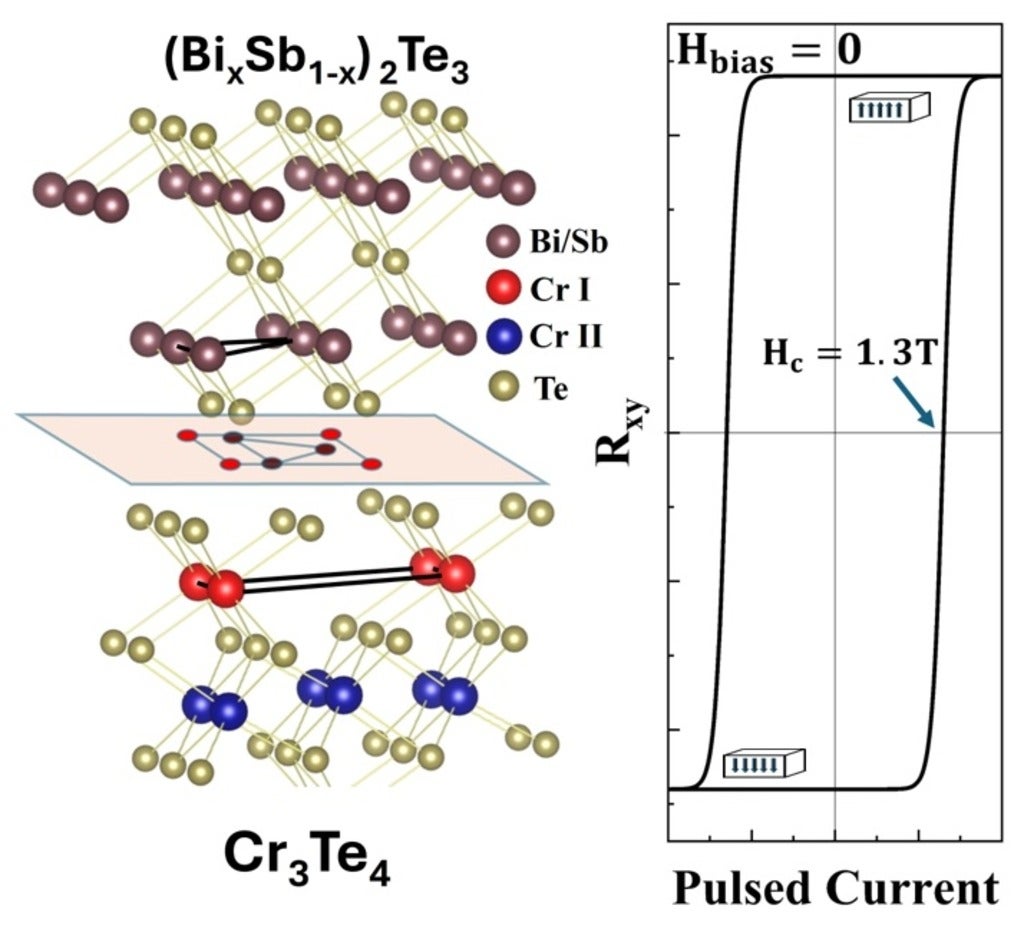
Breaking the electromagnetic boundaries in ferromagnetic materials
Researchers at the University of Waterloo are accelerating towards fully electrical spintronics.
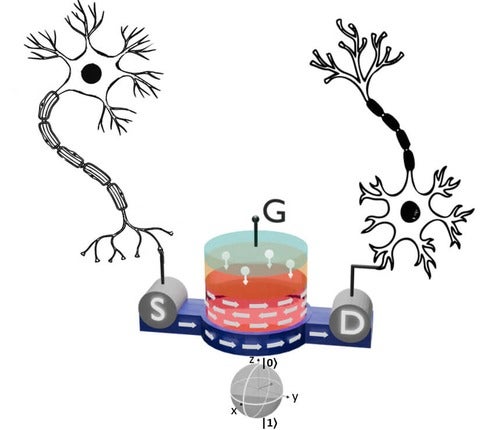
One Step Closer to Smarter Electronic Devices, Using Voltage-Driven Ionic Control
Researchers at the University of Waterloo demonstrate an innovative way to manipulate spin properties.

Battling Quantum Decoherence, One Flat Band At A Time
Researchers establish a novel way to strengthen electron correlations by controlling flat band electronic structures in Transition Metal Dichalcogenide.

Waterloo researchers advance nanoscale imaging capabilities
Dynamic nuclear polarization and nanometer-scale magnetic resonance imaging creates unprecedented opportunities to study biological structures

A brain-inspired iontronic platform that mimics hardware-based artificial intelligence
Researchers supported by Transformative Quantum Technologies (TQT) have demonstrated an iontronic platform that is configurable to mimic neuromorphic functions on a hardware level.
Quantum technologies to address pressing environmental needs
Quantum methods can lead to more efficient and precise solutions to environmental issues over conventional methods, accelerating the path to sustainability. Already, TQT-supported researchers have used quantumbased techniques to address environmental needs such as heavy metal detection, energy-efficient electronics, sustainable computing, and atmospheric monitoring.