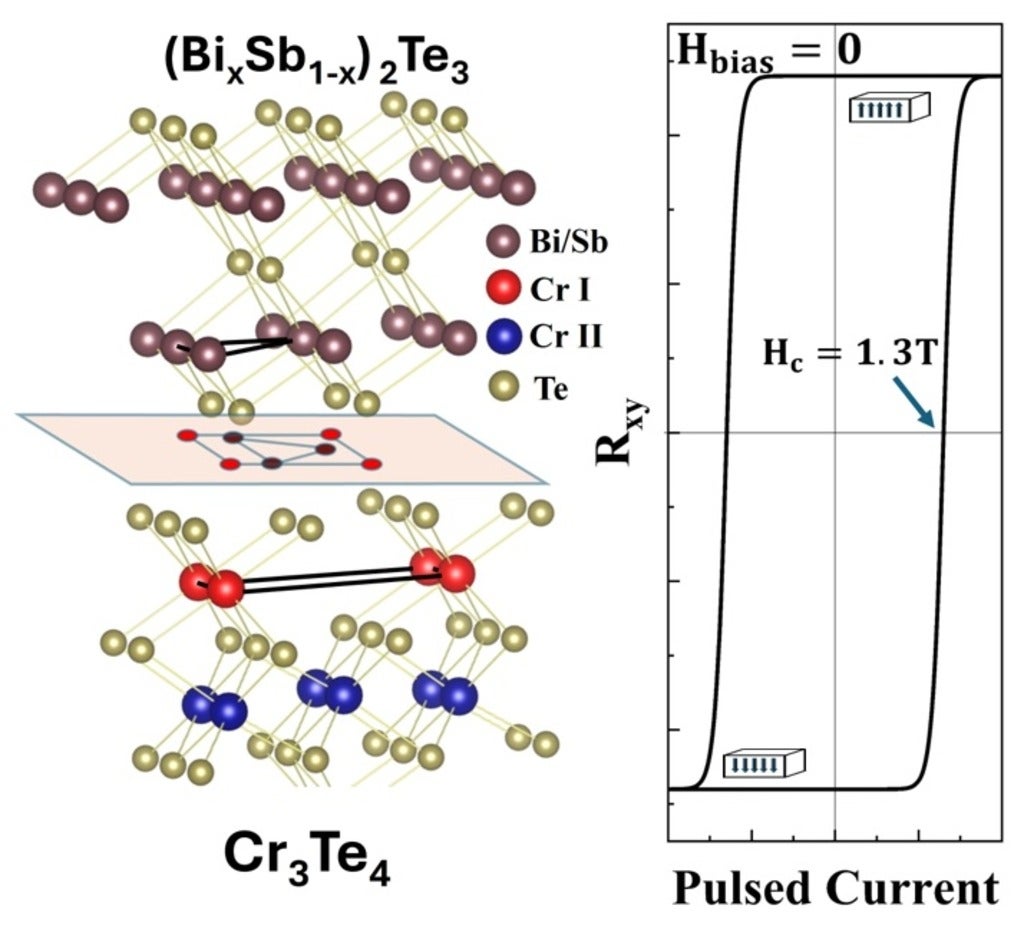
Breaking the electromagnetic boundaries in ferromagnetic materials
Researchers at the University of Waterloo are accelerating towards fully electrical spintronics.
One Step Closer to Smarter Electronic Devices, Using Voltage-Driven Ionic Control
Researchers at the University of Waterloo demonstrate an innovative way to manipulate spin properties.

Battling Quantum Decoherence, One Flat Band At A Time
Researchers establish a novel way to strengthen electron correlations by controlling flat band electronic structures in Transition Metal Dichalcogenide.

Waterloo researchers advance nanoscale imaging capabilities
Dynamic nuclear polarization and nanometer-scale magnetic resonance imaging creates unprecedented opportunities to study biological structures

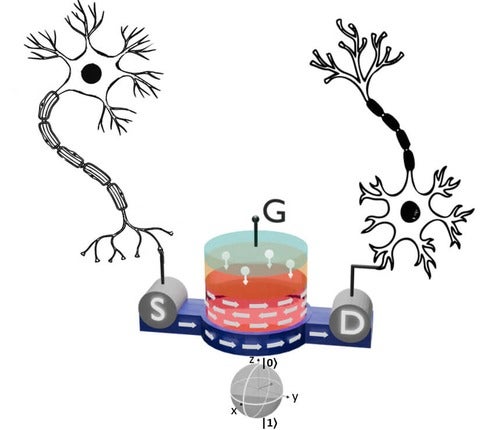
A brain-inspired iontronic platform that mimics hardware-based artificial intelligence
Researchers supported by Transformative Quantum Technologies (TQT) have demonstrated an iontronic platform that is configurable to mimic neuromorphic functions on a hardware level.
Quantum technologies to address pressing environmental needs
Quantum methods can lead to more efficient and precise solutions to environmental issues over conventional methods, accelerating the path to sustainability. Already, TQT-supported researchers have used quantumbased techniques to address environmental needs such as heavy metal detection, energy-efficient electronics, sustainable computing, and atmospheric monitoring.
The promise of two-dimensional electron gases in quantum wells for wide-ranging quantum devices
Two-dimensional electron gases in quantum wells are a powerful resource for several quantum technology applications, including quantum sensing, metrology, and topological quantum computing.

Diverse quantum research aims to improve the accessibility and understanding of complex quantum concepts
The eighth round of the Quantum Quest Seed Fund (QQSF) was targeted at the Faculty of Arts and intended to encourage ideas and uncover opportunities from diverse fields outside of the scope of researchers working day-to-day with quantum devices. This resulted in project awards to Dr. Lai-Tze Fan, a Professor in the Department of Sociology & Legal Studies cross-appointed in the Department of English Language and Literature, and Dr. Igor Grossmann, a Professor in the Psychology Department, who both want to improve the accessibility and understanding of quantum.
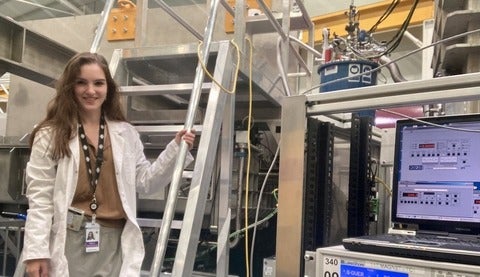
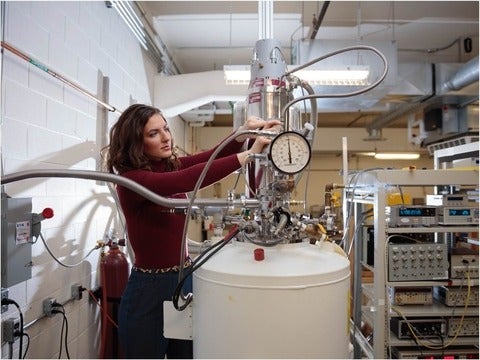
TQT-supported graduate student furthers neutron-based quantum material research with visit to Australia
TQT-supported graduate student furthers neutron-based quantum material research with visit to Australia.
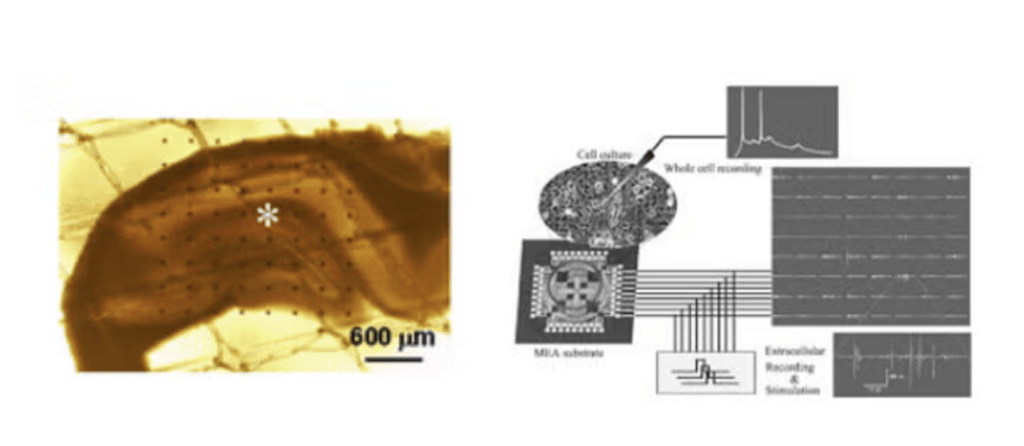
Searching for quantum effects in neuroscience
Professors Michel Gingras and Zoya Leonenko from the Physics & Astronomy Department have recently started a new research effort in Quantum Neuroscience. With their colleagues Professors Michael Beazely (School of Pharmacy) and John Mielke (School of Public Health and Health Systems), they are combining their expertise in physics, biology and neuroscience with the ambitious goal to discover novel quantum effects in neuroscience, an exciting direction within the growing field of quantum biology.
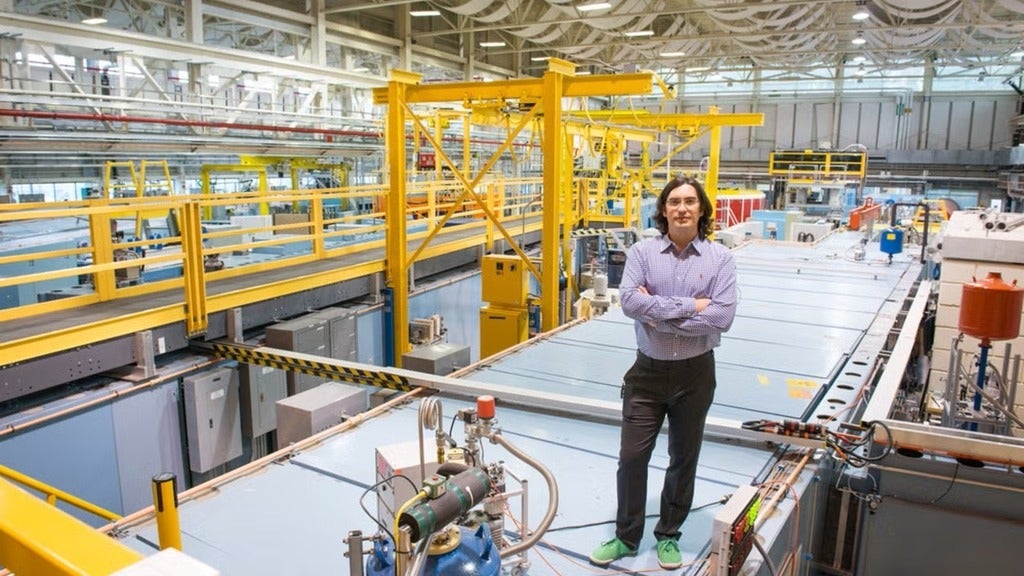
Groundbreaking technique yields important new details on possible ‘fifth force’
Researchers uncovered new information about an important subatomic particle and a long-theorized fifth force of nature.
Simulating Quantum Particles on a Lattice
A team of researchers at the Institute for Quantum Computing (IQC) have developed a new quantum simulator that uses microwave photons in a superconducting cavity to simulate particles on a lattice similar to those found in superconductors or atomic nuclei.
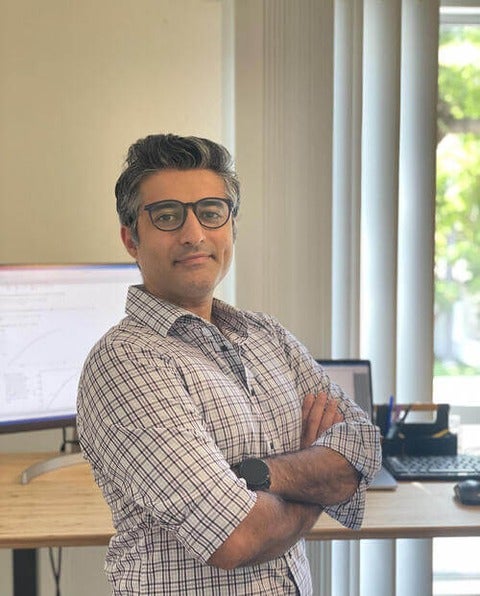
New research opens the book on entangled qubit
Researchers have developed a new way to measure how quantum information behaves in correlated quantum systems that could be useful for understanding and improving quantum devices and quantum error correction codes.

Waterloo researchers study coronavirus structure to help design drugs for current and future pandemics
Aravindhan Ganesan, a pharmacy professor, and Subha Kalyaanamoorthy, a chemistry professor, are two of these scientists. The husband-and-wife team are new to the University of Waterloo, joining just months before COVID-19 sent students and faculty alike to remote learning and working. In a recent publication, they showed how drug design methods can be refined to target the main protease, or Mpro , a part SARS-CoV-2 which contributes to viral replication.
Seed fund continues to support new diverse quantum projects
Two projects most recently supported by the Quantum Quest Seed Fund (QQSF) aim to make quantum concepts more easily understood. The goal of one project is to explain how differences in cultural background influence perception and acceptance to the basic principles of quantum physics, while the other aims to use interactive digital storytelling to advance quantum literacy.
Probing the power of lithium-ion batteries
Researchers at the Institute for Quantum Computing (IQC), the Massachusetts Institute of Technology and the University of Texas at Austin, as well as Qingdao University and Shandong University in China, harnessed a technique normally used in physics to investigate batteries and discover their inner workings.

Quantum future: Recovery will depend on keeping information secure
Waterloo quantum startup is working to secure information in a post-pandemic future with businesses increasingly dependent on the internet.