Quantum neuromorphic computing (QNC) is a novel method that combines quantum computing with brain-inspired neuromorphic computing. Neuromorphic computing performs computations using a complex ensemble of artificial neurons and synapses (i.e., electrical circuits) to emulate the human brain. QNC may lead to a quantum advantage by realizing these components with quantum memory elements, or memelements, which can store and process quantum information within the same device. This research aims to achieve experimental realization of superconducting quantum memelements, which has never been done before. A quantum memcapacitor will be fabricated by depositing and patterning thin aluminum films, and then cooling to cryogenic temperatures to unveil quantum-mechanical properties in highly nonlinear regimes. The success of the device will be demonstrated by measuring a characteristic Lissajous curve with a pinched hysteresis, which is a hallmark of a memelement. A variety of memcapacitor regimes will then be investigated, including two-photon memcapacitive processes, loss and temperature effects. Finally, entanglement between two quantum memcapacitors will be shown theoretically and experimentally, paving the way toward an actual QNC. QNC will lead to new knowledge on quantum technologies by helping develop improved fabrication and quantum machine learning techniques inspired by the brain. Further, investigating the quantum mechanical properties of quantum memelements acting as artificial neurons in dissipative environments may provide further insight into the working principles of the human brain.
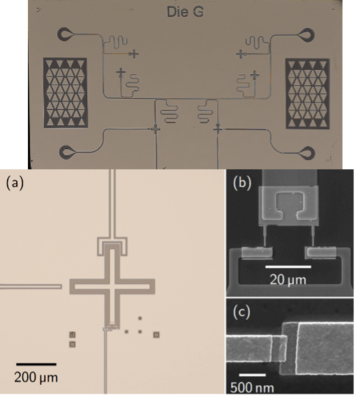
Figure 1. Optical images of a typical superconducting quantum device similar to the one investigated in this project.