
Dr. Talena Atfield, University of Waterloo: Canada Research Chair in Tentewatenikonhra’khánion, which translates to “We Will Put Our Minds Together.”
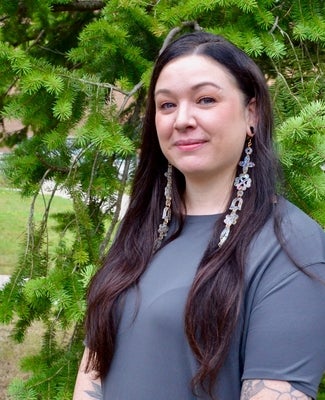
Dr. Talena Atfield is an Assistant Professor of History at the University of Waterloo. She is a citizen of Kanien'kehá:ka (Mohawk) Nation of the Grand River on her father’s side and grew up urban. She is also an associate professor (Yehyatonhserayente:ri) with Six Nations Polytechnic.
Dr. Atfield was awarded the Canada Research Chair in 2024 at the same time as Dr. Lianne C. Leddy of Wilfrid Laurier University. An update on her work from the University of Waterloo in January 2025 explains that the project is based in Ohswé:ken (Six Nations of the Grand River). It works to Indigenize research methodologies through community inclusion, focusing on the strengths of each participant and how they work together.
Dr. Atfield works with tangible and intangible Indigenous knowledges held in museums, galleries, archives, and community centers, with a special focus on Hodinohso:ni material culture. Employing Coming Faces teachings to the study of Indigenous cultures held in collections, she critically examines the information shared with past researchers and works with community members, scholars, and knowledge keepers to find ways to reintegrate and reinvigorate this information into community practice.
“My work acknowledges that there are no ‘experts,’ rather we all have knowledge we can share, and in this way, we are de-centring colonial interpretation,” said Atfield in the update.
Atfield seeks to decolonize authoritative narratives of 20th century anthropologists. “My goal isn’t to interpret. My goal is to look together as a community at the way that we did and do things in Hodinohso:ni communities. It’s very much a group discussion about how our history interacts with the present, and how we might take it into the future. A lot of different and surprising perspectives emerge that you wouldn't get using colonial expert-based approaches.”
Engaging with Coming Faces through the past with Dr. Talena Atfield
Video courtesy of Faculty of Medicine, UBC Learning Circle, Centre for Excellence in Indigenous Health, December 12, 2024. Dr. Talena Atfield discusses her CRC project.
Dr. Lianne C. Leddy, Wilfrid Laurier University: Canada Research Chair in Indigenous Histories and Historical Practice in Canada
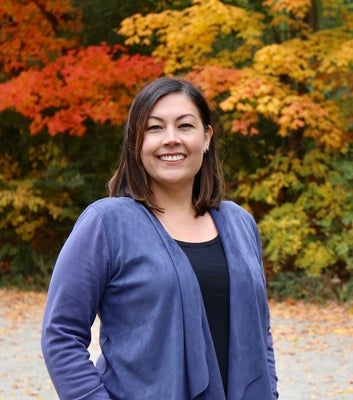
Dr. Lianne C. Leddy is an associate professor of History at Wilfrid Laurier University. She is an Anishinaabekwe and member of Serpent River First Nation. Her Canada Research Chair (CRC) was announced in 2024 at the same time as Dr. Talena Atfield at the University of Waterloo.
“My research uses an Indigenous feminist lens to bridge Indigenous histories and methodologies with traditional western historical approaches,” says Leddy, in an article published by Wilfrid Laurier announcing the award.
One of her research priorities as CRC is to use innovative digital historical methods to re-examine the experiences of Indigenous women and their relationships to settler forces in the Great Lakes watershed during the late 18th and early 19th centuries. Leddy will focus on the later fur trade period, when Indigenous peoples still held the balance of power and colonial relationships were taking shape, a topic explored by settler historians but few Indigenous scholars.
In 2023, Dr. Leddy was honoured with the 2023 Governor General’s History Award for Scholarly Research for her research in Serpent River Resurgence: Confronting Uranium Mining at Elliot Lake.
Leddy cultivates a specialized research environment dedicated to ethical, community-responsive historical practice. Through the training of graduate students, Leddy’s team strengthens the capacity for historical research grounded in Indigenous perspectives on the past.
Cold War Colonialism with Lianne Leddy
Webinar video courtesy of Laurier Centre for the Study of Canada, May 14, 2022. In it, Dr. Leddy discusses Serpent River First Nation’s resilience in confronting colonial extractive practices during the Cold War period from her award-winning research.