Canada Research Chairs
Research into Indigenous History is well-funded across the Tri-U. We are enriched by the projects of two scholars who are Canada Research Chairs.
Based in Ohswé:ken (Six Nations of the Grand River,) Dr. Talena Atfield’s project works to indigenize research methodologies through community inclusion, focusing on the strengths of each participant and how they work together. “My work acknowledges that there are no ‘experts,’ rather we all have knowledge we can share, and in this way, we are decentring colonial interpretation,” she says.
Dr. Lianne C. Leddy's research uses an Indigenous feminist lens to bridge Indigenous histories and methodologies with traditional western historical approaches. “I am prioritizing Indigenous voices and stories,” she says.
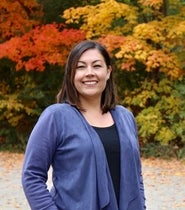
Dr. Talena Atfield

Dr. Lianne Leddy
Learn more about Indigenous Histories and Historical Practice in Canada
Research centres
Long-standing research centres, an institute, and a lab provide research space for students and faculty, public lectures, and other resources for scholarship.
- Centre for Scottish Studies, University of Guelph
- Institute of Anabaptist and Mennonite Studies, Conrad Grebel University College, University of Waterloo
- Laurier Centre for the Study of Canada, Wilfrid Laurier University
- Medieval Digital Research in Arts and Graphical Environmental Networks Laboratory (DRAGEN Lab), St. Jerome's University, University of Waterloo
- Rural History, University of Guelph
Research funding
Each year, many students and faculty receive Social Sciences and Humanities Research Council (SSHRC) funding and students are awarded Ontario Graduate Scholarships (OGS), among other awards. While incomplete, we keep a list of recent recipients and their project titles to acknowledge this success and to remind us of the diversity of research topics engaged with in the community.
Faculty publications
The Tri-U program has a productive faculty. Learn more about some of their recent publications.