


The Tri-University Graduate Program in History combines the faculty and resources of three of Canada’s premier universities, University of Guelph, University of Waterloo, and Wilfrid Laurier University. With over seventy graduate faculty in the program, we are one of the largest History graduate programs in the country and able to provide courses and supervise research across the widest possible range of areas. At the same time, through small seminars, close student-professor relationships, and teaching assistantships and scholarships held at one of our three participating campuses, we provide the atmosphere and collegiality of a smaller, more intimate program.
News

Lydia Kinasewich pursues food history MA at Guelph
University of Northern British Columbia graduate, Lydia Kinasewich, came to the University of Guelph in 2024 to pursue an MA in food history focusing on dairy policy in B. C. Her final project looked into "the history of milk pasteurization policies in British Columbia and consumer resistance to milk pasteurization during the second half of the twentieth century."

Dr. Schreiber explores charity and relief in 16th Century England and Scotland
Grant Schreiber successfully defended his thesis entitled, “‘For ye haue the poore alwaies with you’: Experiments in Charity in post-Reformation Oxford and Aberdeen, 1560-1640,” on Monday, January 5, 2026 at the University of Guelph.
Congratulations, Dr. Schreiber!
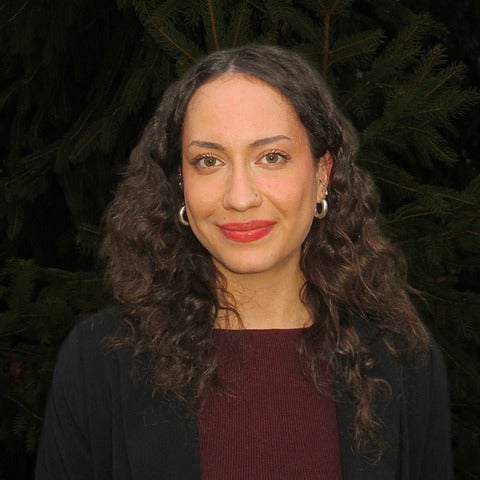
Award-winning MA student from Laurier studied northern Canada realities
Elizabeth Spence graduated in September 2025 with an MA in History from Wilfrid Laurier University. She received a gold medal for academic excellence as one of the top Master's students in a research-intensive or professional master's program. To meet the reward requirements, Elizabeth surpassed the minimum GPA with an 11.75 (A+), a minimum of A- in any course, and her examination committee commended her research paper as outstanding.
Elizabeth's Major Research Paper examined the development of the Pine Point lead-zinc mine in the Northwest Territories as a case study in postwar northern expansion, infrastructure development, and Cold War–era Canadian nationalism.
Learn more about her research and her experience in the Tri-U History program.
Events

C.A.M.E.L.O.T: Conference
The DRAGEN Lab is proud to announce that the C.A.M.E.L.O.T. (Conference on Archaeology, The Medieval, and Experiential Learning of Tomorrow) Conference will be held at St. Jeromes University in Waterloo, Ontario on September 26, 2026. Keep checking for more details.
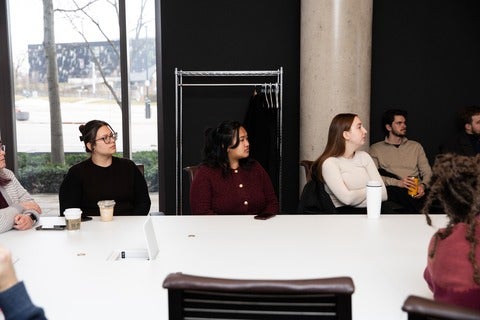
Tri-University Graduate History Conference 2027
Save the date for the 2027 Tri-U Graduate Conference in History: March 13, 2027.
The conference will be held at the University of Guelph and organized by Guelph faculty and students.