Image credit: Nurses' residence, Peers, Alberta [ca. 1928], by unknown (CU1105567). Courtesy of Glenbow Library and Archives Collection, Libraries and Cultural Resources Digital Collections, University of Calgary
Emily Kaliel's presentation explores which rural populations the Alberta government considered to be a "public" worthy of interwar public health programs.
During the interwar period, the Alberta government established several public health programs to support its growing rural population. This presentation explores which populations the provincial government considered as the public worthy of receiving such care, and to which areas of the province the government extended said services. In doing so, it demonstrates how the provincial government prioritized settler communities, particularly the infants and children of settler communities, in strategic locations.
Building on the work of Patrick Wolfe, the presentation shows how two rural public health programs in particular – the District Nursing Program and Full-Time Health Units – operated as part of the structure of settler colonialism, whereby these programs contributed to a system that supported the establishment and naturalization of settler presence on prairie land.
Day/Time: Thursday, February 12, 3:30–5:30 pm EST.
Online: Register to attend remotely
Questions: contact Dr. Rebecca Beausaert or Dr. Ben Bradley.

Emily Kaliel, PhD cand., University of Guelph
Rural History Roundtable
Additional events
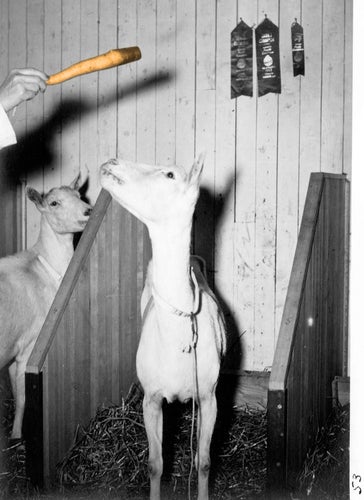
Photo: Pacific National Exhibition, Prize-winning goat in stall with carrot held over its head, AM281-S8-: CVA 180-0830, City of Vancouver Archives, accessed January 6, 2026.
Thursday, March 12, 3:30 - 5:00 pm
Tami Parr, Author and Historian
Goats in America: From Poor Man's Cow to Urban Icon
Virtual presentation
For details and updates, keep checking the Rural History Roundtable page.
Rural History Roundtable events are sponsored by the Francis and Ruth Redelmeier Professorship in Rural History.