John Parish Memorial Scholarship awarded to PhD student studying urban river erosion

Waterloo graduate student Thiruni Thirimanne a PhD candidate in the Department of Civil and Environmental Engineering, has been awarded the Water Institute’s 2026 John Parish Memorial Graduate Scholarship, recognizing excellence in research on river systems and fluvial geomorphology.
Established in 2022 by friends and family in John Parish’s memory, the scholarship honours one of the pioneers of fluvial geomorphology. Parish (BES ’85) was internationally respected for advancing the study of river processes and how they shape surrounding landscapes. His work helped inform watershed management policies and implementation guidelines across Southern Ontario and he was a strong advocate for natural river restoration throughout Canada.
Thiruni’s path to river science began during her undergraduate studies in Civil Engineering at the University of Waterloo, where she specialized in Water Resources. Initially drawn to Waterloo for its strong reputation in engineering and research, she soon discovered a deeper interest in understanding how water systems function.
“From my first co-op experience, I realized I was particularly interested in addressing water-related challenges and understanding how water systems function, whether in urban infrastructure or in rivers and watersheds,” said Thiruni. “That experience motivated me to shape my coursework toward hydrology and river processes.”
Courses in fluvial geomorphology and physical hydrogeology further strengthened her interest in how rivers transport sediment, how water moves through landscapes and how these systems evolve over time. Building on this foundation, she continued at Waterloo to pursue graduate research focused on river systems and watershed processes.
“John Parish played an important role in advancing the study of river systems and fluvial geomorphology, so it is a tremendous honour to receive a scholarship in his name and contribute to research in this field,” said Thiruni.
Thiruni’s research focuses on improving predictions of erosion risk and channel response in urban waterways, an issue facing many rapidly developing watersheds. During her master’s research, Thiruni developed SPINpy 2, a watershed-scale erosion risk assessment tool that helps quantify how urbanization influences sediment transport, channel stability and river morphology.
In her doctoral research, she is expanding and validating the model using field observations and erosion-damage classification to better connect observed river conditions with predictive results. This approach builds on John Parish’s Rapid Geomorphic Assessment framework, incorporating modern geospatial data and quantitative validation.
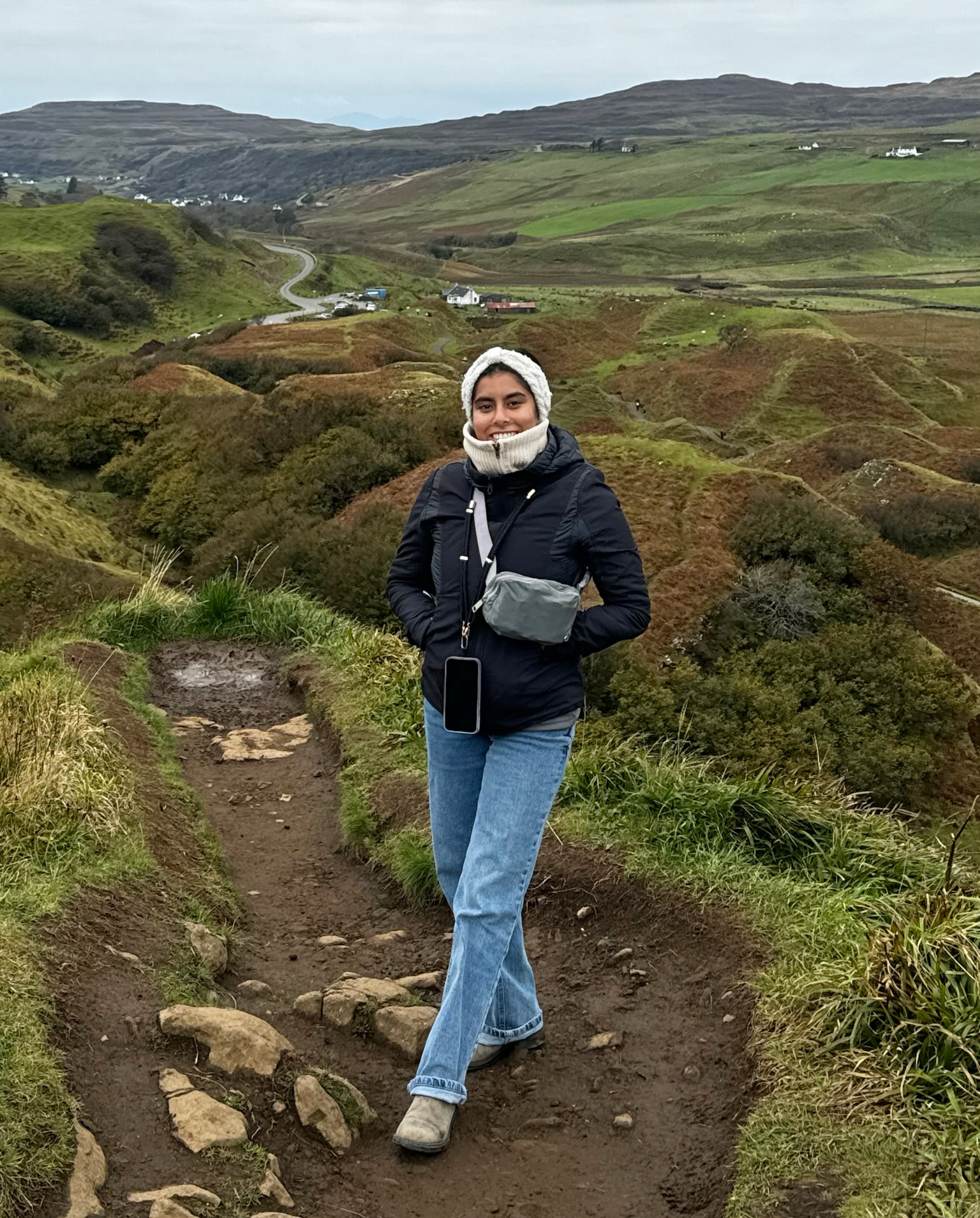
Photo: Thiruni Thirimanne winner of the 2026 John Parish Memorial Scholarship.
Many researchers have studied urban river systems and erosion risk, but Thiruni’s work uniquely combines these methods into a single framework to develop a methodology that is both scientifically rigorous and practical for managing urban waterways.
By linking field observations with watershed-scale modelling, Thiruni aims to better understand how urbanization affects river channel stability and to identify thresholds where management interventions may be needed to prevent erosion and support resilient waterways.
“I hope my research can support more informed and practical river management strategies that help communities maintain stable, resilient waterways while balancing ecological and social needs,” she said.
A key goal of her work is to ensure SPINpy 2 remains a robust, reliable and accessible open-source tool with minimal data requirements, providing researchers, practitioners and decision-makers with insights to better understand and manage erosion risks in urban rivers.
Thiruni credits much of her academic development to the guidance of her supervisor, Professor Bruce MacVicar, professor in the Department of Civil and Environmental Engineering.
“I would like to sincerely thank my supervisor, Bruce MacVicar, for his guidance and support throughout both my Master and PhD studies,” she said. “His mentorship and insights have been invaluable in shaping my research and professional growth.”
Beyond her doctoral research, Thiruni is also collaborating with MacVicar on a Living Lab initiative on the University of Waterloo campus. The outdoor, data-rich environment will be designed to support applied engineering education and sustainability research by allowing students to observe and measure real-world hydrologic and environmental processes. Equipped with Bluetooth-enabled instrumentation connected to a data webpage, the site will provide real-time environmental data for students, researchers and the broader community, supporting interdisciplinary learning and hands-on research opportunities.
After completing her degree, Thiruni hopes to remain in academia, pursuing both teaching and research. She would like to continue exploring water systems, while training and mentoring the next generation of researchers and practitioners in river science and management.
The Water Institute congratulates Thiruni on receiving the John Parish Memorial Graduate Scholarship and looks forward to the impact of her research on better understanding and managing urban river systems.

Photo: Thiruni Thirimanne winner of the 2026 John Parish Memorial Scholarship.