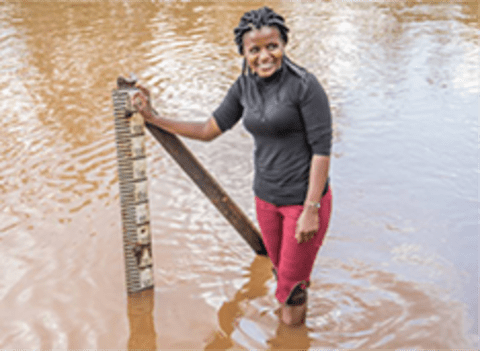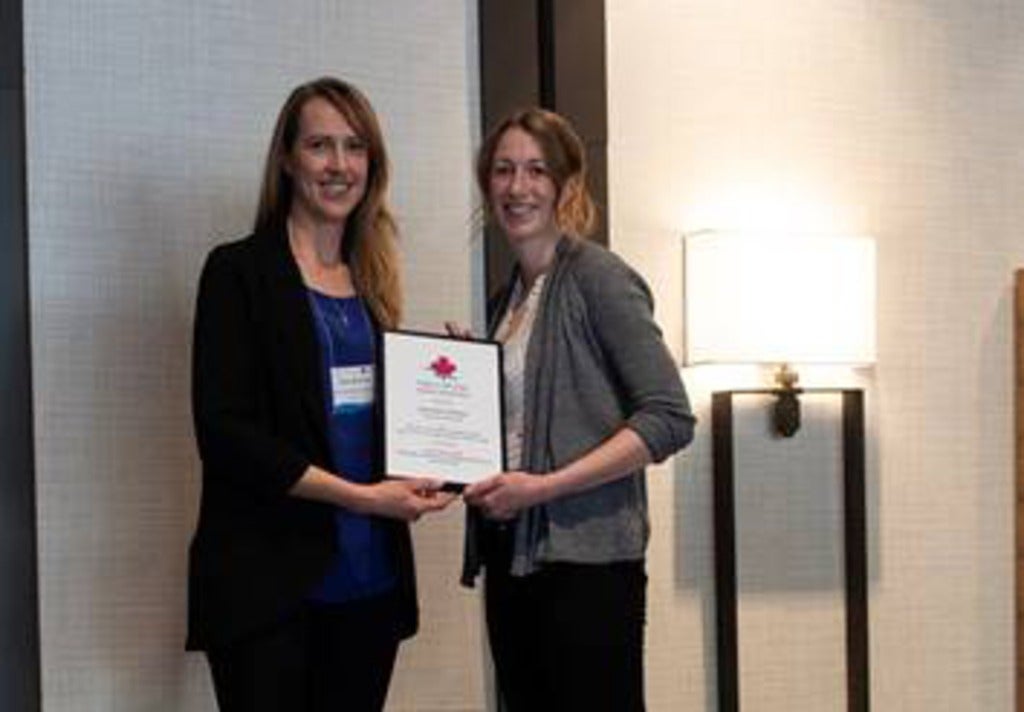
Master of Applied Science (MASc) and Collaborative Water Program student receives Canadian Water Resources Association award
For resource managers charged with maintaining important assets like croplands or fisheries, quantitative modelling is a critical tool. But these sophisticated decision-support models often overlook an essential element of resource management: governance.
In a new study, an interdisciplinary team of scientists, experts and stakeholders, shows that discounting factors of governance could fundamentally compromise the models officials rely on to inform sound resource management strategies.

Despite Sub-Saharan Africa facing protracted water problems, only one per cent of universities in the sub-region offer water education programs, a study has found.
According to the study, higher education related to water is key to building capacity to achieve the Sustainable Development Goal that focuses on water and sanitation for all by 2030. Thus, the study assessed 28,077 institutions of higher education for water-related programs.
Water Institute member Fereidoun Rezanezhad, Assistant Professor in Waterloo’s Department of Earth and Environmental Sciences, led a series of workshops and meetings to further collaboration between the China Research Academy of Environmental Sciences (CRAES) and Water Institute members with a specific focus on soil-wa
Imagine a flood without sandbags, berms, pumps or panic — one that did little or no damage to waterfront homes.
That’s the vision of Water Institute member and University of Waterloo professor Elizabeth English, an architect who has pioneered research into the use of buoyant foundations and floating homes.
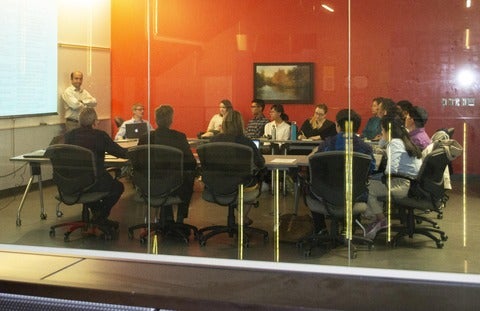
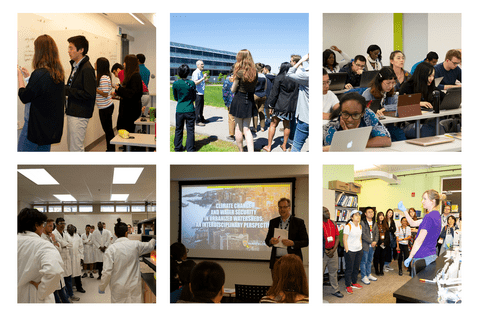
The Water Institute wrapped up a successful “Climate Change and Water Security in Urbanized Watersheds” PhD Summer School which ran from June 3 to 12 at St. Jerome’s University's campus.
Participants included more than 30 students originating from five continents and 15 countries with backgrounds ranging from physical sciences, biologic sciences, computer sciences, social sciences, engineering and public health.
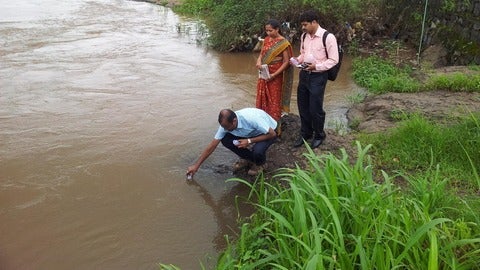
Sushanta Mitra was doing field trials in remote areas of India when he was struck by how many people with no reliable access to clean water were connected to the internet via smartphones.
The contrast amazed him. It also gave him a good idea.