As the floods come, who should pay the price for preparation?

Retrofitting homes is one solution, with sustainability pilot projects already taking place in municipalities like Durham Region and Burlington in the GTA.

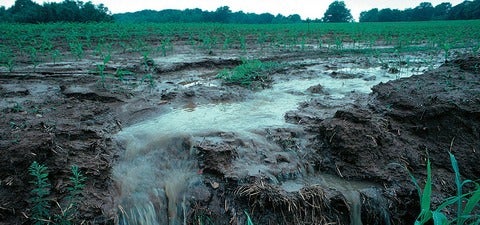
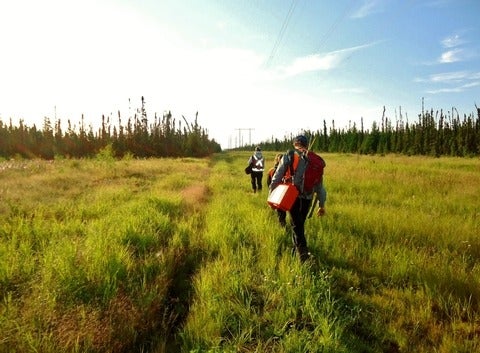
Climate change is significantly impacting Canada’s water resources. From melting permafrost, to more pervasive algal blooms, to increased flooding, these impacts are only expected to increase in the future. Three professors from the University of Waterloo’s Water Institute have been awarded significant grants to develop new, innovative technologies and to deliver new management approaches to enhance the resilience and adaptive capacity of Canada’s water resources in the face of climate change.
AquaHacking 2017 has officially kicked off at the University of Waterloo. Bringing together water experts, engineers, digital designers and entrepreneurs, this multi-stage hackathon encourages creative minds to work together to develop technology that will positively impact Lake Erie.

Water Institute member Laura Hug, is an assistant professor in the Department of Biology and leads the Hug Research group as they explore the microbial diversity that exists in contaminated environments – specifically landfills.
Today, University of Waterloo Earth scientists received a $1.9M grant from Agriculture and Agri-Food Canada to examine greenhouse gas emissions from agricultural systems, and the impacts of alternative land-use practices and beneficial management practices (BMPs) on greenhouse gases.

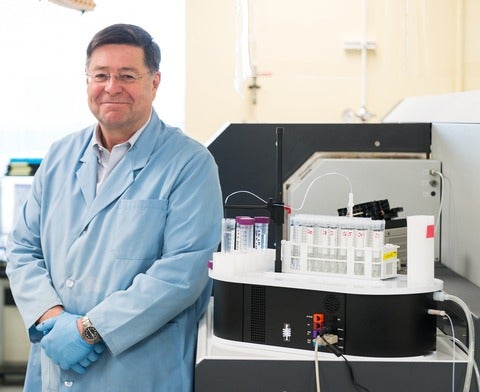
Congratulations to Water Institute members Laura Hug and Janusz Pawliszyn, who will receive a combined total of $2M through the Canada Research Chairs (CRC) and Canada Foundation for Innovation’s John R. Evans Leaders Fund (JELF).

Water reservoirs created by damming rivers could have significant impacts on the world’s carbon cycle and climate system that aren’t being accounted for, a new study concludes.

Researchers at the Interdisciplinary Centre on Climate Change and the Partners for Action research network at the University of Waterloo surveyed 2,300 homeowners who live in communities that the Government of Canada’s Flood Damage Reduction Program designated as flood-risk areas.
The study found that 94 percent of respondents are unaware of their risk and don’t know that recent government policy changes puts the onus on homeowners to insure their homes.
The story includes comments by Water Institute member Blair Feltmate, of the School of Environment, Enterprise and Development.

A team of researchers has discovered that many Canadian lakes can provide new insights into ancient oceans, and their findings could advance research about greenhouse gas emissions, harmful algal blooms, and early life forms.