
Global Water Futures (GWF) is a seven-year research initiative that will position Canada as a global leader in water science for cold regions. The project will provide governments, businesses and communities with the risk management tools they need to tackle threats to Canada’s water supply and quality.
Program Highlights:
-
Funded in part by a $77.8-million grant from the Canada First Research Excellence Fund, GWF is Canada’s largest water research project.
-
The program is supported by a unique partnership between universities across Canada with core support for the research being supported by the University of Waterloo, University of Saskatchewan, Wilfrid Laurier University, and McMaster University.
-
The University of Waterloo is leading nine projects and are involved in eight additional projects.
-
Over 90 University of Waterloo researchers and graduate students are involved.


News

Ontario viticulture must plan for the changing climate
Canadian wine is a $11 billion industry and has experienced substantial growth over the past decade. In the past, its success has hinged on grape growers and winemakers having a thorough understanding of the region’s climate, soil, and terrain because even small deviations can have detrimental impact on yield and quality. Now they must also consider climate change and its impact on vineyards.
Jessica Williamson, a doctoral student in the Department of Geography and Environmental Management, is researching the hydrological processes that affect grapevine development and success.

Jimmy Lin named a 2022 ACM Fellow
A message from the Cheriton School of Computer Science.
GWF core team member and faculty leadProfessor Jimmy Lin has been named a 2022 ACM Fellow for his contributions to question answering, information retrieval, and natural language processing.
The Association for Computing Machinery is the world’s largest educational and scientific computing society, uniting computing educators, researchers and professionals to inspire dialogue, share resources and address the field’s challenges. ACM fellowships are conferred to the top 1 percent of the association’s members, and the prestigious recognition indicates outstanding accomplishments in computing and information technology and outstanding service to ACM and the larger computing community.
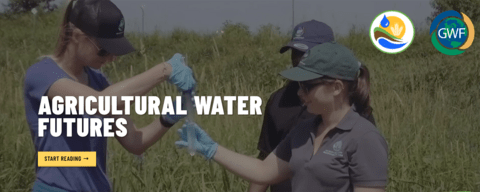
Enabling adaptation in Canada’s agricultural sector – research progress
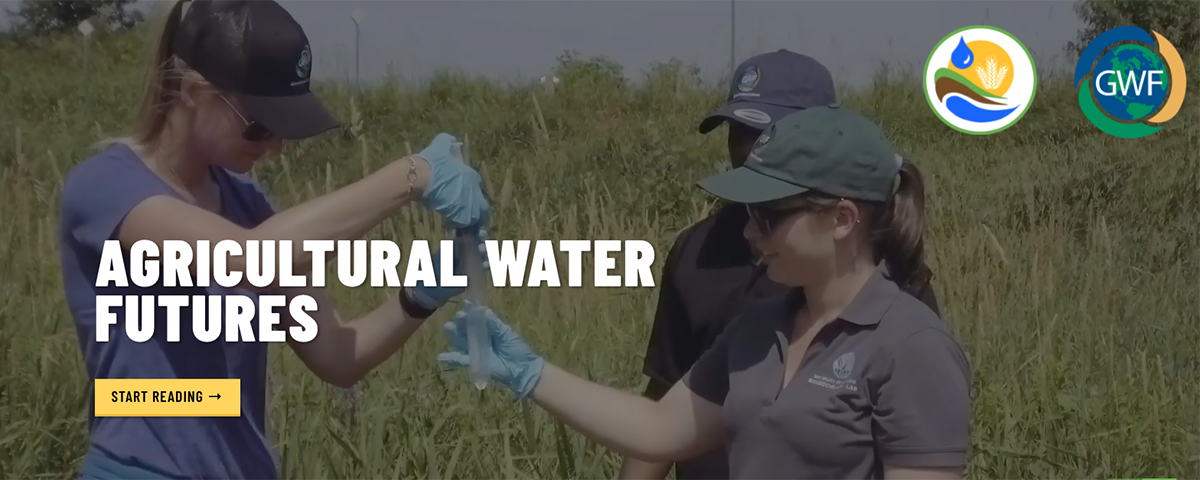
Agricultural Water Futures has just released a new public-friendly report that provides a glimpse into the progress the project has made during the first phase of study (2017-2020).