News

Filter by:

Limit to news where the title matches:
Limit to items where the date of the news item:
Date range
Limit to news items tagged with one or more of:
Limit to news items where the audience is one or more of:
Limit to news items where the faculty or school is one or more of:

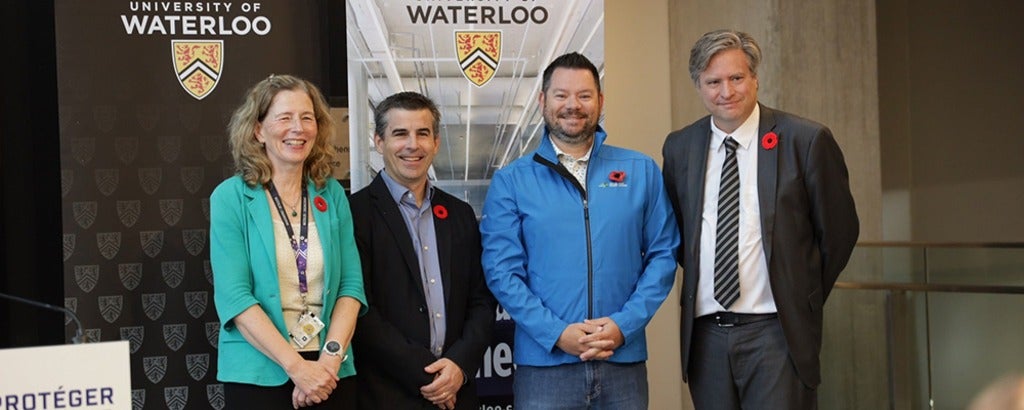
The Province of Ontario is investing $540,000 over three years in a new collaborative research agreement with the University of Waterloo to advance hydrologic modelling, flood forecasting and water management tools that help communities across the province prepare for and respond to flooding.
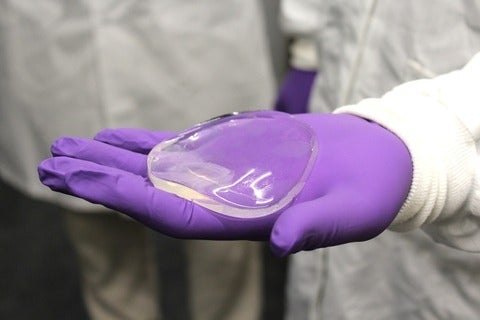
Taking inspiration from nature, Water Institute researcher Yimin Wu, Professor and Tang Family Chair in New Energy Materials and Sustainability, and his research team have developed a hydrogel that mimics sea cucumbers’ ability to change stiffness to help repair damaged tendons and other soft tissues. The material provides temporary support for new tissue growth, then gradually breaks down and is absorbed by the body.

More than 120 members of the global water community came together on October 1 for an international webinar exploring how organizations can make hydrological data easier to discover, access, share and reuse across different systems and jurisdictions.

The webinar, “Unlocking the Power of Hydrological Data: Empowering People, Enabling Applications, Informing Policy, and Protecting the Environment,” was organized by the World Meteorological Organization (WMO) in collaboration with the University of Waterloo’s Water Institute, Global Water Futures Observatory, DataStream, the Consortium of Universities for the Advancement of Hydrologic Science (CUAHSI) and government partners.

Professor Monica Emelko, a member of The Water Institute’s Board of Directors, has been recognized with the prestigious Norman J. Howard Award from the Ontario Water Works Association (OWWA) for her outstanding contributions to municipal water supply, research, and the advancement of the water profession.

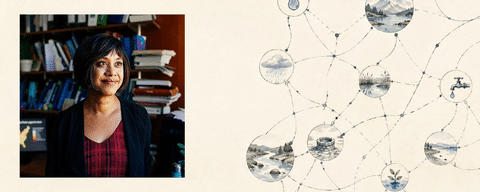
Dr. Nandita Basu delivered a distinguished public lecture at the University of Victoria, highlighting integrated pathways to water, food, and energy sustainability through the SOLUTIONSCAPES framework. Her talk emphasized that while many effective environmental solutions already exist, their impact depends on coordinated, landscape-scale implementation that accounts for real-world complexity. The lecture also marked her recognition with the Distinguished Women Scholars Award.