About the Talk
Generative AI poses a challenge to anthropological understanding of human language. While AI outputs mimic human linguistic forms, AI's expressive capacity does not fully operate like that of humans. Human languages are rooted in embodied and embedded histories, whereas LLMs inherit those histories as decontextualized data rather than as conditions for new enunciations.
Drawing on my collaboration with computational designers and researchers, Yunus D. Telliel proposes adapting insights from expressive range analysis (a computational method for characterizing and visualizing a generator's capabilities in a low-dimensional space). Focusing on the category of expressiveness across human and machine languages, he proposes a framework that shifts the comparative basis from what a language produces (the actual) to the boundaries of the sayable (the potential).
This framework offers anthropologists a third way of studying AI, one that requires neither anthropomorphizing it nor reducing its expressive power to mere statistics.
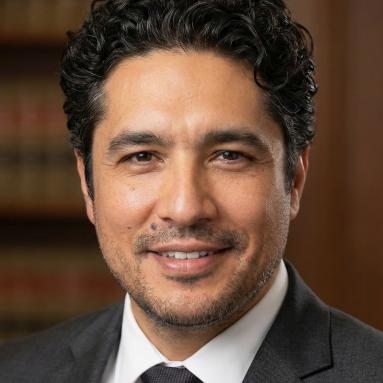
Yunus Doğan Telliel is an assistant professor of anthropology and rhetoric and the director of the Great Problems Seminars program (an interdisciplinary STEM initiative for first-year students) at Worcester Polytechnic Institute. His new book, Languages of the Qur'an: Translation, Science, and Religion in Turkey (Indiana University Press, November 2026), explores how Muslims navigate the Qur’an and its translations in relation to secularism and science. His current project, Computing the Human in the Age of Generative AI, asks why the pursuit of machine intelligence has given birth to a new (technological) anthropology that defends ’the human’ while erasing differences among humans. He and Ashley Lebner co-edited a volume, Science, Religion, and Secularity: The View from Relations, published by Bloomsbury in August 2026.