Seminar

Wednesday, November 8, 2023 11:30 am - 12:30 pm EST (GMT -05:00)

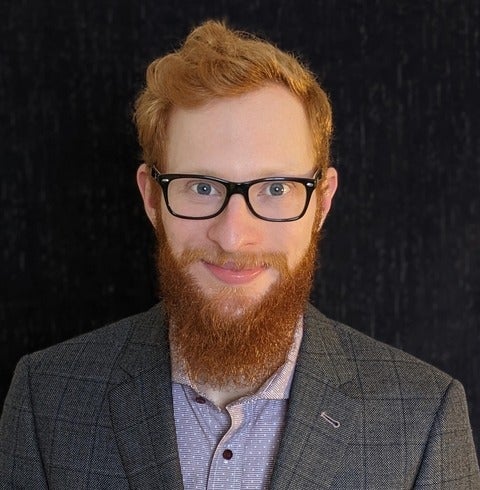
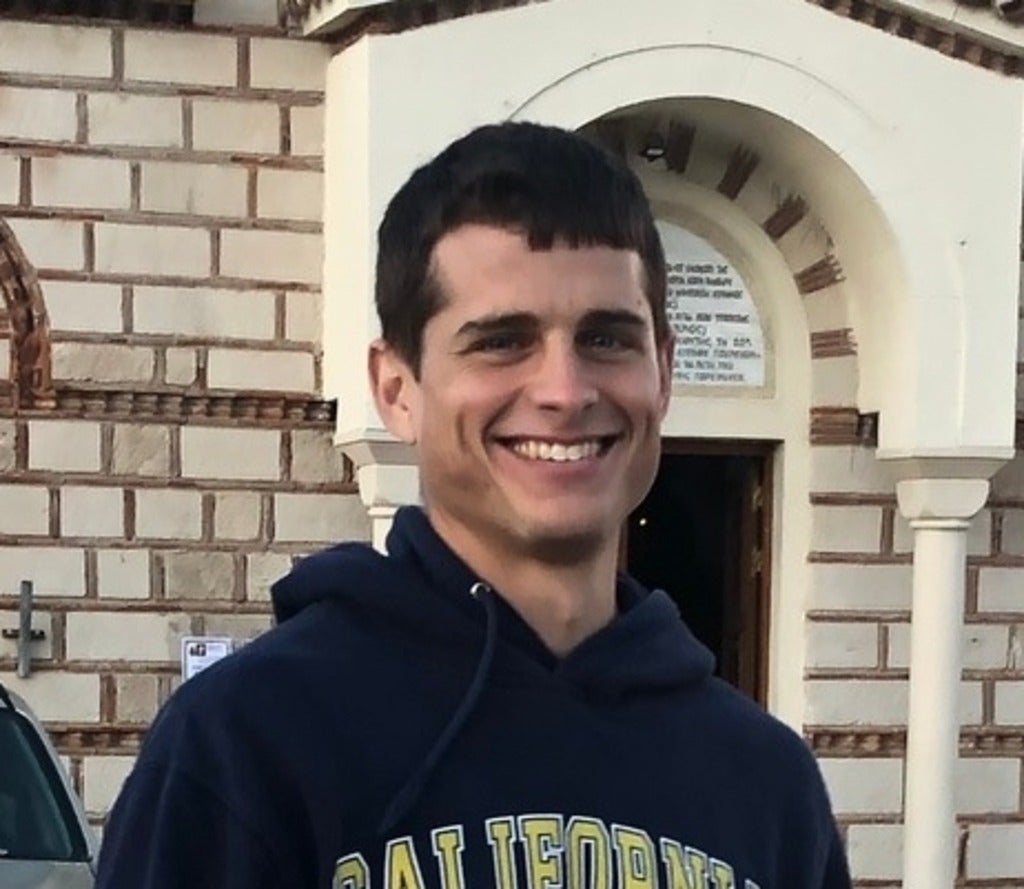
Astro Seminar Series - Sean Ressler - IN PERSON

Sean Ressler is a postdoctoral fellow at CITA working on general relativistic and Newtonian simulations of black hole accretion. The motivation of his work is to make these simulations more realistic by incorporating more physics, more observational input, or connecting smaller scales to larger scales (or vice versa).  
Wednesday, October 25, 2023 11:30 am - 11:30 am EDT (GMT -04:00)

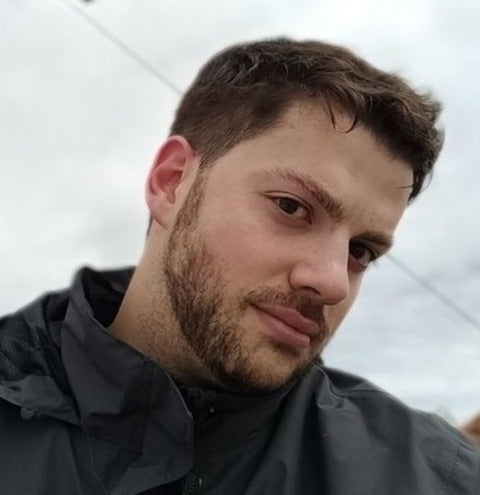
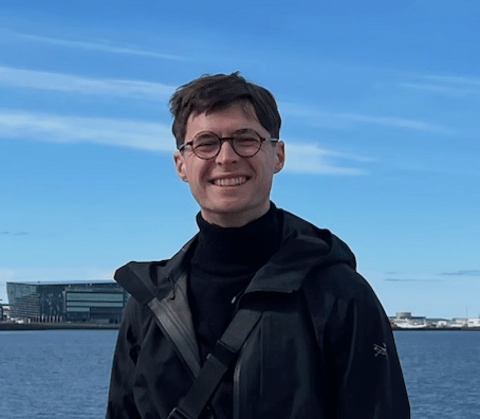
Astro Seminar Series - Bobby Bickley - VIA ZOOM

Bobby Bickley is an astronomy Ph.D. candidate at the University of Victoria (Victoria, BC). He also holds a B.Sc. in mechanical engineering from the University of Connecticut.

Wednesday, October 4, 2023 11:30 am - 11:30 am EDT (GMT -04:00)

Astro Seminar Series - Ryan Cloutier - HYBRID

Ryan Cloutier is an Assistant Professor in the Department of Physics and Astronomy at McMaster University. Ryan completed his PhD at the University of Toronto before taking up a postdoctoral fellowship and a Banting Fellowship at the Center for Astrophysics, Harvard and Smithsonian.

Wednesday, September 13, 2023 11:30 am - 11:30 am EDT (GMT -04:00)

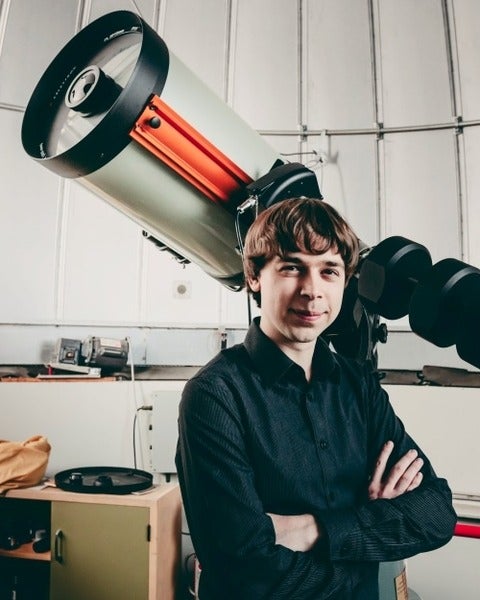
Astro Seminar Series - Marco Bonici - HYBRID

Marco Bonici is a postdoc at the Waterloo Centre for Astrophysics at the University of Waterloo. Originally from Genova, in 2017 he completed his Bachelors and Masters degree at Università degli Studi di Genova in Theoretical Physics. He completed his PhD in Physics and Astrophysics in 2021 at University of Genova, under the supervision of Dr. Carmelita Carbone.

Wednesday, September 6, 2023 11:30 am - 11:30 am EDT (GMT -04:00)

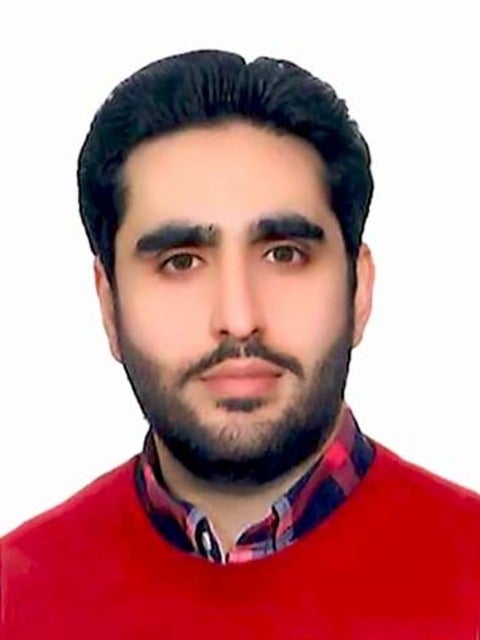
Astro Seminar Series - Mohammad Zhoolideh Haghighi - HYBRID

Mohammad Zhoolideh Haghighi is an assistant professor at the K. N. Tossi University of Technology. He studies different aspects of galaxy groups and galaxy clusters, including their dynamical relaxation and their hydrodynamics. Mohammad also takes advantage of machine learning techniques in astronomy for object detection, image processing, and automating telescopes in observatories. 

Wednesday, August 16, 2023 3:00 pm - 3:00 pm EDT (GMT -04:00)

Seminar - Connor Stone

Connor Stone is currently Postdoctoral Fellow at the Université de Montréal with an NSERC Postdoctoral Fellowship and a CITA National Fellowship after receiving his Ph.D from Queen's University in 2022. He is a University of Waterloo alumnus, class of 2016.

Wednesday, June 14, 2023 11:30 am - 11:30 am EDT (GMT -04:00)

Astro Seminar Series - Gus Evrard - HYBRID

Prof. August E. (Gus) Evrard is a first generation computational cosmologist and educational innovator at the University of Michigan. Author of the first computational algorithm to enable multi-fluid cosmological simulations of galaxy formation, Prof. Evrard's astrophysical research aims to understand clusters of galaxies, the rarest and largest gravitationally bound systems in the universe.  

Wednesday, May 17, 2023 11:30 am - 11:30 am EDT (GMT -04:00)

Astro Seminar Series - Roman Gold - HYBRID

Roman Gold is an Assistant Professor at CP3-Origins, University of Southern Denmark.  He is a member of the Event Horizon Telescope Collaboration and was awarded the 2022 EHT Early Career Award for his significant contribution and leadership in the geometric modelling process and the analysis of the Sgr A* source structure.  

Wednesday, May 3, 2023 11:30 am - 11:30 am EDT (GMT -04:00)

Astroseminar Series - Claudia Maraston - HYBRID

Claudia Maraston is a Professor of Astrophysics at the University of Portsmouth (UK), where she has been since 2007.  She obtained her PhD at the University of Bologna, and held postdoctoral fellowships at the Ludwig-Maximillian University of Munich and the Max-Planck Institute for extra-terrestrial physics (MPE) in Garching.

Wednesday, March 15, 2023 11:30 am - 11:30 am EDT (GMT -04:00)

Astro Seminar Series - Carolina Cuesta Lazaro - HYBRID

Carolina Cuesta Lazaro is an IAIFI Fellow at the Institute for Artificial Intelligence and Fundamental Interactions, holding a shared position between MIT and the Theory and Computation at the Center for Astrophysics | Harvard & Smithsonian. Carolina is interested in developing robust and interpretable Machine Learning models that can guide us towards future discoveries in physics.