
For many, the legacy of residential schools in Canada is out of sight and out of mind, but others are working tirelessly to make this history accessible to the public to keep the memories of survivors alive. On March 24, Centre for Peace Advancement staff toured the Woodland Cultural Centre with Phyllis Webstad, a Residential School survivor and the founder of the Orange Shirt Society. This tour was organized and planned by members from the Mennonite Central Committee Indigenous Neighbours Program who were also present. With both a former residential school and a gallery filled with historical imagery, the experience was eye-opening and impactful.
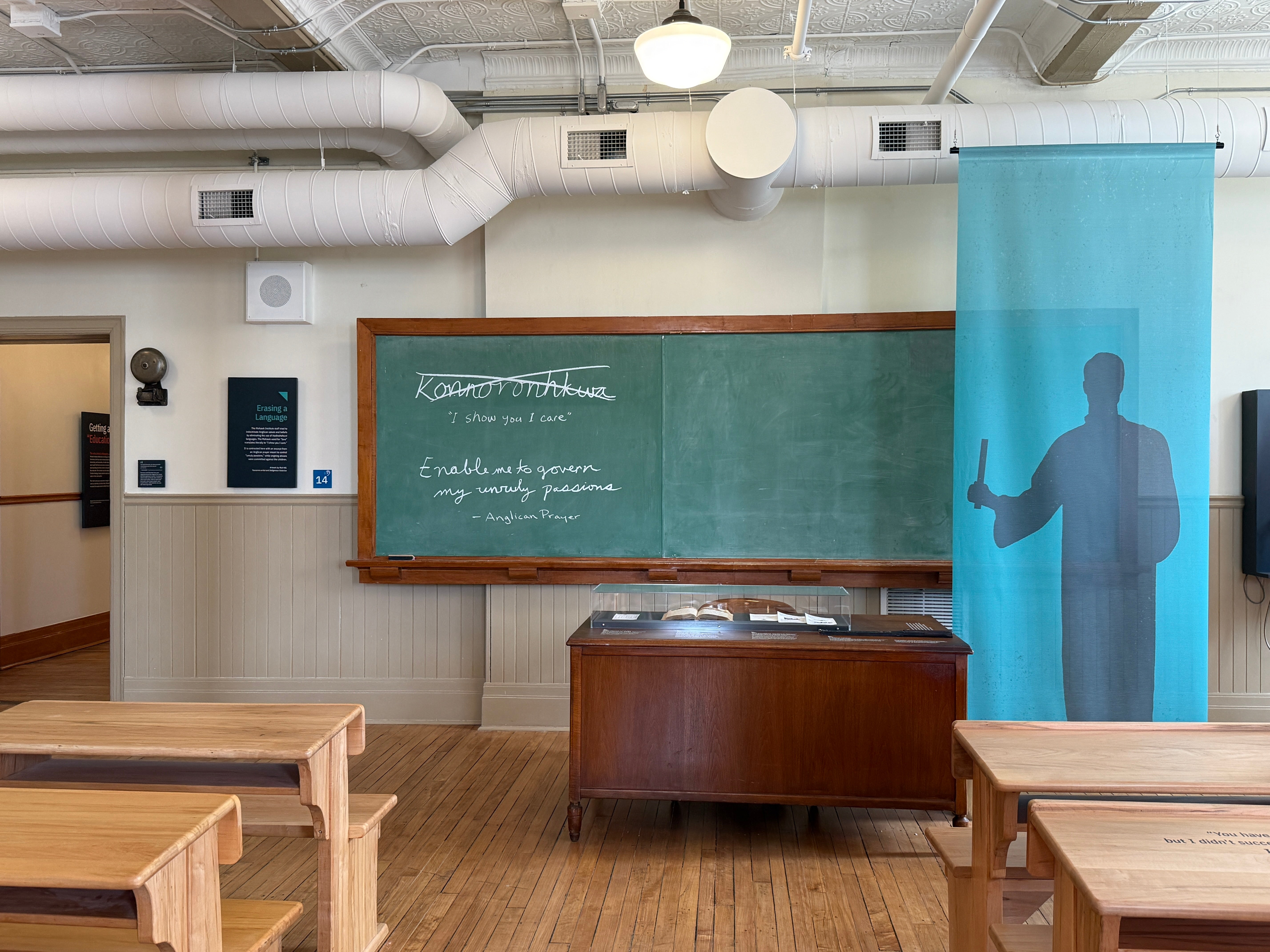
The tour began in the former Mohawk Institute Residential School where Indigenous children from across Canada were forced to attend. The first space encountered on the tour was a classroom that recreated what would have been taught: “Konnoronhkwa” crossed out on a board with the words “I show you I care” written beneath in English, representing the attempt to strip children of their native tongue. One desk in the room had the words of survivor Wilber Maracle: “I wasn’t getting an education. They always said they put us in there to get an education. We didn’t get an education.” The space also featured markings left by students under the sewing table – an attempt to send messages to one another and build relationships in a school that actively discouraged that.
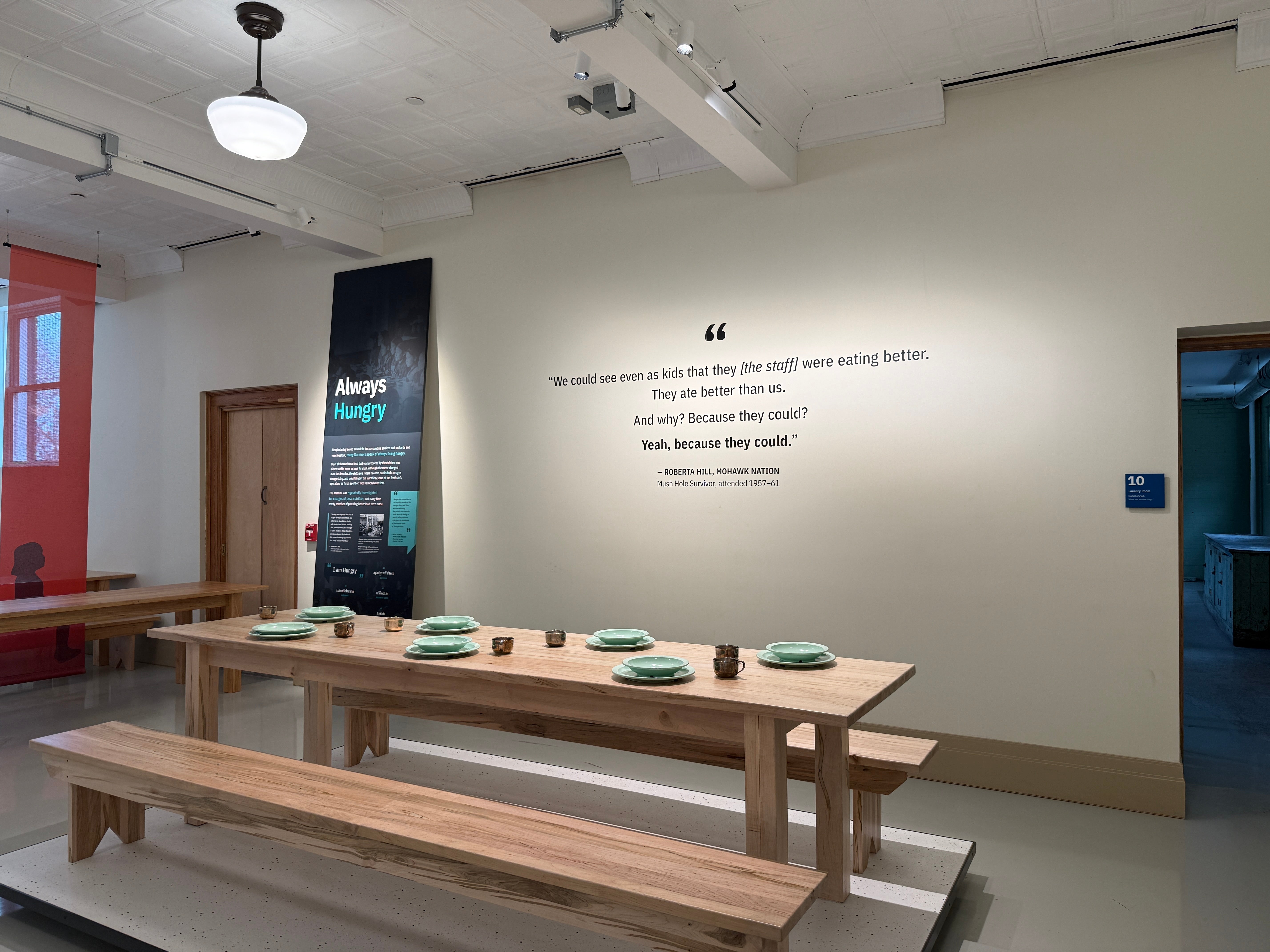
After a brief look into the nurse's office and the library, the next area was the basement, where the cafeteria, laundry room, and boiler room were located. In the area where students ate, there were words on the ground: “NO TALKING!” While children were given little food and hardly anything fresh, the teachers ate separately with plentiful meals. At the table where staff would have sat, an audio re-enactment of conversations illustrated negative perceptions of the Indigenous Peoples. In the laundry room, the Executive Director of Woodland Cultural Centre, Heather George, explained the types of work children were made to do, many fitting the traditional gender roles established by Europeans. Children were also exposed to hard chemicals in the laundry room and in the fields. The top floor consisted of the boys and girls dormitories, each on opposites side of the floor. However, the main focus for the group was a room that played a video of an actor playing the dean while a young Indigenous girl asked him questions as to why they treated people this way.
In a separate building was the gallery, which depicted scenes of what life would have looked like for Indigenous Peoples before settlers arrived and early interactions between the two groups.
It was a meaningful experience for Centre for Peace Advancement staff to tour the former residential school alongside a residential school survivor. Phyllis Webstad went to St Joseph's Mission residential school in British Colombia in the 1960s.
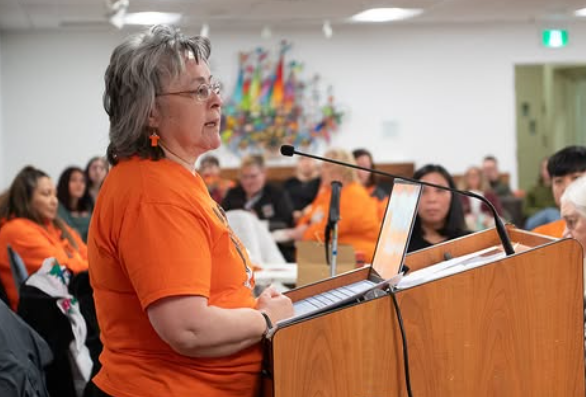
In the evening after the tour, Phyllis spoke to an audience of around 200 people at Conrad Grebel University College, vulnerably telling her story and the generational impact of the residential schools on Indigenous Peoples. Phyllis also spoke about the importance of supporting small and Indigenous owned businesses—one example is the merchandise available on the Orange Shirt Society website.
Both the tour and Phyllis’ talk highlighted just how recent Residential Schools and the erasure of Indigenous culture was. Many dismiss residential schools as something that took place a long time ago, but there are survivors who are in their 50s today. Furthermore, the trauma does not end with those who were in residential schools; new generations of Indigenous Peoples are still facing the aftermath of residential schools and ongoing systemic issues. This experience highlighted the importance of being informed – it helps a group that previously was ignored heard and acknowledged for their experiences. The Centre for Peace Advancement encourages others to seek out similar experiences to work towards a future of healing and reconciliation.