
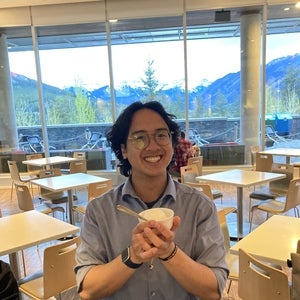
We’re thrilled to share that Gabriel Jabile, the University of Waterloo’s 2025 Map the System campus winner, was one of the top three competitors at the Canadian Finals this week, and will receive a grant to attend the global finals this summer at the University of Oxford. Gabriel’s project, “Livestock Disease Outbreaks in Uganda,” was recognized for its exceptional depth, systems-based analysis, and strong potential for meaningful impact.
Map the System is a global competition that challenges students and educators to deeply examine complex social and environmental problems. Unlike traditional pitch-style contests, this competition emphasizes systems thinking, a method of exploring how historical, political, economic, and cultural forces interact to shape issues over time. Participants are judged not on quick fixes, but on how well they understand the problem and its root causes. This year’s Canadian finals were organized by the Institute for Community Prosperity at Mount Royal University with the support of ATCO, and kicked off the Banff Systems Summit at the Banff Centre for Arts and Creativity.
Gabriel’s research focuses on the structural weaknesses of Uganda’s veterinary system and the challenges it faces in preventing and managing livestock disease outbreaks. Drawing on government documents, academic studies, and conversations with local farmers and stakeholders, he uncovered a system burdened by disconnected policies, limited infrastructure, and bureaucratic inefficiencies. His investigation also traced how colonial legacies and political instability continue to influence the delivery of veterinary care today.
“The system struggles with fragmented policies, lack of training, and poor coordination among stakeholders,” Gabriel explains in his report. “These issues are compounded by social power imbalances, underrepresentation of women and smallholder farmers in decision-making, and persistent resource constraints in rural areas.”
But his research goes far beyond technical critique. Gabriel immersed himself in the realities of the communities affected by these challenges. He sat in farmers’ homes, listened to their stories**, and came to understand how financial limitations, misinformation, and deeply held cultural beliefs affect their decisions around animal health. “This experience taught me that human problems require more than just logical solutions, they need compassion and curiosity,” Gabriel says. “We must respect local knowledge, build trust, and engage communities as partners, not just beneficiaries.”

Gabriel is a third year Biomedical Engineering student, and his fieldwork in Uganda conducted as part of an internship with Engineers Without Borders reshaped how he thinks about development. He argues that sustainable change demands inclusive governance, long-term thinking, and a deep understanding of the social fabric behind the numbers.
Looking ahead, Gabriel is not stopping with research. With his Ugandan co-founders, Lukuzen, Kirabo, Amelia and Bamukunda, he is currently building a start-up offering a mobile triaging service for livestock health support in rural Uganda. They are currently partnering with one community to pilot the technology and hope to partner with more farming communities across Uganda and the rest of East Africa. Taking part in the global finals will help him achieve his goals of highlighting the voices and lived experiences of underserved farmers while meeting like-minded systems thinkers eager to make change that benefits everyone.
As Gabriel prepares to take the stage at Oxford in July, we applaud his outstanding achievement and look forward to seeing the continued impact of his work, on paper, in policy, and most importantly, in the lives of the communities he serves.
By Pinar Gurgen