Faculty

Studies led by the University of Waterloo, with a group of multinational researchers, have identified that climate change is threatening the future of the Olympic and Paralympic Winter Games. Temperatures are rising with the increase of global green house gas emissions, affecting the ability to reliably host the winter games across the globe. The average February daytime  temperature of the Olympic Winter Games locations is steadily increasing - from 0.48C in the 1920–1950s, to 3.18C in the 1960–1990s, to 7.88C in games held in the twenty-first century - intensifying the need for weather risk management strategies.

Wednesday, October 12, 2016 2:30 pm - 5:30 pm EDT (GMT -04:00)

University of Waterloo Academic-Industry Networking Forum: Greenhouse Gases

University of Waterloo (UW) technologies and research are revolutionizing the development of greenhouse gas reduction, contributing to innovative solutions applicable to a variety of industrial sectors.

Join us to connect with UW’s research expertise and technologies and explore opportunities for collaborations in the areas of industrial greenhouse gas emission reduction.

Monday, February 1, 2016 6:00 pm - 6:00 pm EST (GMT -05:00)

The COP21 climate summit: What happened in Paris, and what’s next for Canada?

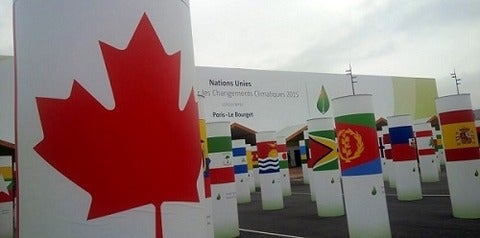
Last fall, the global media spotlight was on the United Nations climate change summit (a.k.a. “COP21”) when 195 countries came to an agreement to act on climate change.

Are you curious about what this might mean for our community, our country and the world?

Thursday, January 21, 2016 7:00 pm - 7:00 pm EST (GMT -05:00)

Environmental refugees… the next wave?

One million migrants arrived in Europe in 2015 seeking asylum from war and conflict. Yet many researchers warn these numbers are small compared with the number of people who will be displaced global in coming decades because of climate change. Will the next great waves of international migration have environmental causes? What are the potential implications for North America? What can we do now to prepare for future climate migration? Join Canadian and American experts in an open discussion of what we know about global environmental migration, and what research has yet to tell us.

This week, political leaders from all over the world, including new Canadian Prime Minister Justin Trudeau, will arrive in Paris to negotiate a plan to fight global climate change. The University of Waterloo is sending a handful of students to be on the ground in the French capital as the historic agreement unfolds around them.

The Co-operators and Farm Mutual Reinsurance Plan today announced the creation of the Partners for Action (P4A) Network at the University of Waterloo's Faculty of Environment. The two founding partners have committed $1.1 million to the new applied research network, which will work to advance flood resiliency in Canada in the face of a changing climate.