Editor:
Brandon Sweet
University Communications
bulletin@uwaterloo.ca
Our collective work matters - thank you for standing with us
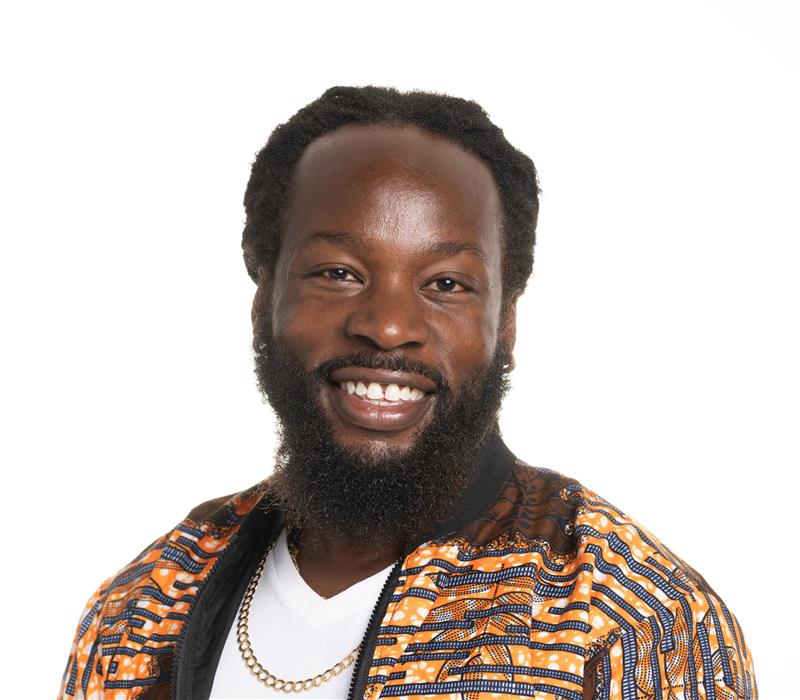
A message from Dr. Christopher Taylor, Associate Vice-President, Equity, Diversity, Inclusion & Anti-Racism.
As we close out 2025, I want to speak plainly: equity, diversity, inclusion, and anti-racism are not optional. They are essential to the integrity of our institution and to the future we are building together.
Over the past challenging year, your support has allowed the Office of EDI-R to push beyond performative gestures and into real, systemic change.
Our 2025 Impact Report tells that story:
- We supported equity-deserving communities with resources and advocacy, because representation without power is not enough.
- We continued to create spaces for truth-telling and accountability through initiatives like the Table Talks Series, ensuring that conversations lead to action.
- We listened to the trans and non-binary community and defined our strategy for addressing the systemic issues they continue to face.
- We heard that many community members don’t know where to turn when harm occurs, so we launched targeted campaigns and roadshows to promote our response processes to reduce barriers to accessing help.
- We critically examined emerging and persistent issues and developed a series of complex infographics and accessible social-media content to educate, inform, and increase institutional capacity.
- We held more educational events as part of the Menstrual Equity Program to further destigmatize menstruation for all genders and provide access to reusable menstrual products.
- We supported and advised campus partners across multiple offices to ensure data was being used responsibly, while strengthening institutional understanding of accommodation processes and policy compliance.
- We saw a significant growth in our online and social media presence, extending the reach of our work and strengthening how communities connect with our office.
- We engaged with students in a meaningful way through the Student Ambassadors Program and student-driven consultations, whose insights on belonging, safety, food security, and cultural wellbeing are now shaping our priorities for the year ahead.
- We opened our doors more intentionally to communities off-campus, strengthening our role within the Waterloo region while building stronger bridges between on-campus and off-campus communities.
This work is political because equity work is about power: who has it, who doesn’t, and how we redistribute it to create justice. And let me be clear: we are not slowing down.
In 2026, we will:
- Deepen our engagement with communities—not as a checkbox, but as co-creators of institutional change.
- Hold ourselves accountable through transparent reporting and policy reform that moves beyond rhetoric.
- Expand education and capacity building, equipping our campus to lead courageously in a world that demands more than neutrality.
We are kicking off the year by launching a series of community resources designed to empower campus and local communities to lead projects that matter most to them. These initiatives aim to reduce financial barriers, support community-led solutions, and strengthen relationships with communities that we are connected to.
As I often say, “Equity work is not charity—it’s justice. And justice requires courage, persistence, and community.”
Our roots are in community. Our vision is bold. And our commitment is unwavering. But this work cannot happen in isolation: It requires all of us.
Thank you for standing with us. Thank you for believing that equity and justice are not just ideals. They are actions. Together, we will keep moving forward.
Read Dr. Taylor's full statement on the EDI-R page.
Craig Kaplan named 2025 ACM Distinguished Member
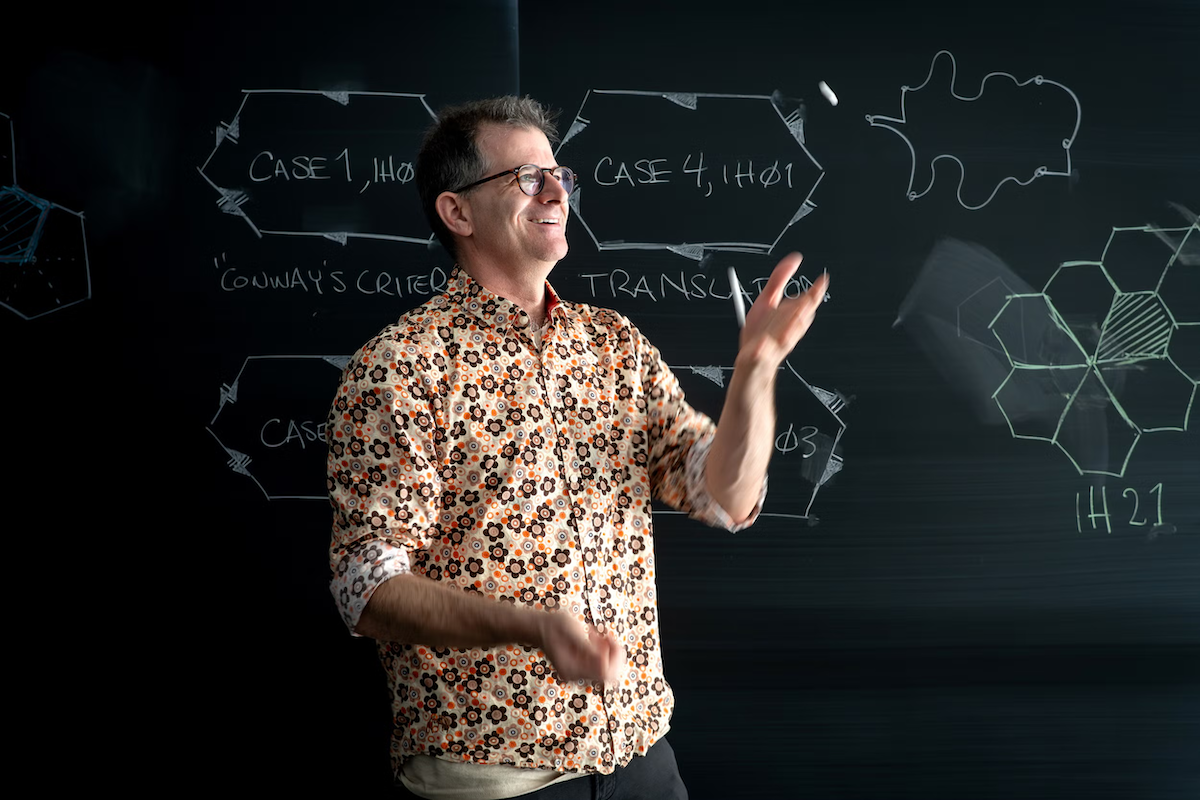
Looking for an academic who juggles computer graphics, mathematics and art (as well as chalk) seamlessly? Dr. Craig Kaplan's your guy!
This is an excerpt of an article originally published on the Cheriton School of Computer Science website.
The Association for Computing Machinery has named Professor Craig S. Kaplan a 2025 Distinguished Member in recognition of his pioneering contributions to the design and modelling of computational geometric patterns and non-photorealistic rendering. He is among 61 individuals worldwide honoured this year for outstanding scientific achievements in computing.
“Congratulations to Craig on this much-deserved recognition from ACM,” said Raouf Boutaba, University Professor and Director of the Cheriton School of Computer Science. “This honour is his fourth major accolade in 2025, recognizing his teaching and research excellence. Earlier this year, he received the Faculty of Mathematics Award for Distinction in Teaching, was named a Fellow of the Fields Institute, and his co-discovery and proof of the first aperiodic monotile was cited by Sir David Spiegelhalter in BBC Science Focus magazine as the most important mathematical breakthrough of this century.”
Professor Craig S. Kaplan juggles a range of interdisciplinary topics with ease, working at the intersection of mathematics, computer graphics and art. He develops mathematical tools and algorithms that generate ornamental patterns and support artists and designers.
His work frequently incorporates knowledge from computer graphics, classical and computational geometry, human–computer interaction, graph theory, symmetry and tiling theory, and perceptual psychology. He holds the Marsland Fellowship in Information Technology, a prestigious award that supports his research program.
Professor Kaplan’s research, teaching and service excellence
Solving the long-standing einstein problem
Professor Kaplan’s most celebrated accomplishment is his 2023 co-discovery and proof of the first aperiodic monotile. Known as the hat, the 13-sided polygon fills the infinite plane without gaps or overlaps in a pattern that cannot repeat. Its discovery resolved the famous einstein or “one stone” problem in tiling theory, an open question for more than six decades.
Professor Kaplan’s involvement began when David Smith, a mathematical hobbyist, contacted him about a promising shape with seemingly aperiodic properties. Together with collaborators Joseph Samuel Myers and Chaim Goodman-Strauss, the team solved the einstein problem and published their proofs in a paper titled “An aperiodic monotile” in Combinatorial Theory. Shortly thereafter, the research team published “A chiral aperiodic monotile,” a paper in which they proved that a related family of shapes, called spectres, tile the plane aperiodically using only translations and rotations, satisfying an even stricter definition of aperiodicity.
The discovery captured global attention. Media outlets including The New York Times, The Guardian, CNN, New Scientist, Smithsonian Magazine, Quanta Magazine and Scientific American covered the breakthrough extensively. TIME magazine later named the hat as one of the best inventions of 2023, highlighting it alongside advancements in supercomputing, entertainment technology and materials science.
The public celebrated the discovery through online discussions, creative experimentation, and events such as Hatfest, a conference held at the University of Oxford’s Mathematical Institute. As co-discoverer Chaim Goodman-Strauss reflected, “People made this their own… It’s absolutely unique, in my experience, for a mathematical result to have a cultural life like that.”
In the January 2025 issue of BBC Science Focus magazine spotlighting the game-changing breakthroughs shaping the world since the year 2000, Sir David Spiegelhalter described the solution to the einstein problem as “the most important mathematical breakthrough of this century.” Aperiodic monotile enthusiasts continue to explore the shape as 3D-printed objects, quilting and textile designs, ravioli, and as stained glass art created by Sir David Spiegelhalter himself.
Impossible solids: Insights that helped elucidate molecular structure
The five Platonic solids and 92 Johnson polyhedra have long fascinated mathematicians. While exploring them, Professor Kaplan became intrigued by what he called “near misses,” geometric oddballs tantalizingly close to being a mathematically perfect solid. He documented many of these polyhedra on his website, including a structure built from 11-sided polygons, equilateral triangles and squares.
Years later, a Japanese biologist studying a manufactured protein structure known as a TRAP-cage discovered Professor Kaplan’s work. The molecular cage, formed from TRAP rings and bonded together with gold atoms, mirrored the structure of a near-miss solid Professor Kaplan had documented on his site and built using paper shapes and tape. Through a computational analysis of the stability of the TRAP-cage, Professor Kaplan helped the research team confirm that the protein’s molecular structure was physio-chemically possible. The resulting interdisciplinary study was published in Nature as “An ultra-stable gold-coordinated protein cage displaying reversible assembly.”
Geometric patterns in art and design
Professor Kaplan has long held an interest in computer-generated Islamic geometric patterns, a field that he leads. His paper with David Salesin, “Islamic star patterns in absolute geometry,” is the definitive work on the topic and has influenced both academic understanding and practical implementation of these patterns.
He has also made fundamental contributions to non-photorealistic rendering and geometric pattern generation. In particular, his paper with David Salesin titled “Escherization,” presented at SIGGRAPH 2000, helped draw the two fields closer together. He remains a sought-after reviewer in this research area and continues to explore the artistic and mathematical potential of decorative tilings, particularly in the style of M.C. Escher.
Professor Kaplan has developed a wide range of computational techniques to create, manipulate and analyze decorative patterns in computer graphics. His research with his students on image-guided maze construction, presented at SIGGRAPH 2007, introduced innovative graphical and combinatorial algorithms to design mazes based on images. And his work on optical art rendering with lines and curves introduced an algorithm that takes an arbitrary image and automatically generates the corresponding optical art composition.
More recently, he and his students have expanded digital tools for artistic abstractions with new techniques to pixelate vector line art, synthesize geometric patterns and draw hatching strokes, a traditional artistic method to produce tonal and shading effects. These contributions have expanded the techniques available for artistic rendering in computer graphics.
Professor Kaplan has been commissioned to create designs for various contexts including book covers, furniture, theatre productions, and architectural elements. His 3D-printed geometric kippahs were featured in an exhibition at the Museum of Modern Art in New York, and his parquet deformations have been incorporated into architectural installations at the National Museum of Mathematics.
Read the full story on Waterloo News.
Holiday office cleaning reminder and other notes
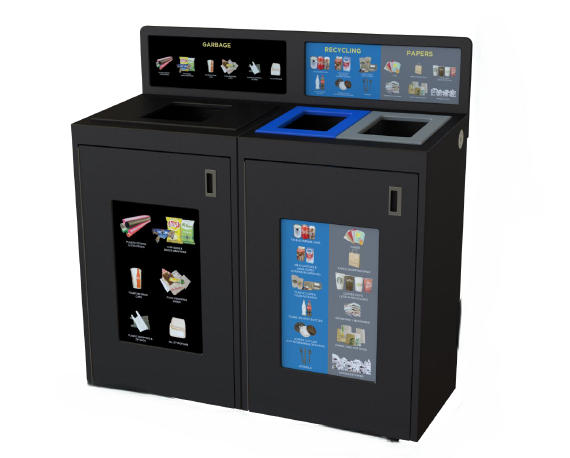
Plant Operations is reminding members of the University community to clean up their offices before going on holiday break. "As the holiday season approaches, we’d like to share a quick reminder before you head out for the break: please empty any personal office garbage, especially if it contains food waste, and place it in the kitchenette or bathroom bins. Recycling, including organics should be sorted and placed into the waste/recycling receptacles throughout the building."
"Leaving food waste behind over the break can attract pests and create unpleasant odours, so your help in keeping things clean is greatly appreciated! If you have any questions or concerns, feel free to reach out to Facilities via email."
"As we approach the end of the term and winter break,Human Resources would like to remind you of the revised year-end pay dates," says a note from Human Resources. Those dates are as follows:
- Monthly paid employees will be paid on December 23, 2025; and
- Biweekly paid employees will be paid on December 24, 2025.
"Both dates cover pay that would normally be issued on Friday, December 26, 2025," the note from HR continues. "Additionally, monthly paid employees will receive their January pay on January 23, 2026, instead of the usual January 30."
Link of the day
Godspeed, Buck Rogers: Gil Gerard dead at 82
When and where
The Campus Wellness Student Medical Clinic offers healthcare visits with Physicians and Nurse Practitioners to current undergraduate and graduate students. Services include: vaccinations, immunity testing, naturopathic services and more. Counselling Services offers appointments with counsellors in person as well as via phone and video. Students can book appointments for these services by calling Campus Wellness at 519-888-4096.
The privately-run Student Health Pharmacy (located in the lower level of the Student Life Centre) is now offering new COVID booster shots and flu shots. Covid booster shots are available by appointment only – please call ext. 33784 or 519-746-4500. The Student Health Pharmacy’s summer hours are Monday to Friday, 9:30 a.m. to 4:30 p.m. Naloxone kits are still available – pick them up in the pharmacy at no charge.
The Waterloo Eye Institute optometry clinics in Waterloo and downtown Kitchener offer comprehensive eye exams and eyewear, including glasses and contact lenses, with the Waterloo location offering various specialized services including urgent eye care. Discounts apply for University of Waterloo students and employees. The Waterloo Clinic is at a nearby interim location, 419C Phillip St, during construction at the School of Optometry and Vision Science. The Kitchener Clinic remains at the Health Sciences Campus, 10B Victoria St. S. Book online or by phone at 519-888-4062.
Warriors Winter Youth Camps, registration is now open for multi-sport and games, baseball, basketball, eSports, football and hockey camps for boys and girls ages 5 to 18. Register today!
Final examination period, Friday, December 5 to Thursday, December 18.
Research Impact Canada December Dr. RIC: Thursday, December 18, 1:00 p.m. to 2:00 p.m., online. Contact Nadine Quehl to receive the Zoom link.
Co-operative work term ends, Friday, December 19.
Final examination emergency day, Friday, December 19.
Faculty of Arts AI Forum, Friday, December 19, 10:00 a.m. to 11:30 a.m., NH 3407.
Nominations open: WUSA General Elections, Monday, December 22.
University holiday break, Wednesday, December 24 to Friday, January 2, 2026.
Lectures and classes begin, Monday, January 5, 2026.
Co-operative work term begins, Monday, January 5, 2026.
WUSA Welcome Week Brunch, Tuesday, January 6, 2026, 9:30 a.m. to 11:30 a.m., SLC Great Hall.
NEW - Antagonism and Intimidation in Academia Speaker Series 2.0, Monday, January 12, 2026, 3:00 p.m. to 5:00 p.m., EC5 1027.
NEW - Velocity Innovation Open House, Tuesday, January 13, 2026, 4:00 p.m. to 6:00 p.m., Federation Hall.
NEW - Cracking the code: tips for technical interview success, Wednesday, January 14, 12:00 p.m. to 1:00 p.m., TC 2218
Additional position available
This week's list from the human resources department is viewable through the Careers website or through Workday's new recruitment module. To access Workday Recruiting, login to Workday, and navigate to the Jobs Hub from the left side menu.
- Job ID# 2025-01111 - Executive Officer - Faculty of Environment, USG 16/17
Upcoming service interruptions
Stay up to date on service interruptions, campus construction, and other operational changes on the Plant Operations website. Upcoming service interruptions include:
- North parking lot at RAC-1 shoring activity, Monday, November 10 to January 1, 2026, shoring, pile driving, lagging and tie-backs will take place between November 10 to the end of December 2025 as part of WaterFEL construction, traffic restrictions and limited access to be in place, excessive noise and vibration may occur in the work area.
-
Optometry elevator shutdown, Thursday, December 18, 7:00 a.m. to 8:00 a.m., south elevator will be out of service.
-
South campus replacement of 4 main backflow preventers, Friday, December 19, 2:00 a.m. to 5:00 p.m., all soft water on campus will be affected, some locations will not have the use of hot water, or soft water.
-
School of Architecture fire alarm testing, Friday, December 19, 6:30 a.m. to 8:15 a.m.
-
Digital Media Stratford fire alarm testing, Friday, December 19, 12 noon to 3:00 p.m.
-
Burt Matthews Hall (original section) domestic hot water shutdown, Friday, December 19, 5:00 p.m. to 11:00 p.m., no water available to building for the duration to accommodate metering installation.
- South campus replacement of 4 main backflow preventers, Saturday, December 20, 2:00 a.m. to 5:00 p.m., all soft water on campus will be affected, some locations will not have the use of hot water, or soft water.
-
Modern Languages domestic cold water shutdown, Saturday, December 20, 7:00 a.m. to 11:00 a.m., no cold water available to the building for a period of one hour during the shutdown window, toilets and sinks will not have water at this time.
-
Psychology, Anthropology, and Sociology (PAS) domestic cold water shutdown, Saturday, December 20, 7:00 a.m. to 11:00 a.m., no cold water available for a period of one hour during the shutdown window, no water to toilets and sinks during this time.
Needles Hall addition domestic cold water shutdown, Saturday, December 20, 7:00 a.m. to 11:00 a.m., no cold water will be available for an hour during the shutdown window, toilets and sinks will not have water during this time.
-
South Campus Hall domestic cold water shutdown, Saturday, December 20, 7:00 a.m. to 4:00 p.m., there will be no water available to the building for the duration of shutdown, no water to sinks or toilets.
-
Quantum Nano Centre, Biology 1 and 2, Health Services, Science Teaching Complex fire alarm testing, Monday, December 22, 6:30 a.m. to 8:15 a.m.
-
UWP (Beck Hall, Eby Hall, Grand Commons) electrical shutdown, Monday, December 22, 8:00 a.m. to 12 noon, an electrical shutdown will affect all normal power within the listed buildings due to a high-voltage feed connection, the building will be without normal power for 4 hours, and elevators will not function. Emergency power will be active.
-
Central Services Building domestic cold water (potable) shutdown, Monday, December 22, 7:00 a.m. to 4:00 p.m., during this time the 8" potable line will be shut down to accommodate metering installation.
-
MKV-East temporary electrical shutdown, Tuesday, December 23, 6:30 a.m. to 7:30 a.m., there will be an electrical shutdown that will affect all normal power and lighting due to ongoing electrical work, the east wing of the building (mostly bedrooms and hallways on the 1st floor) will be without normal power for approximately 1 hour, emergency power will be active.
-
Energy Research Centre, Math 3, Burt Matthews Hall fire alarm testing, Friday, January 2, 2026, 6:30 a.m. to 8:15 a.m.
-
Minota Hagey, Mackenzie King Village, Ron Edyt Village fire alarm testing, Friday, January 2, 2026, 1:00 p.m. to 2:30 p.m.