Submit content for the Daily Bulletin through the Daily Bulletin intake form.
For all other requests, please contact communications@uwaterloo.ca.
Waterloo researchers awarded Spring 2026 CIHR Project Grants

Geoffrey Fong, Juewen Liu, Kelly Skinner and William Wong.
University of Waterloo researchers have received Spring 2026 Project Grants from the Canadian Institutes of Health Research (CIHR), supporting innovative research that will improve health outcomes in Canada and around the world.
CIHR's Project Grant program supports research with the greatest potential to advance health-related knowledge, health care, health systems and health outcomes. The program funds projects led by researchers at all career stages that pursue new, innovative and high-impact ideas across the full spectrum of health research.
The funded projects address a wide range of pressing health challenges, from targeted drug delivery for dry eye disease and using machine learning to identify undiagnosed Hepatitis C infections, to advancing culturally responsive diabetes prevention and management in Inuit Nunangat and strengthening tobacco control policies in low- and middle-income countries.
Among the recipients is Dr. Geoffrey Fong, who received a $2.57 million CIHR grant to lead the Global Prevention of Disease (GPrev) Project. Building on more than two decades of research through the International Tobacco Control (ITC) Project, the international initiative will combine evidence synthesis with advanced population health simulation models to estimate the impact of proven tobacco control measures. This includes graphic health warnings and comprehensive smoke-free laws in China, Morocco, Zambia, Tanzania and Guatemala. The findings will help governments, the World Health Organization and public health organizations make evidence-informed policy decisions that reduce smoking, save lives and address health inequities.
Congratulations to Geoffrey Fong, Juewen Liu, William Wong, Kelly Skinner and the other University of Waterloo recipients on this outstanding achievement. Their work reflects Waterloo's commitment to advancing health through research at the intersection of society, technology and entrepreneurship, while partnering with communities to develop solutions that improve lives.
Behind the scenes at the Ontario Summer Games
This article was originally published on Waterloo News.
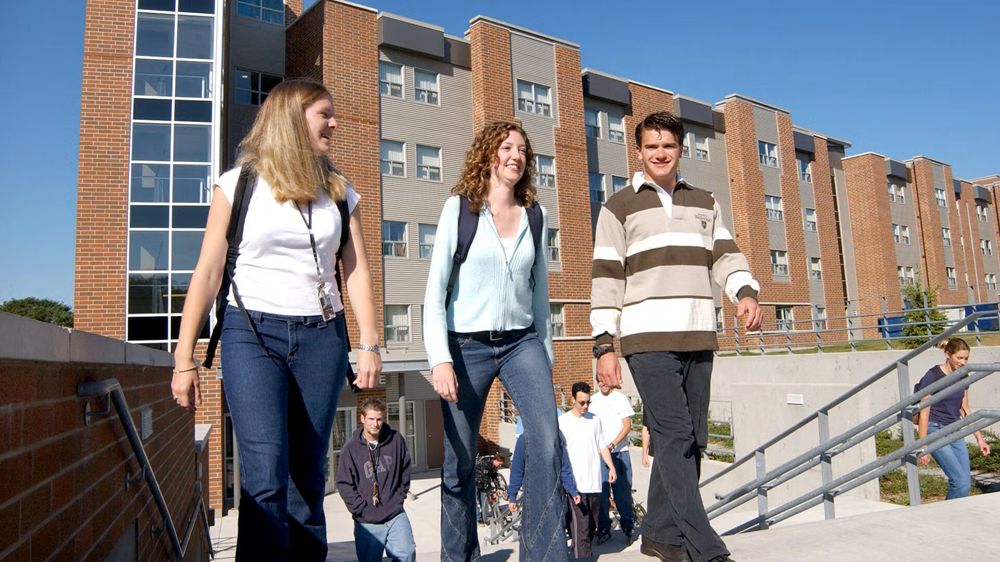
This summer, the University of Waterloo will quietly transform into the heart of one of the province’s largest multi-sport events. As more than 1,600 athletes, coaches and officials arrive at the University for the Ontario Summer Games between July 30 and August 2, residence buildings, dining halls and athletic facilities across our campus will take on a new rhythm.
Behind the scenes, the transformation is the result of months of coordination across various units at the University. The timing offers the perfect opportunity for the Games to leverage campus capacity, enabling teams across campus to work together in a uniquely integrated operation.
From hosting several competitions and coordinating transportation to being a primary hub for housing, feeding and moving participants throughout the Games, Waterloo researchers, students and staff are playing a major role in this year’s event.
Supporting athletes off the field
For Waterloo Athletics and Recreation, the event builds on years of experience hosting major competitions, but at a different scale. “We will be housing and feeding up to 1,500 individuals in residence on campus during the games,” says Ari Grossman, Associate Director of Business Operations at Waterloo Athletics. “Athletics and Recreation will be providing venues for hosting basketball and rugby on campus as well as supporting recreation opportunities for participants when on campus.”
While Waterloo Athletics provides the stage, Food Services powers the performance. During the Games, athletes, their coaches and support staff will rely on Waterloo’s dining operations for consistent, high-quality meals designed to meet the demands of competition. Menus were built to support athletic performance, balancing protein, carbohydrates, fibre and hydration, while accommodating a wide range of dietary needs.
Keeping people moving
With competition venues spread across the region, transportation is a key element requiring extensive planning to ensure athletes and their support teams are moved safely and efficiently.
Waterloo students from the Faculty of Environment’s School of Planning are supporting these complex logistics by working with organizers to plan and coordinate transportation services. This includes calculating travel times between varied locations, establishing the number of buses required, and setting optimal arrival and departure times across the event schedule.
“Each day and each sport have a unique set of requirements,” explains Stephanie Fritz, a master’s student in Planning who is supporting the effort. “Some sports have athletes arrive on site and stay all day; others have athletes travelling between venues for their games throughout the day.”
With a strict event schedule, this means that pick-ups and drop-offs must be well organized to get people to the varied venues on time. It must also factor in contingencies for a variety of scenarios, like a bus unexpectedly breaking down, to ensure operations run without interruption.
In addition to housing, feeding and transportation, countless volunteers are involved in other aspects of the Games, from delivering athletic therapy services to coordinating equipment and supporting the logistics of the opening ceremonies. The institution’s collective efforts reflect the expertise, collaboration and spirit found across campus, helping deliver a positive and memorable experience for athletes, coaches and visitors.
New global study highlights burden of unsafe food

This is an excerpt from an article that was originally published on Waterloo News.
If it isn’t safe, it isn’t food.
That message sits at the heart of a major new global effort by the World Health Organization (WHO).
University of Waterloo public health researcher Dr. Shannon Majowicz contributed research to the new WHO estimates, which cover the global burden of foodborne disease between 2000 and 2021.
The estimates, which were released in mid-June alongside peer‑reviewed publications and webinars presenting key findings, represent the most comprehensive updates to date, bringing together global data on the illnesses, deaths and long-term health impacts such as paralysis, cancer and kidney disease associated with unsafe food.

Foodborne diseases, which are largely preventable, remain a significant public health concern around the world, affecting hundreds of millions of people each year.
By standardizing methods and bringing together data from across countries and regions, the new WHO estimates aim to provide governments, public health agencies and researchers with a clearer picture of where risks lie and how they can be reduced.
Majowicz and collaborators updated 22 of the 42 WHO estimates, focusing on the global, regional and national burden of both diarrheal and invasive enteric pathogens, which contribute to serious illness, long-term complications such as kidney disease, paralysis, septicemia, central nervous system infection, as well as death.
“Our aim was to better understand the burden of foodborne illness,” Majowicz says. “How many people are affected? How many develop severe consequences? How many die?”
This research highlights an important reality: Despite general declines over time, diarrheal and invasive enteric pathogens transmitted by contaminated food continue to be a substantial cause of illness and death globally.
In the study of diarrheal pathogens, Majowicz and colleagues found that in 2021, 14 diarrheal pathogens caused 666 million illnesses, with 265,000 deaths, due to contaminated food. The African continent bore the highest disease burden. In the invasive pathogen study, the transmission of eight pathogens by food caused 24 million illnesses, with 106,000 deaths, mostly in Africa and southeast Asia.
When and Where
The Campus Wellness Student Medical Clinic offers healthcare visits with Physicians and Nurse Practitioners to current undergraduate and graduate students. Services include: vaccinations, immunity testing, naturopathic services and more. Counselling Services offers appointments with counsellors in person as well as via phone and video. Students can book appointments for these services by calling Campus Wellness at 519-888-4096.
The privately-run Student Health Pharmacy (located in the lower level of the Student Life Centre) is now offering new COVID booster shots and flu shots. Covid booster shots are available by appointment only – please call ext. 33784 or 519-746-4500. The Student Health Pharmacy’s summer hours are Monday to Friday, 9:30 a.m. to 4:30 p.m. Naloxone kits are still available – pick them up in the pharmacy at no charge.
The Waterloo Eye Institute optometry clinics in Waterloo and downtown Kitchener offer comprehensive eye exams and eyewear, including glasses and contact lenses, with the Waterloo location offering various specialized services including urgent eye care. Discounts apply for University of Waterloo students and employees. The Waterloo Clinic is at a nearby interim location, 419C Phillip St, during construction at the School of Optometry and Vision Science. The Kitchener Clinic remains at the Health Sciences Campus, 10B Victoria St. S. Book online or by phone at 519-888-4062.
Warriors Youth Swim Lessons, registration is now open for LTS Child/Youth Preschool 1 – Swimmer 9. Group and private lessons available. Register today!
Warriors Summer Youth Camps, registration is now open for multi-sport and games, baseball, basketball, eSports, football and hockey camps for boys and girls ages 5 to 18. Register today!
Your Voice Starts Here: The Staff Role in Decision-Making at UW, Thursday, July 30, noon to 1 p.m., EIT.
New Faculty Teaching Days Spring 2026, Tuesday, August 11 to Friday, August 14, 8:30 a.m. to 4:30 p.m., MC 2036
Who are our Learners (CTE9910), Tuesday, August 11, 10 to 11:30 a.m., MC 2036
Course Dynamics and Engagement (CTE9906), Tuesday, August 11, 1 to 3 p.m., MC 2036
What Our Community Is Saying About Health and Well-being, Wednesday, August 12, 11 to 11:45 a.m. on Teams.
Course Design Foundations (CTE6642), Wednesday, August 12, 9:30 a.m. to 3:30 p.m., MC 2036
Assessment as Learning (CTE9912), Thursday, August 13, 10 a.m. to noon., MC 2036
Course Outline Builder (CTE9916), Thursday, August 13, 1 to 2:30 p.m., MC 2036
Working Effectively with TAs (CTE7017), Friday, August 14, 10 to 11:30 a.m., MC 2036
Upcoming service interruptions
Stay up to date on service interruptions, campus construction, and other operational changes on the Plant Operations website.