New paper presents field-derived phosphorus accumulation rates and speciation in an urban bioretention system
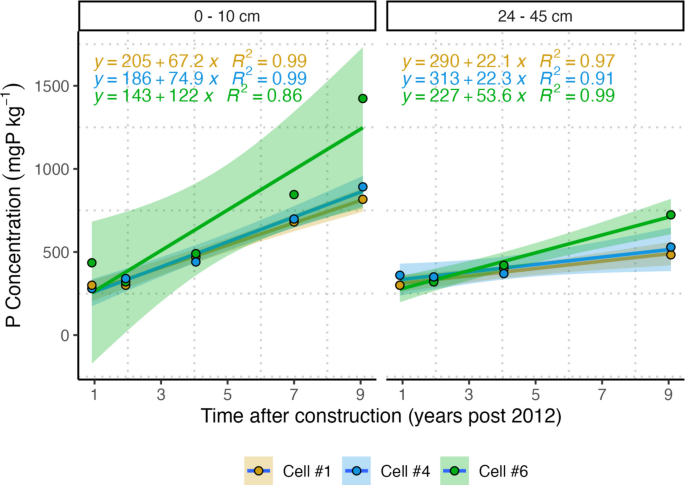
Bioretention cells are widely used in urban stormwater management to reduce runoff and improve water quality, but their ability to remove phosphorus (P) varies due to complex biogeochemical processes. This 9-year study of a multi-cell system in Mississauga, Ontario, shows consistent accumulation of total P in the filter medium, with higher concentrations near the surface and an overall sequestration of about 4 kg per year. The results indicate that the system has not yet reached P saturation and should continue to effectively reduce stormwater P loads. Most retained P is associated with organic matter and mineral forms, influenced by factors such as iron, manganese, and organic carbon. Favorable conditions promote the formation of stable calcium- and iron-P mineral phases, contributing to high removal efficiency. However, performance may change as the system ages or hydrometeorological conditions shift, highlighting the need for further research to better understand and optimize long-term P removal.
Link: https://doi.org/10.1007/s11356-026-37661-8