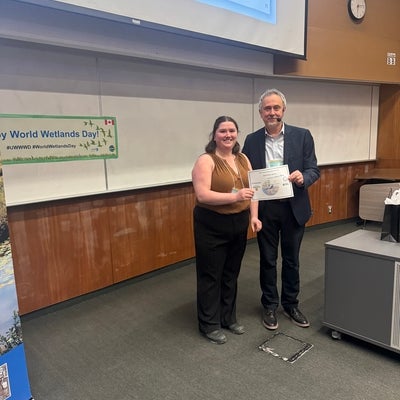
Thank you to all who made this year's event a success!
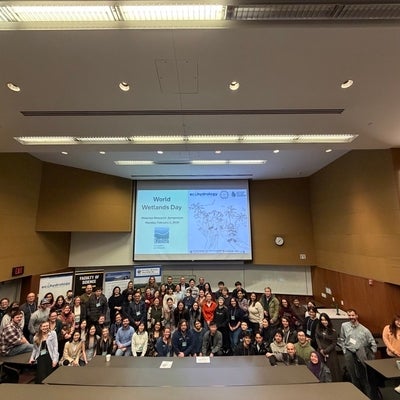













14th Annual World Wetlands Day at the University of Waterloo
About World Wetlands Day
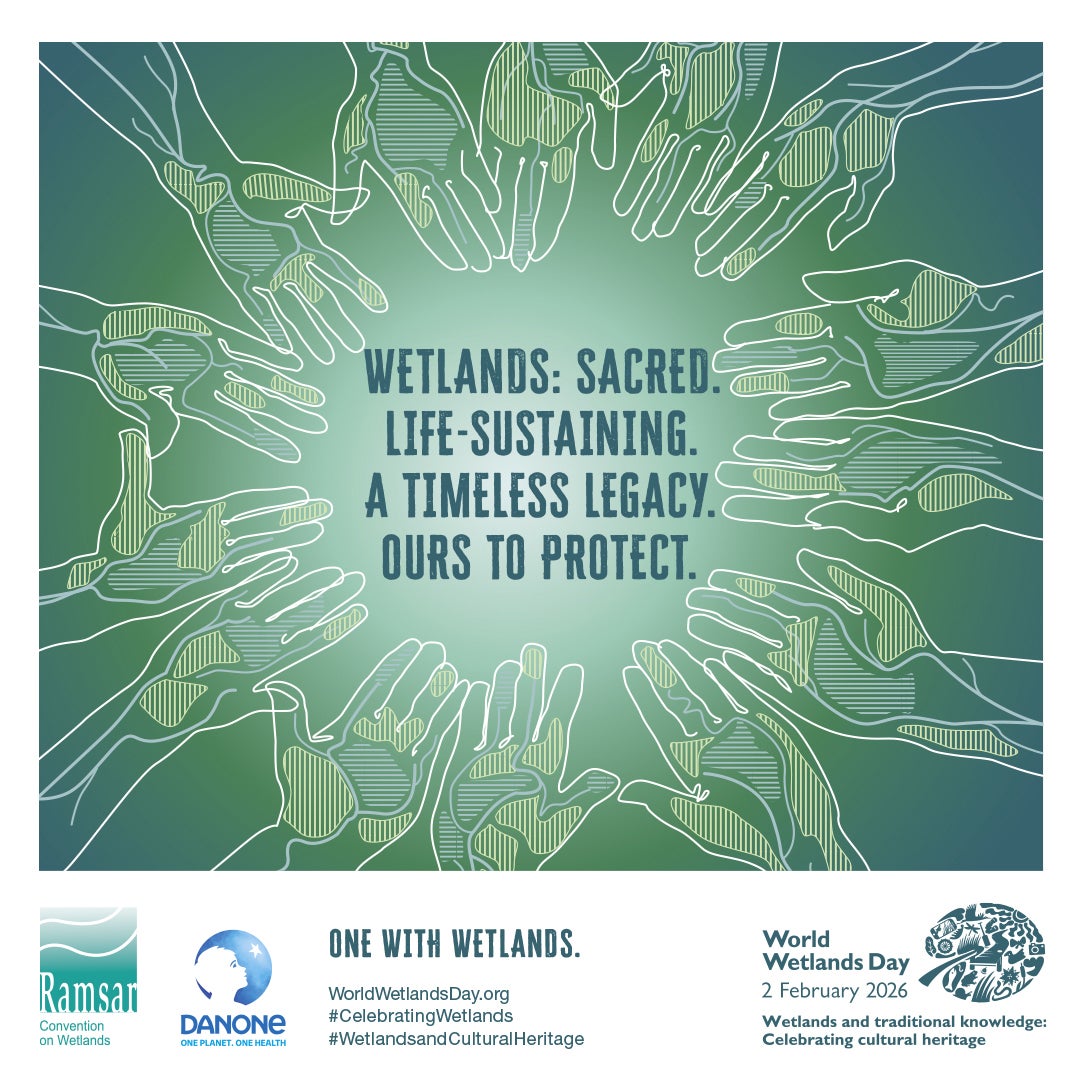
World Wetlands Day (WWD) is celebrated each year on February 2nd, which marks the day when the Convention on Wetlands was adopted in 1971 in Ramsar, Iran. The Convention is an international government agreement acknowledging the importance of wetlands and plays a central role in the wise use and conservation of these critical ecosystems. To learn more about the Convention, visit: www.ramsar.org
World Wetlands Day 2026 Registration
The University of Waterloo’s WWD event will be held in person in the Centre for Environmental and Information Technology (EIT) building on campus on Monday, February 2nd, 2026.
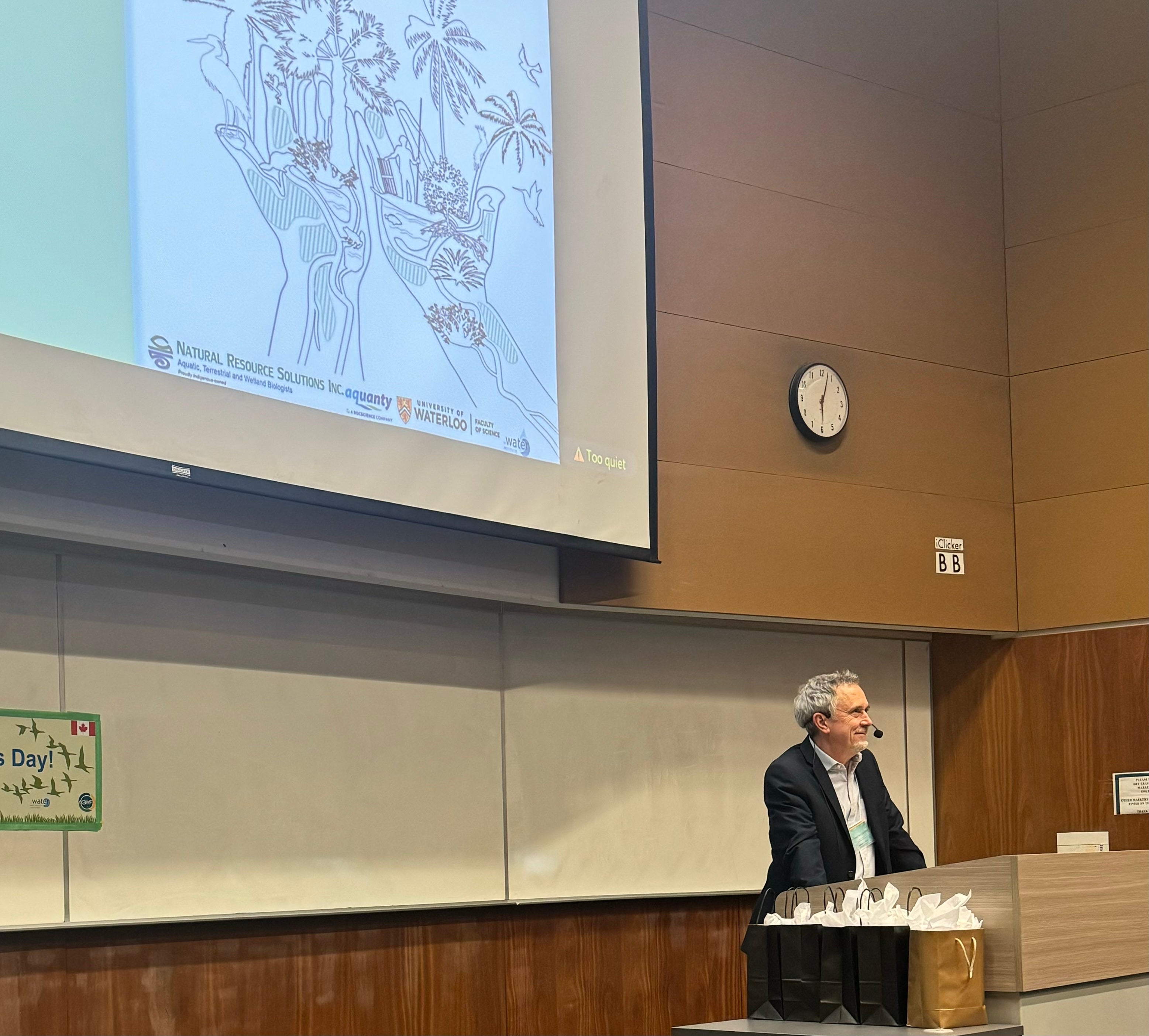
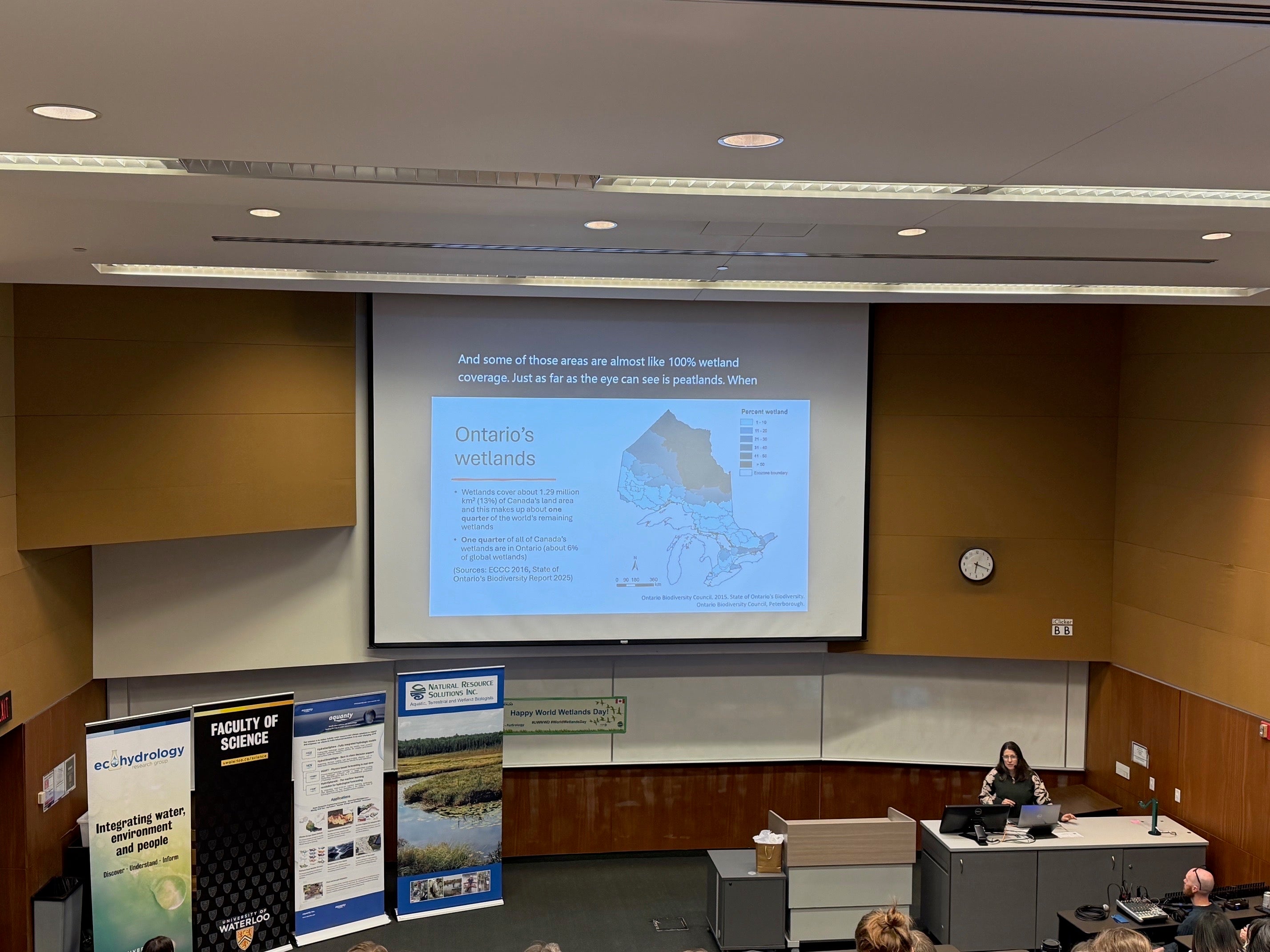
The event will feature a poster session and reception on the first and second floors from 4:00 to 6:00 pm, followed by a distinguished lecture by Dr. Sarah Finkelstein in EIT 1015 from 6:00 to 7:00 pm, entitled:
"From Biidasige Park in the Toronto Port Lands to the Winisk River on Ontario’s North Coast: linking paleoenvironmental research and Indigenous knowledge to support wetland conservation in Ontario"

"From Biidasige Park in the Toronto Port Lands to the Winisk River on Ontario’s North Coast: linking paleoenvironmental research and Indigenous knowledge to support wetland conservation in Ontario"
Ontario contains one of the most extensive and diverse profiles of wetland types in any jurisdiction of the world. These wetlands hold deep cultural significance for Indigenous communities, provide essential habitat for threatened wildlife, support flood mitigation and water quality, and play a critical role in biogeochemical cycling including carbon sequestration. The thick soil profiles that accumulate as a result of waterlogged conditions in wetland contexts can also preserve detailed archives of the wetland initiation and developmental history. Through the techniques of paleoecology, biological and geochemical tracers preserved in these wetland soils can be used to track changes over decades to millennia, thus providing valuable insights into drivers of change and resilience to disturbance. In the Toronto Port Lands, buried soils were uncovered during construction for a massive floodplain protection project, yielding pollen and seed assemblages, and radiocarbon dates detailing pre- and early-settlement era wetland plant communities. Used in combination with Anishinaabe knowledge of plants and their uses, these results inform restoration of what was an extensive freshwater wetland at Waasayishkodenayosh, the mouth of Toronto’s Don River. In other examples, we are working in collaboration with Weenusk and Moose Cree First Nations to use paleoecology to identify hotspots of peat carbon accumulation, track pathways of peatland development and impacts of climate change across the inland peatlands of the Hudson Bay Lowlands, and the coastal mineral soil wetlands proximal to Weeneebeg (James Bay) and Washaybeyoh (Hudson Bay). In combination with Indigenous knowledge, these results are used to support land use planning and the conservation vision of these communities.
Sarah Finkelstein is a Professor in the Department of Earth Sciences at the University of Toronto. She is a paleoecologist and paleoclimatologist with research interests in Holocene and Late Pleistocene wetland development, carbon cycling in wetlands, and using palynology (pollen) and other microfossil proxies to reconstruct long-term environmental changes. Sarah is also engaged in collaborations with Indigenous knowledge keepers to link scientific and Indigenous knowledge in support of climate change mitigation, conservation and wetland restoration. Sarah’s research has focused on the diverse wetlands of the Great Lakes region in Southern Ontario as well as the ecosystems of Arctic and Boreal Canada including the extensive peatlands of the Hudson and James Bay Lowlands.
Poster presentations
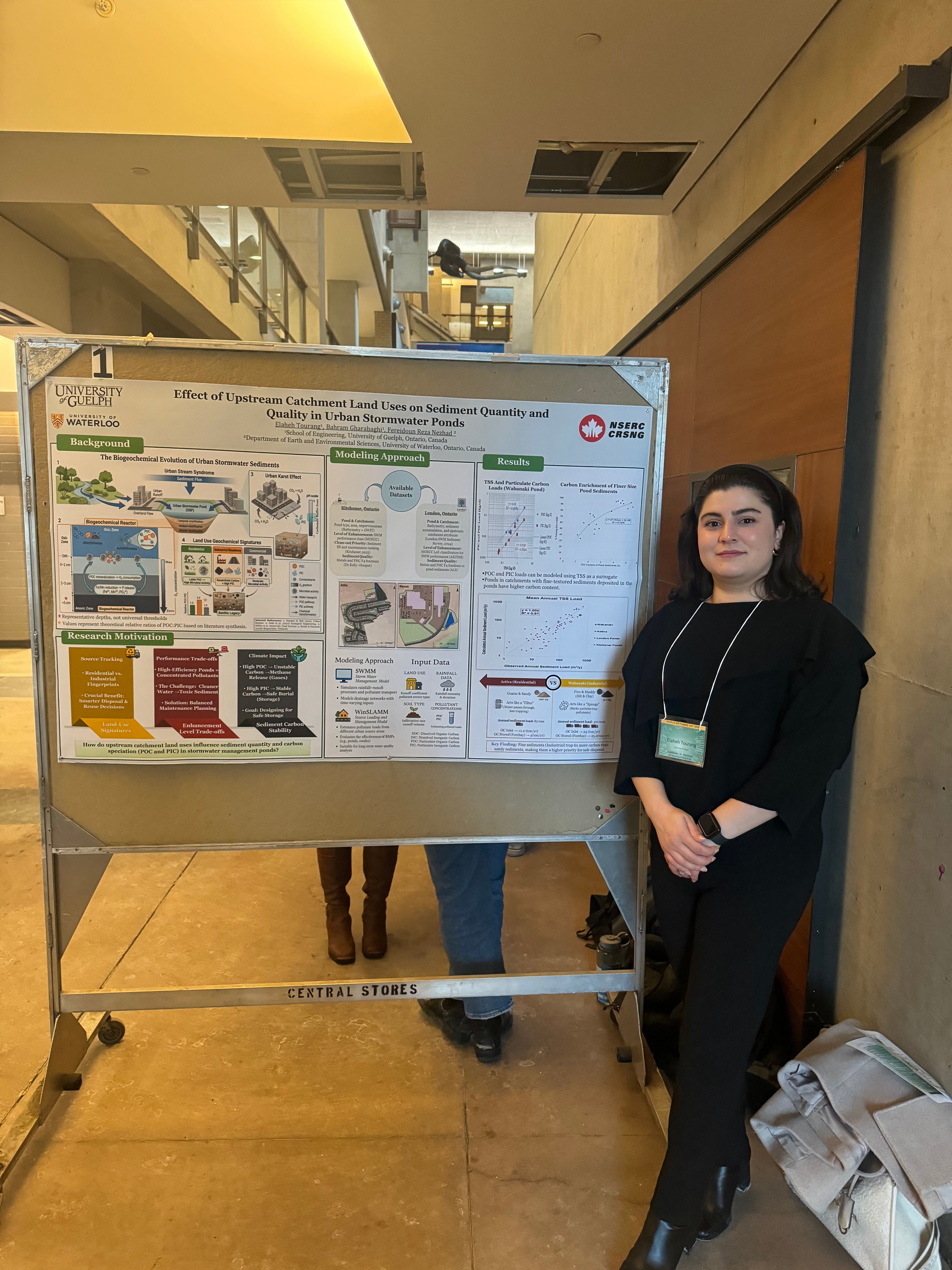
Elaheh Tourang - Effect of Upstream Catchment Land Uses on Sediment Quantity and Quality in Urban Stormwater Ponds
Violet McCloskey - Wildfire effects on tree-mediated methane fluxes in the Hudson Bay Lowlands
Claire Schon - What I learned when my field site burned down: Exploiting my tragedy for academic success
Sandani Buddhima Abewickrama Vidana Pathirana - What Controls Dissolved Methane in a Peatland-Fed Boreal Lake? A Preliminary Assessment of Water Chemistry Controls
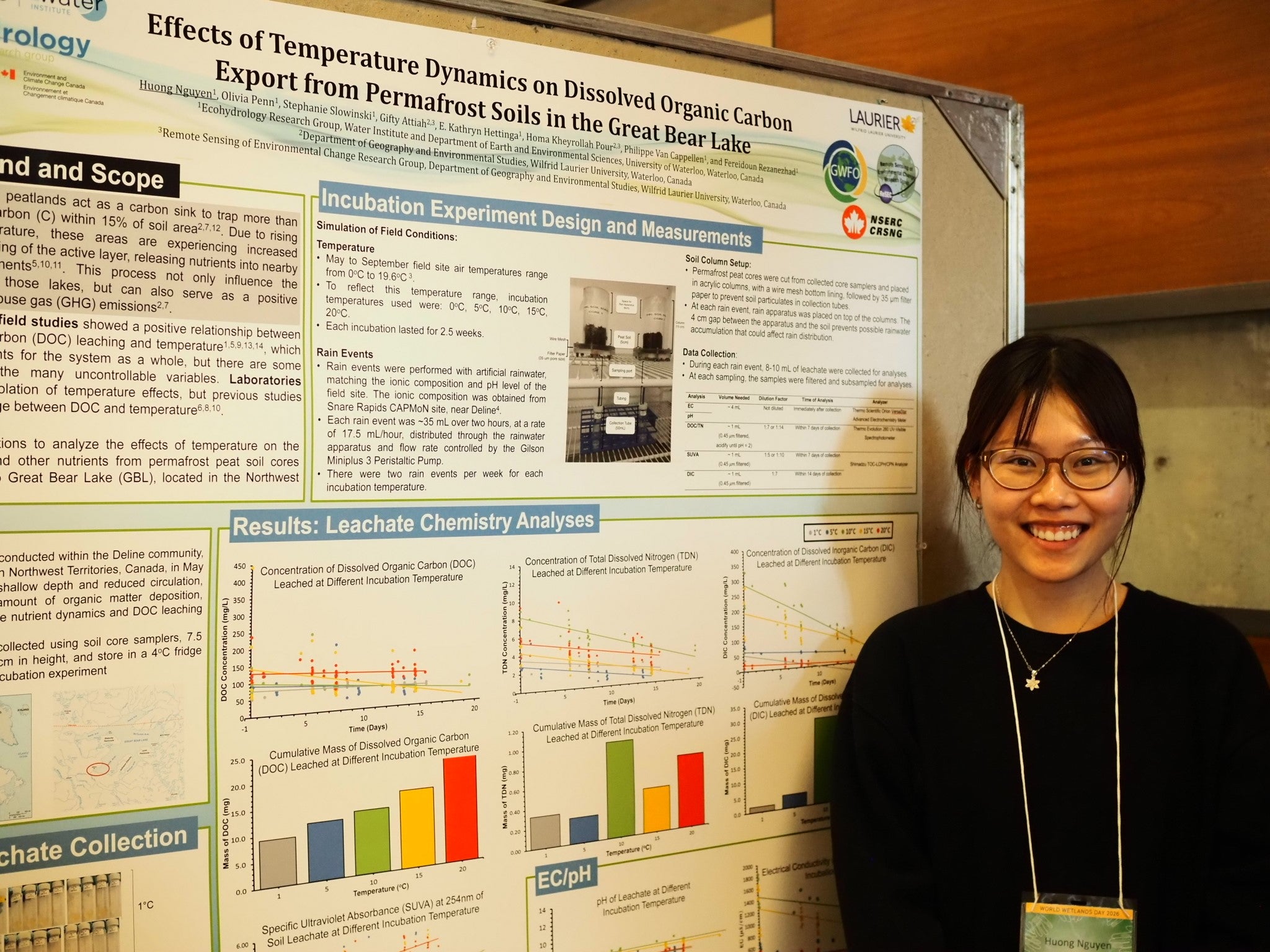
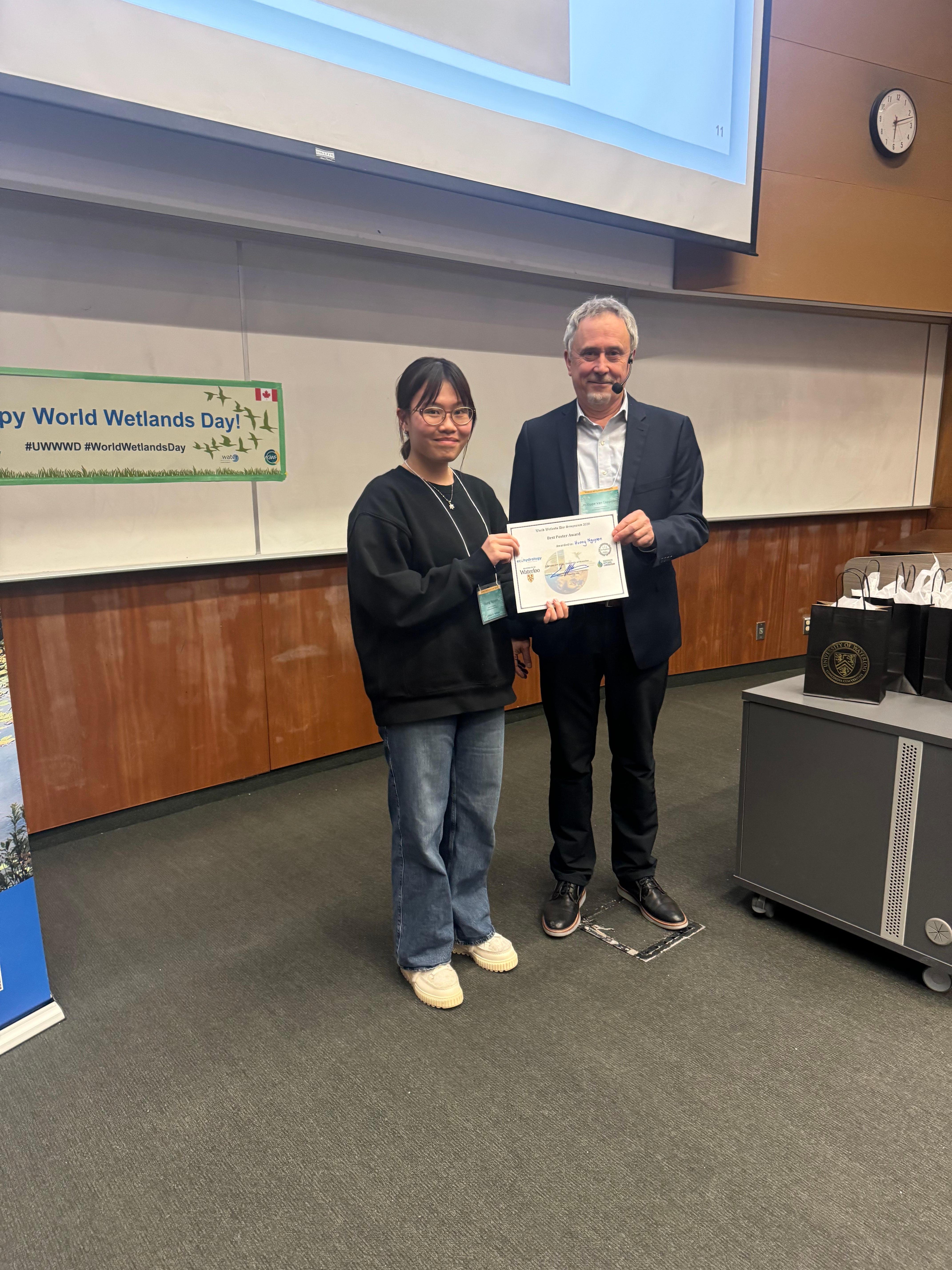
Huong Nguyen - Understanding the Effects of Rising Temperature on Leaching of Dissolved Organic Carbon from Soil in the Great Bear Lake
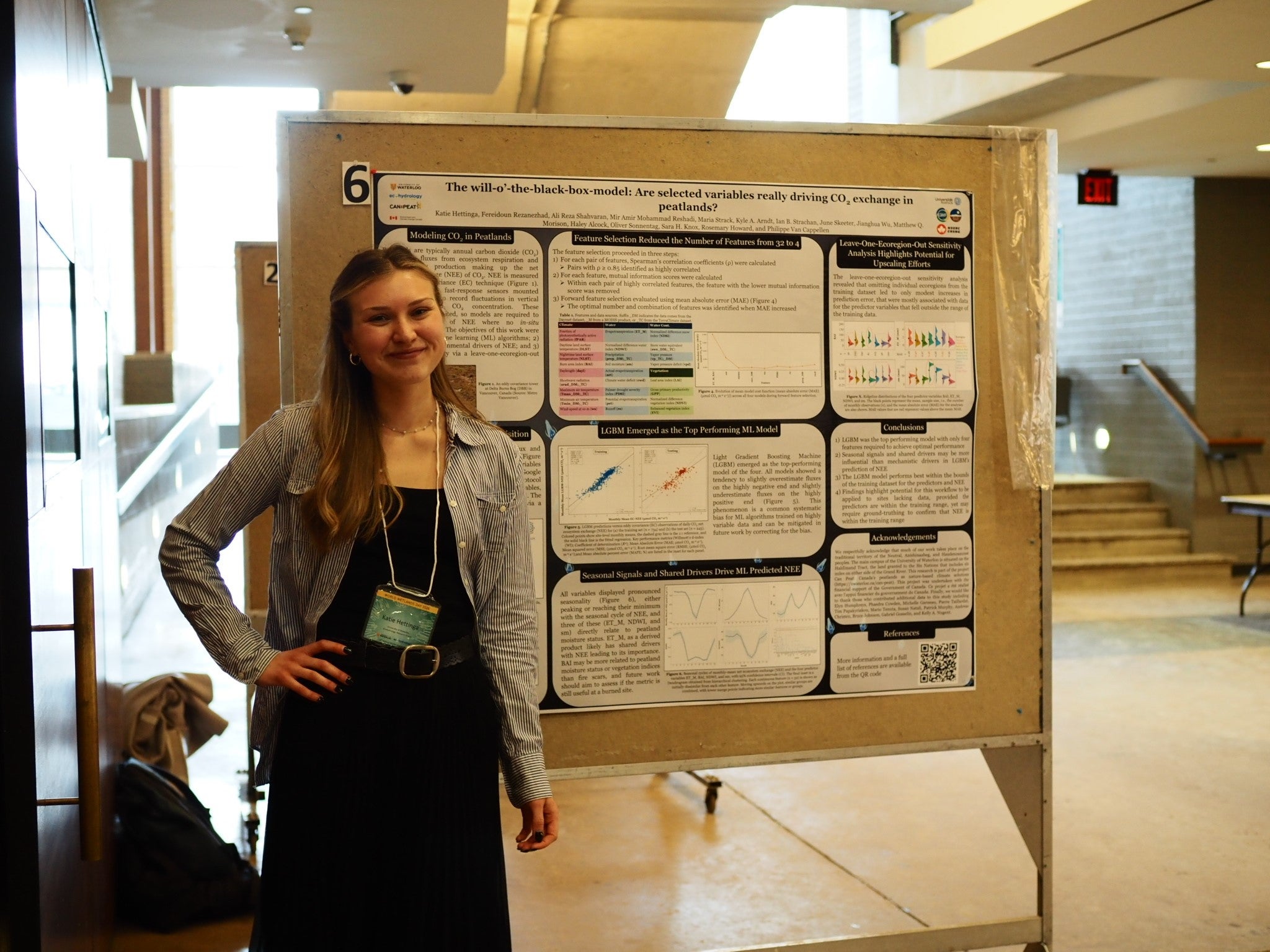
Katie Hettinga - The will-o'-the-black-box-model: Are selected variables really driving CO2 exchange in peatlands?
Elaine Cota - Snow Water Equivalent and Runoff Changes across Ecoregions in the Northwest Territories, Canada
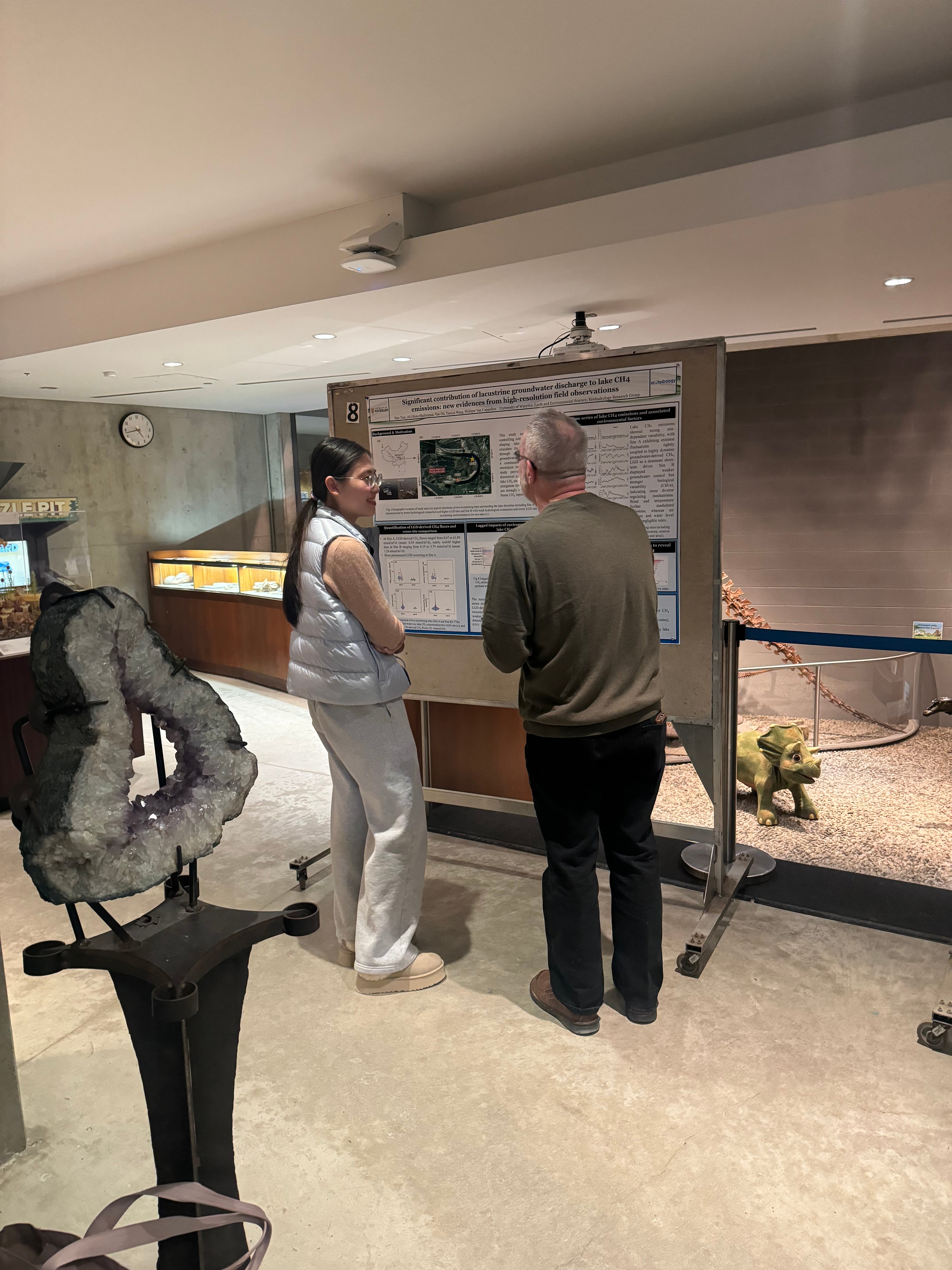
Hao Tian - Significant contribution of lacustrine groundwater discharge to lake Ch4 emissions: new evidences from high-resolution field observations
Henry Gibbons - Seismic Line Restoration in Northeastern B.C.: A Look at Inline Mounding & Hummock Transfer
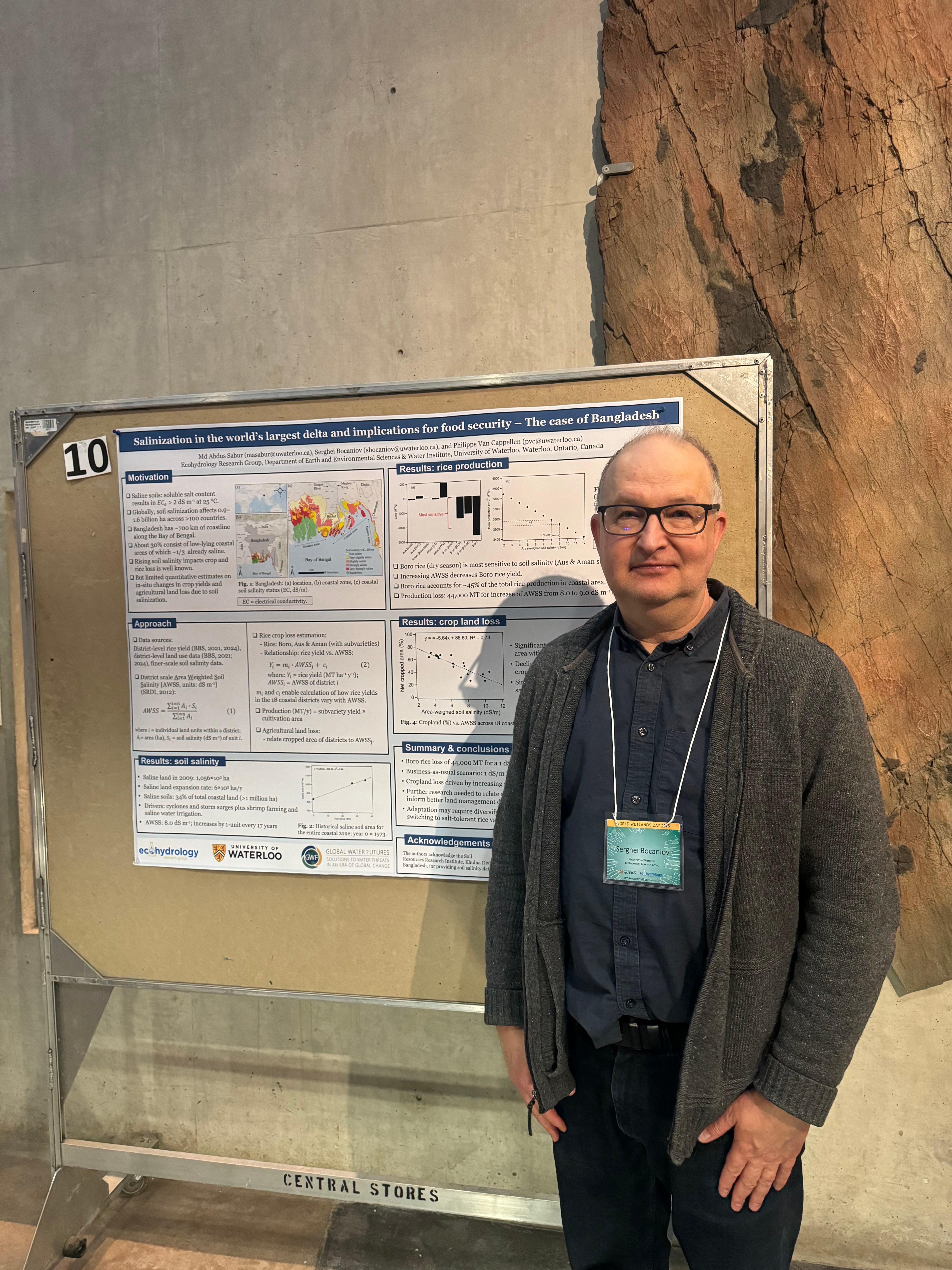
Serghei Bocaniov - Salinization in the world’s largest delta and implications for food security – The case of Bangladesh
Chinonso Chris Emenyonu - Quantifying Peat Respiration and Vegetation Distribution along Hydrologic Gradients in a Restored Fen
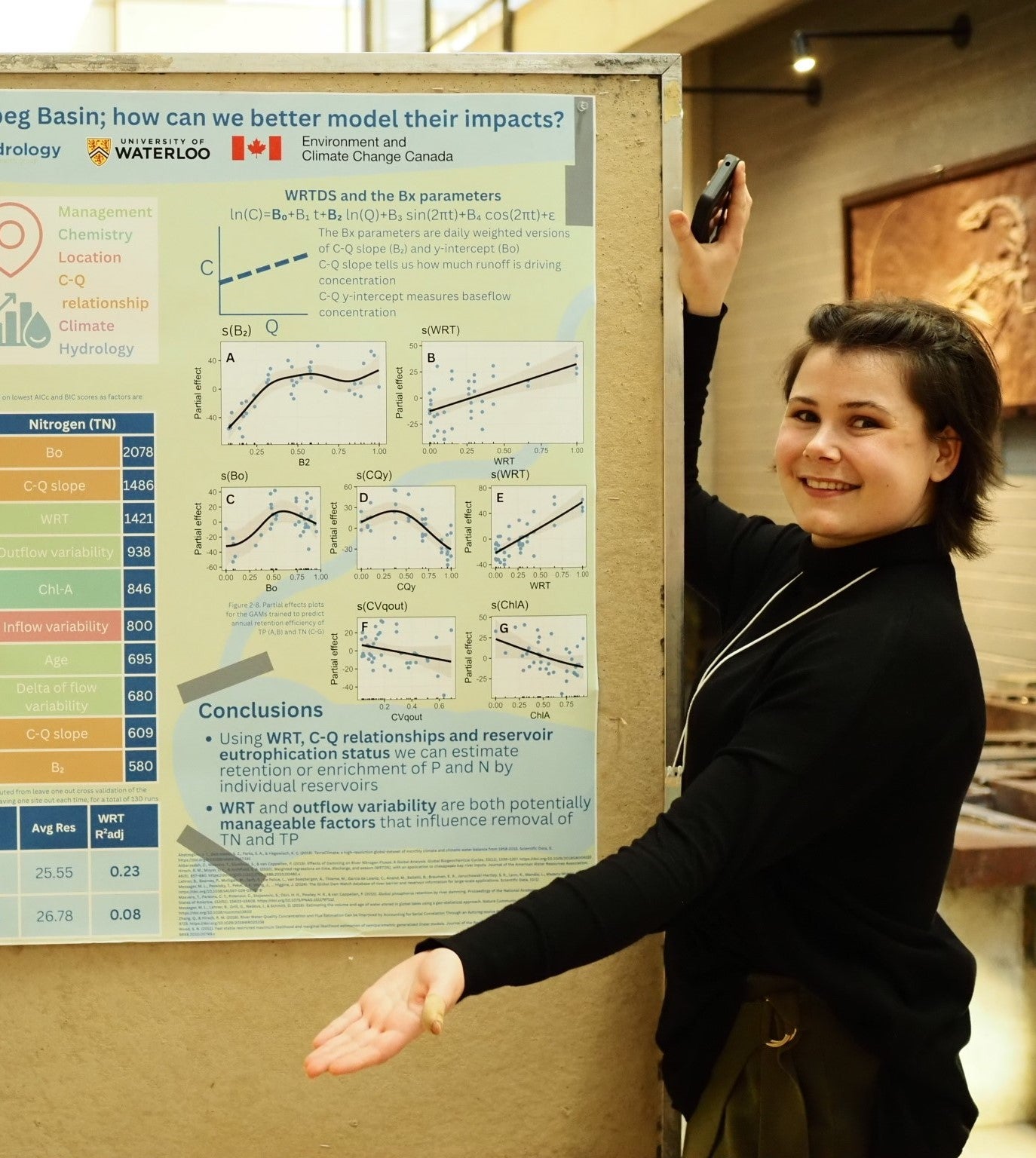
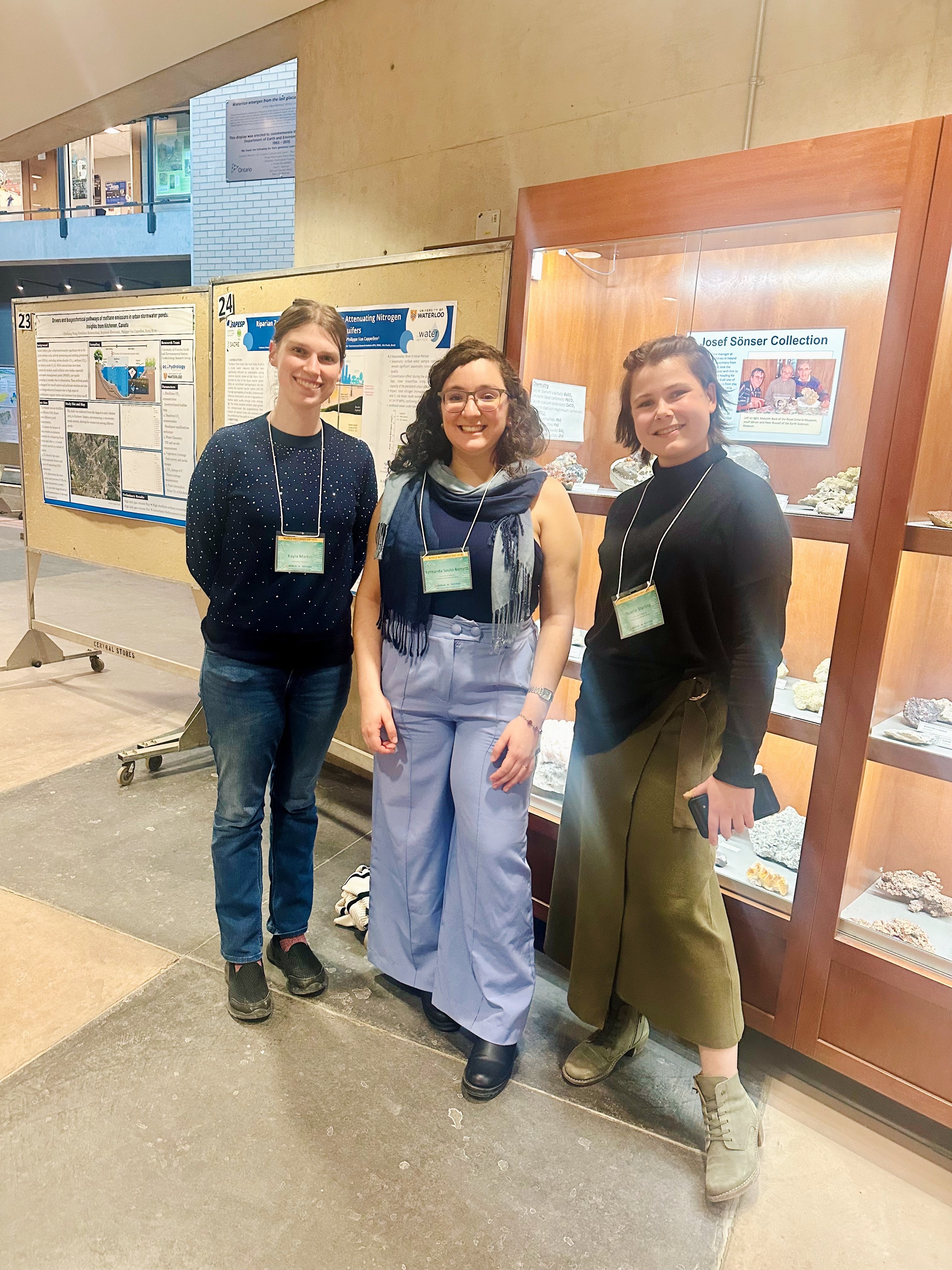
Noelle Starling - Dams shape N and P loads across Lake Winnipeg Basin; how can we better model their impacts?
Jiangkai Xue - Paleoclimate-Driven Sedimentary Environment Change Shaped High Iodine Aquifers in Alluvial Lacustrine Plains
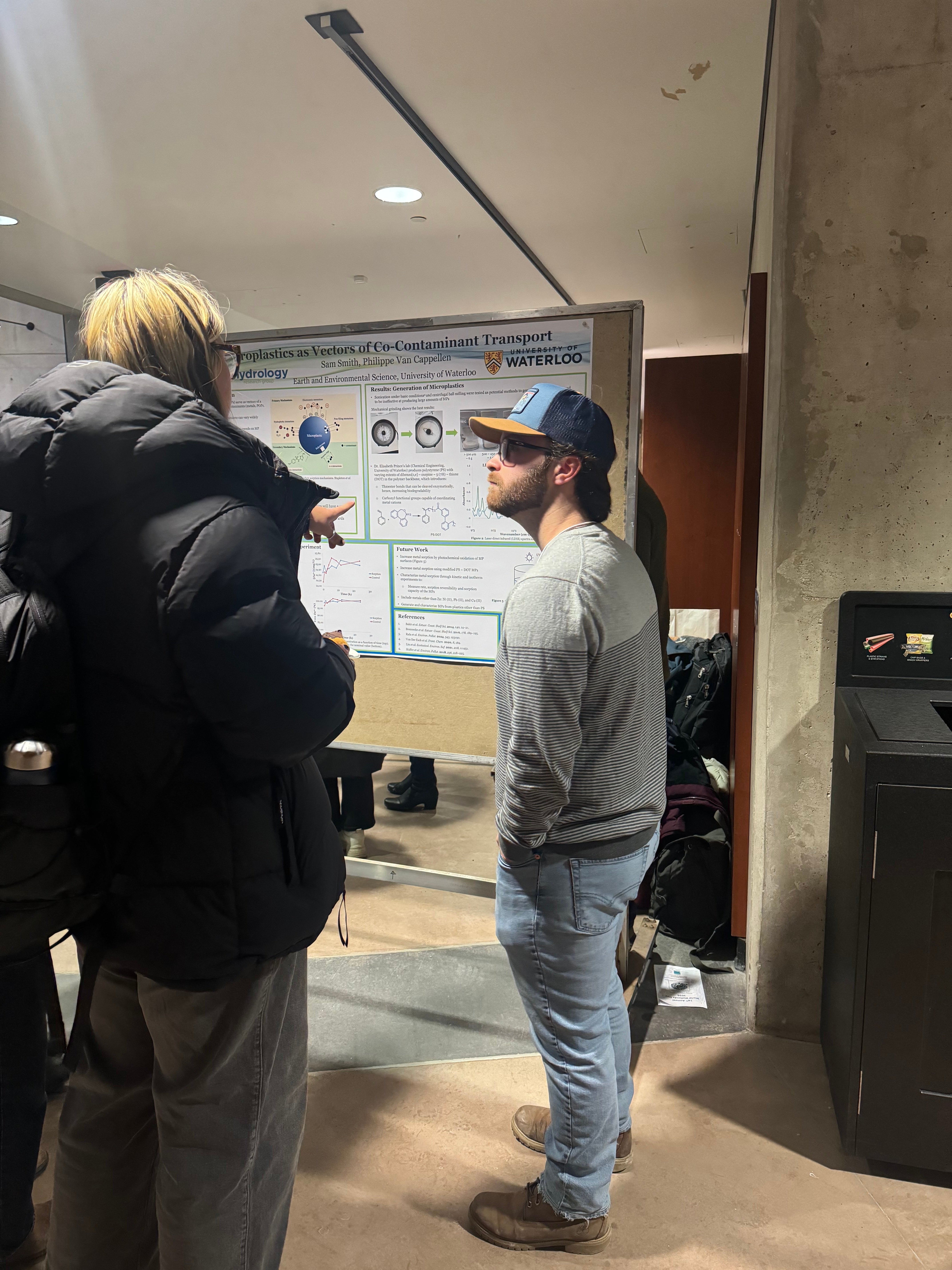
Sam Smith - Microplastics as vectors of co-contaminant transport
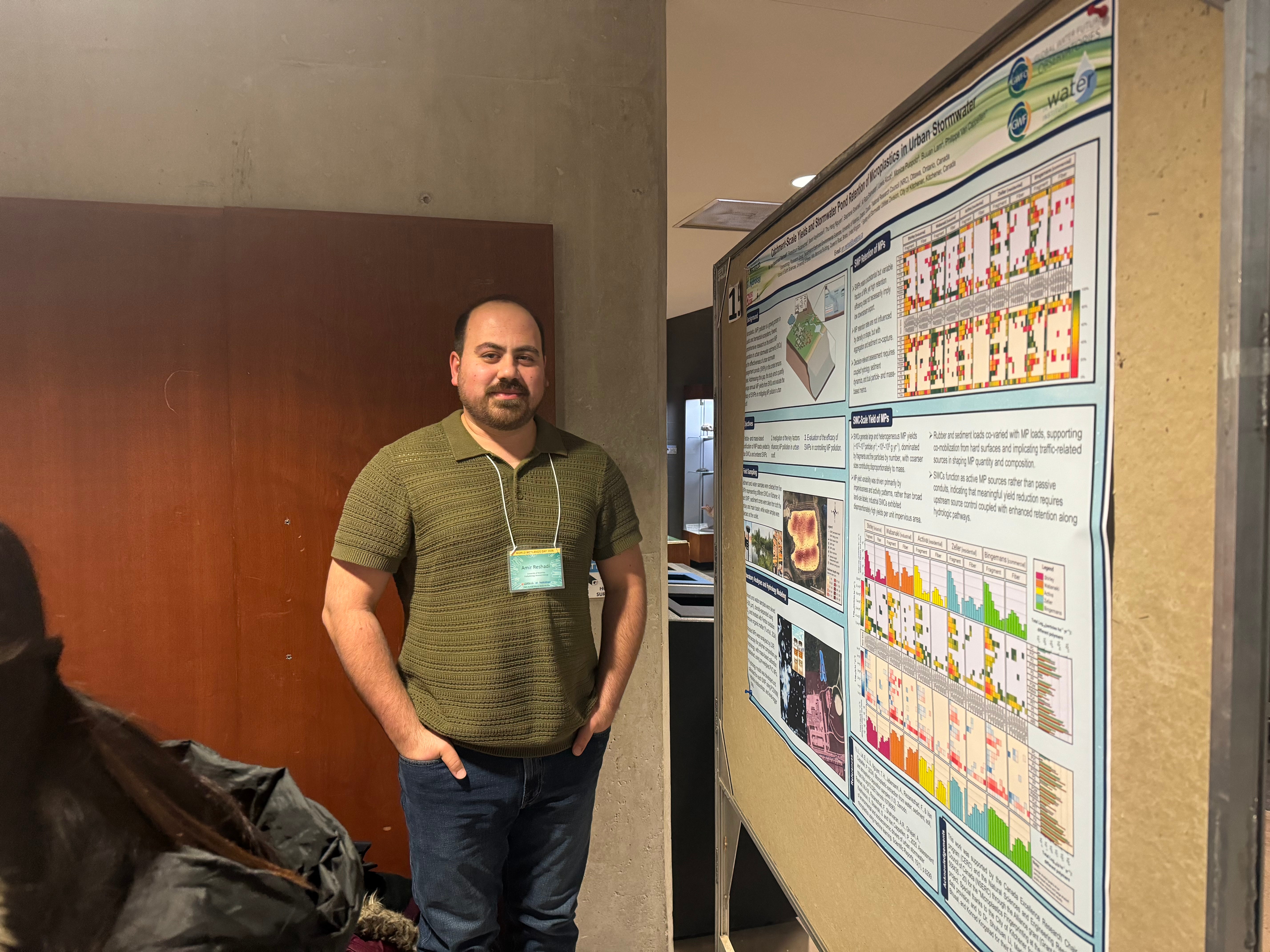
Amir Reshadi - Microplastic Emissions and Retention in Urban Catchments and Stormwater Ponds
Nazia Tabassum - When Vegetation Changes, Carbon Responds! Photograph-Derived Vegetation Indices and Carbon Fluxes in Disturbed and Restored Peatlands
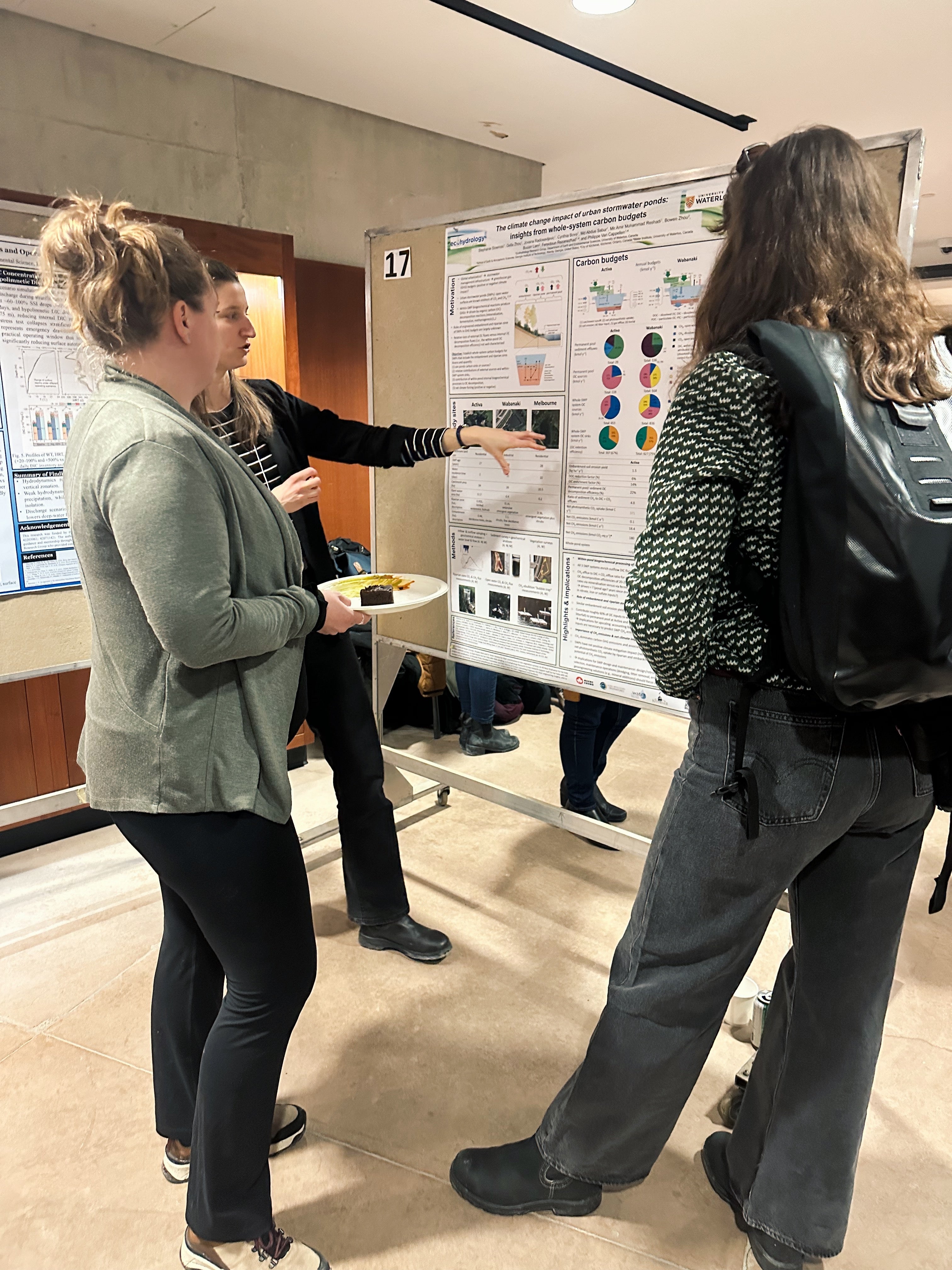
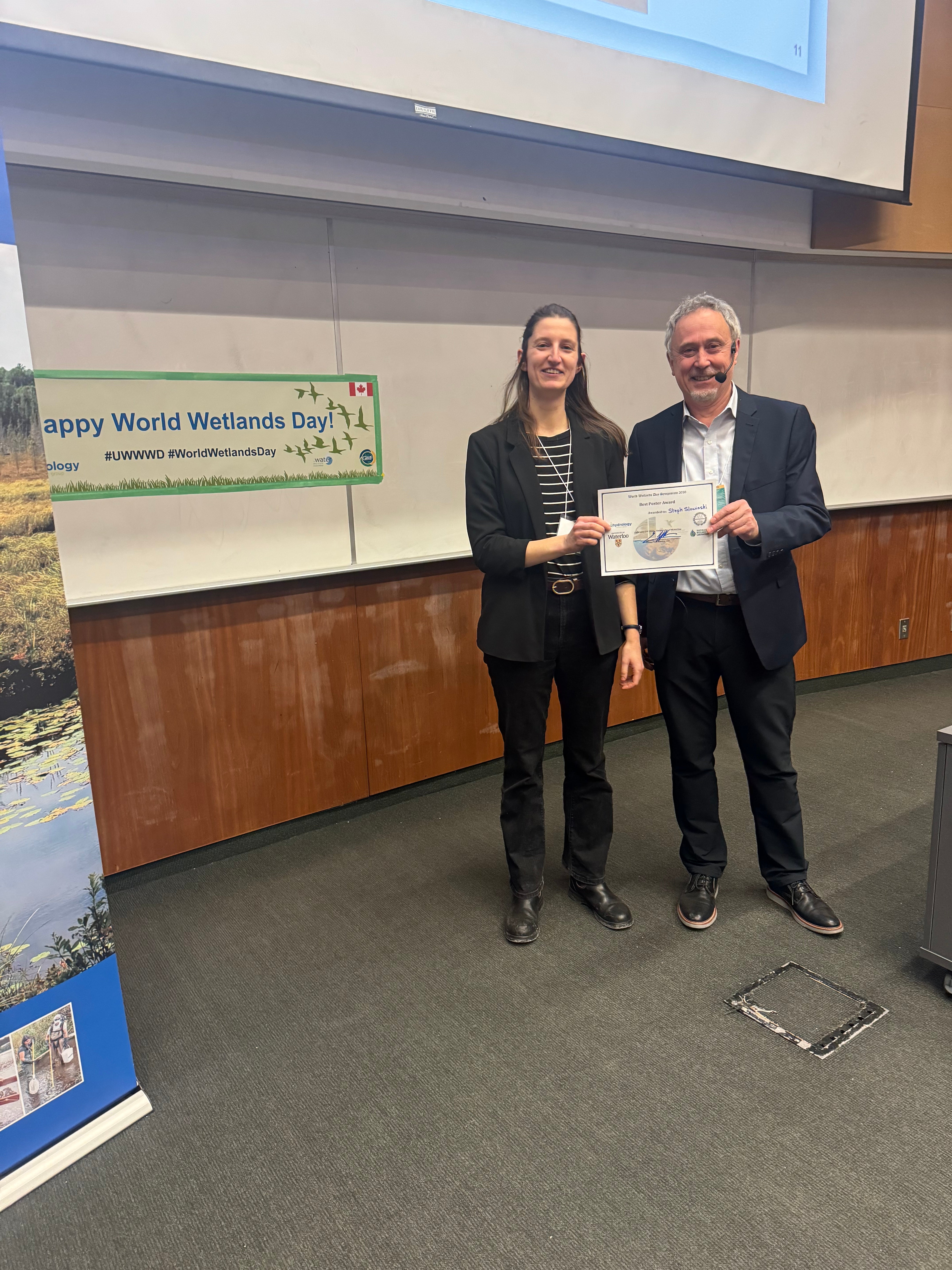
Steph Slowinski - The climate change impact of urban stormwater ponds: insights from whole-system carbon budgets
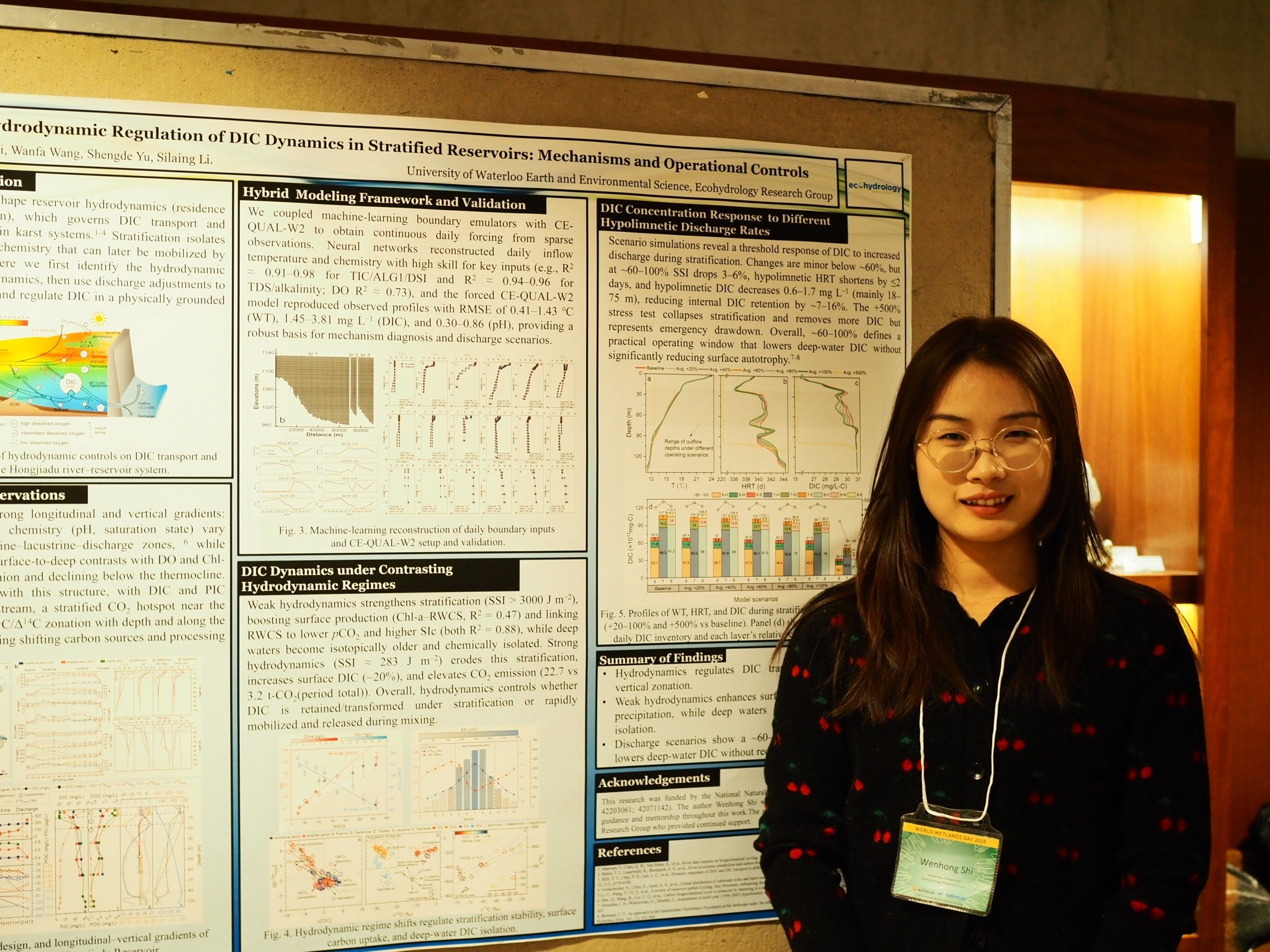
Wenhong Shi - Hydrodynamic Regulation of DIC Dynamics in Stratified Reservoirs: Mechanisms and Operational Controls
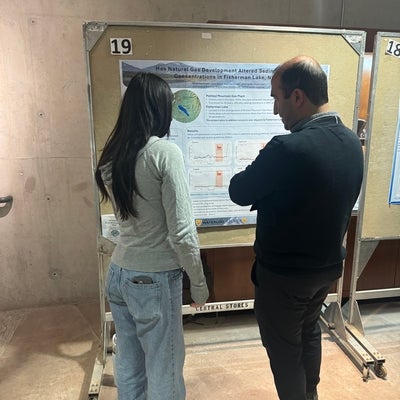
Emma Bacchionchi - Has Natural Gas Development Altered Sediment Metal Concentrations in Fisherman Lake, NWT?
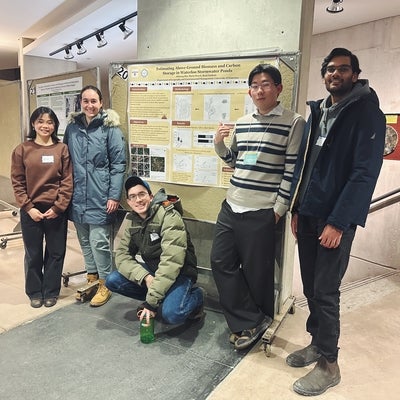
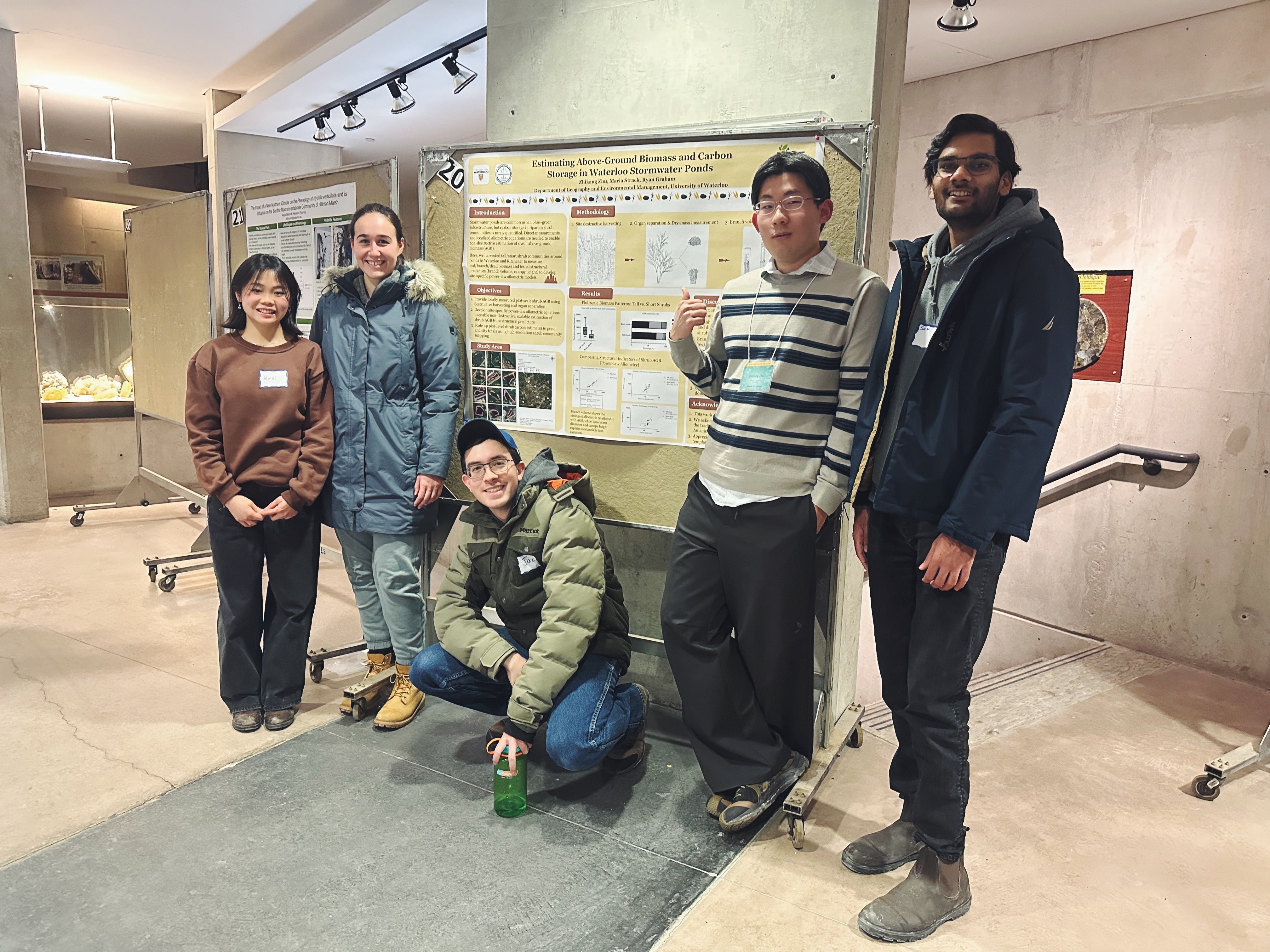
Zhikang (Sonic) Zhu - Every Shrub Counts: Estimating Above-Ground Biomass and Carbon Storage in Waterloo Stormwater Ponds
Kayla Martin - Effects of Hydrilla verticillate Phenology on Water Quality and Benthic Marco-Invertebrates in Hillman Marsh
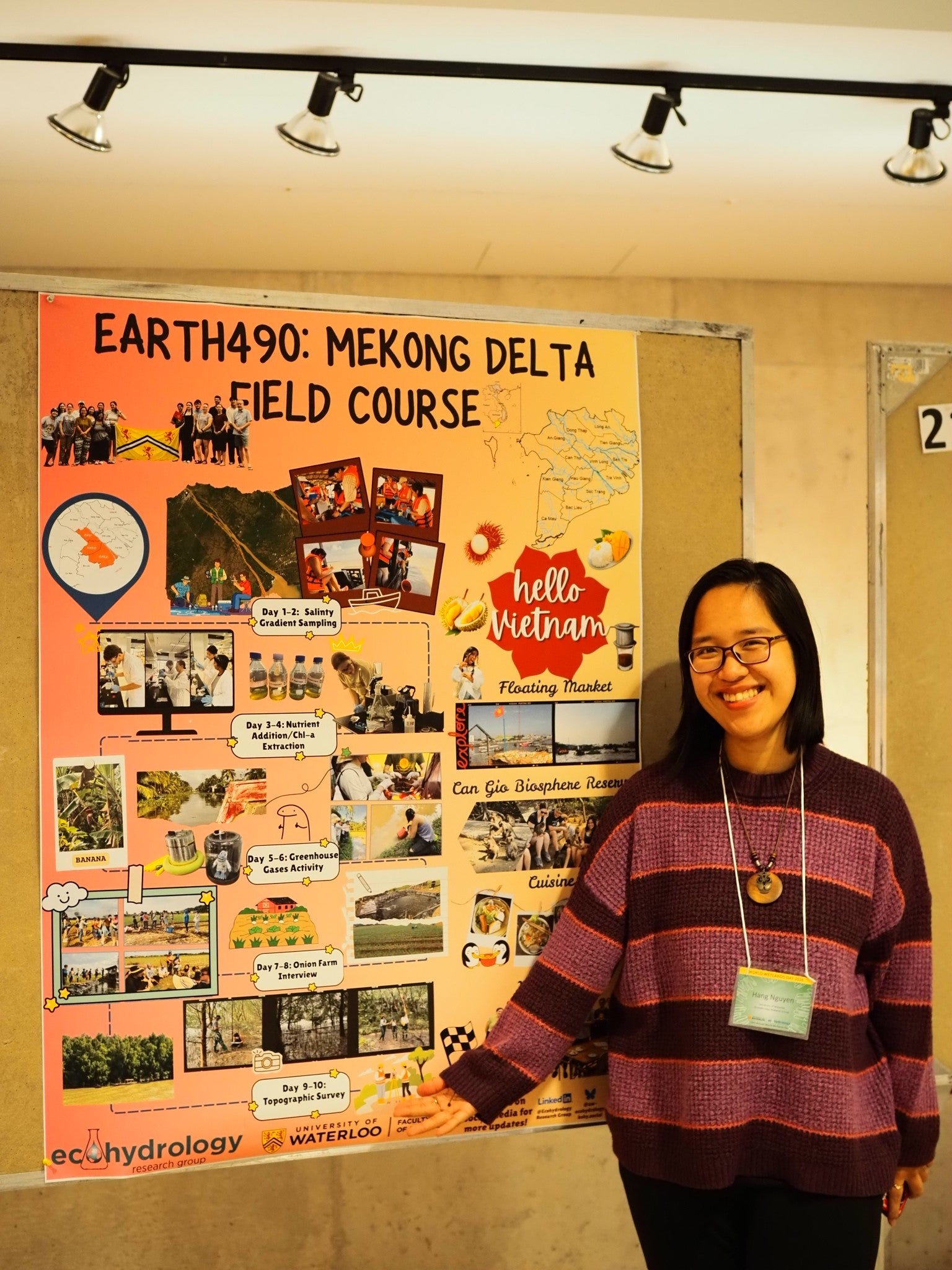
Hang Nguyen - EARTH490: Mekong Delta Field Course
Xinchang Wang - Drivers and biogeochemical pathways of methane emissions in urban stormwater ponds: Insights from Kitchener, Canada
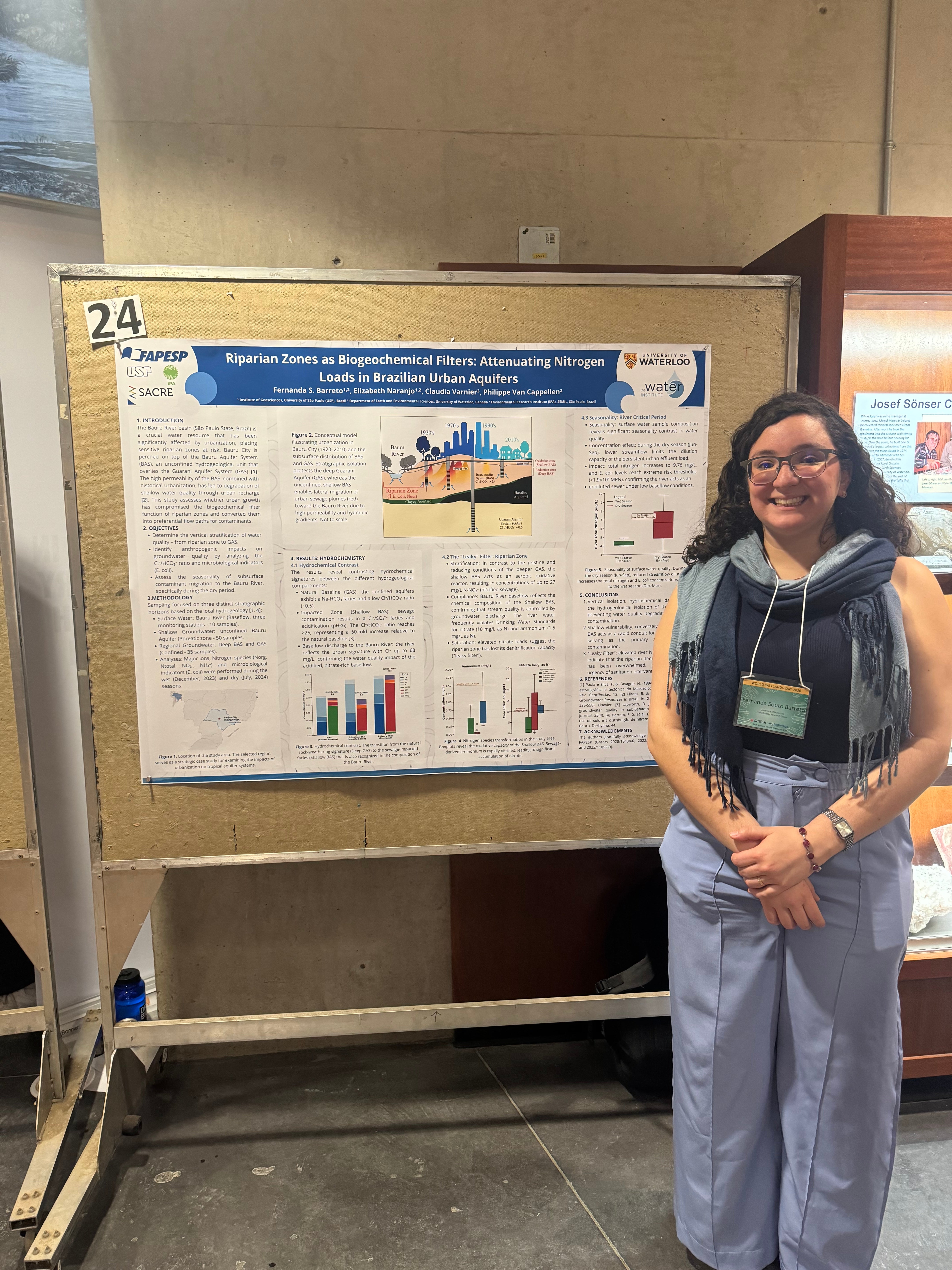
Fernanda Souto Barreto - Coupling Hydrogeology and Riverine Health: Sewage-Derived Groundwater Discharge Driving Urban Stream Degradation
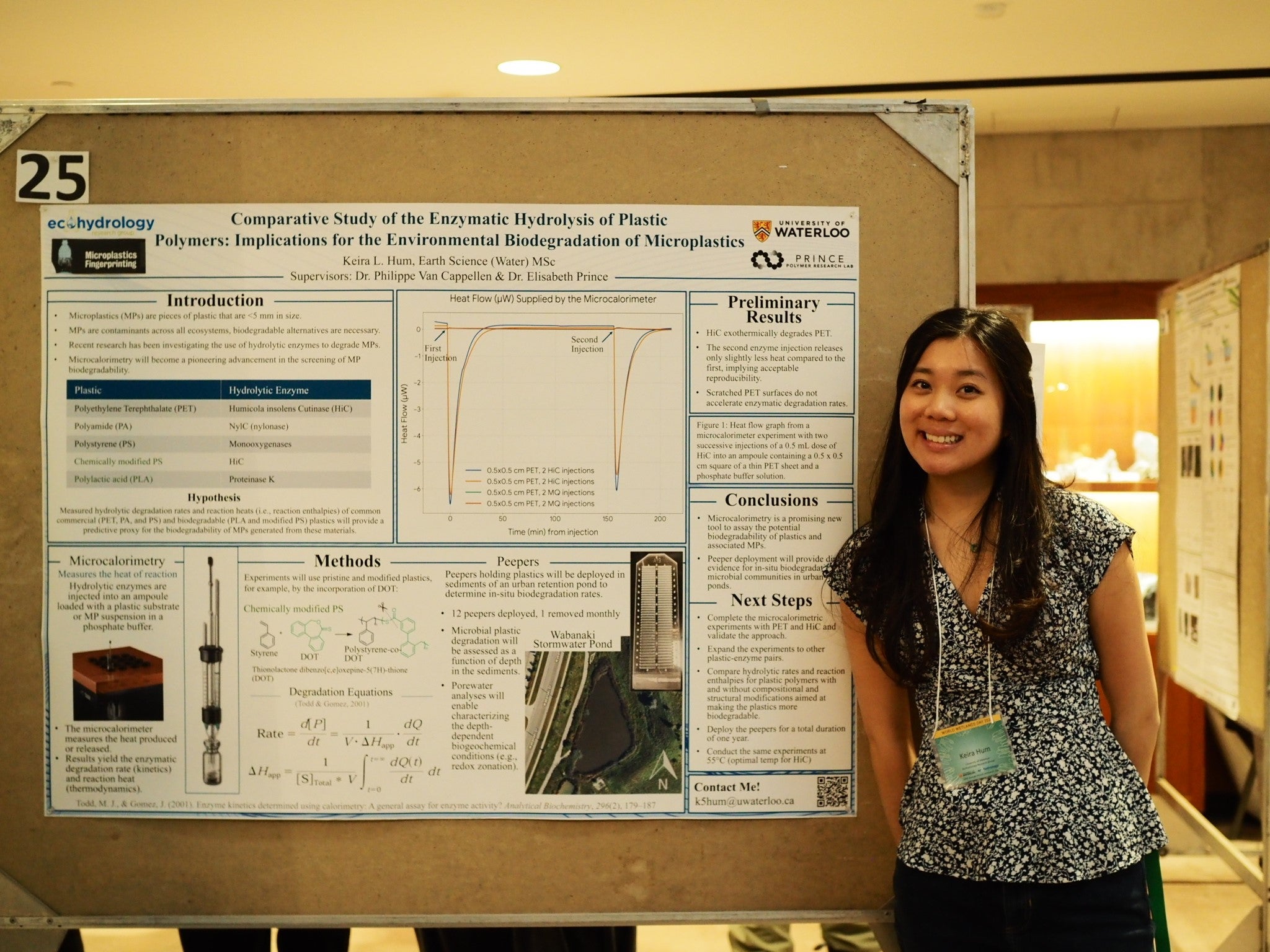
Keira Hum - Comparative Study of the Enzymatic Hydrolysis of Plastic Polymers: Implications for the Environmental Biodegradation of Microplastics
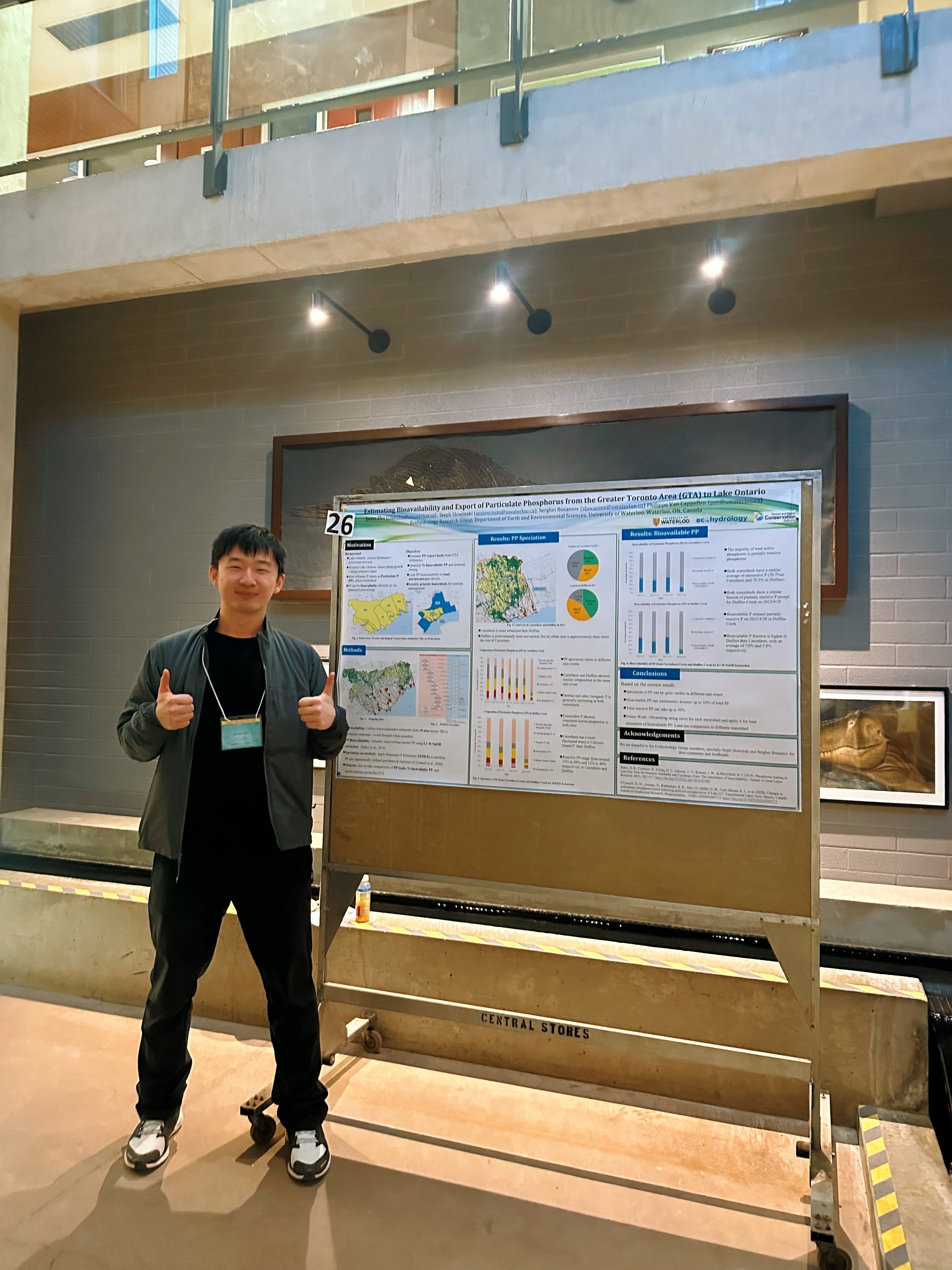
Jason Zhu - Bioavailability of Particulate Phosphorous
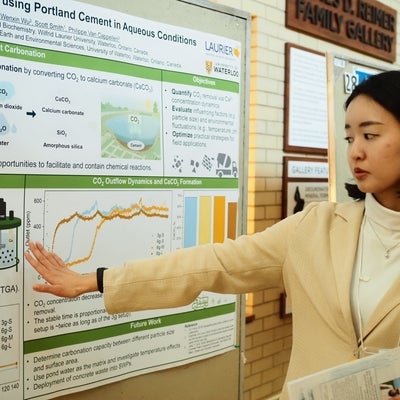
Michelle Tai - Assessment of CO2 Capture using Portland Cement in Aqueous Conditions
Megan Schmidt - Assessing Nitrous Oxide Fluxes From Soil and Tree Stems in Temperate Swamps
Shengde Yu - GRM: Linking Global Databases to Process-Based Reservoir Simulations
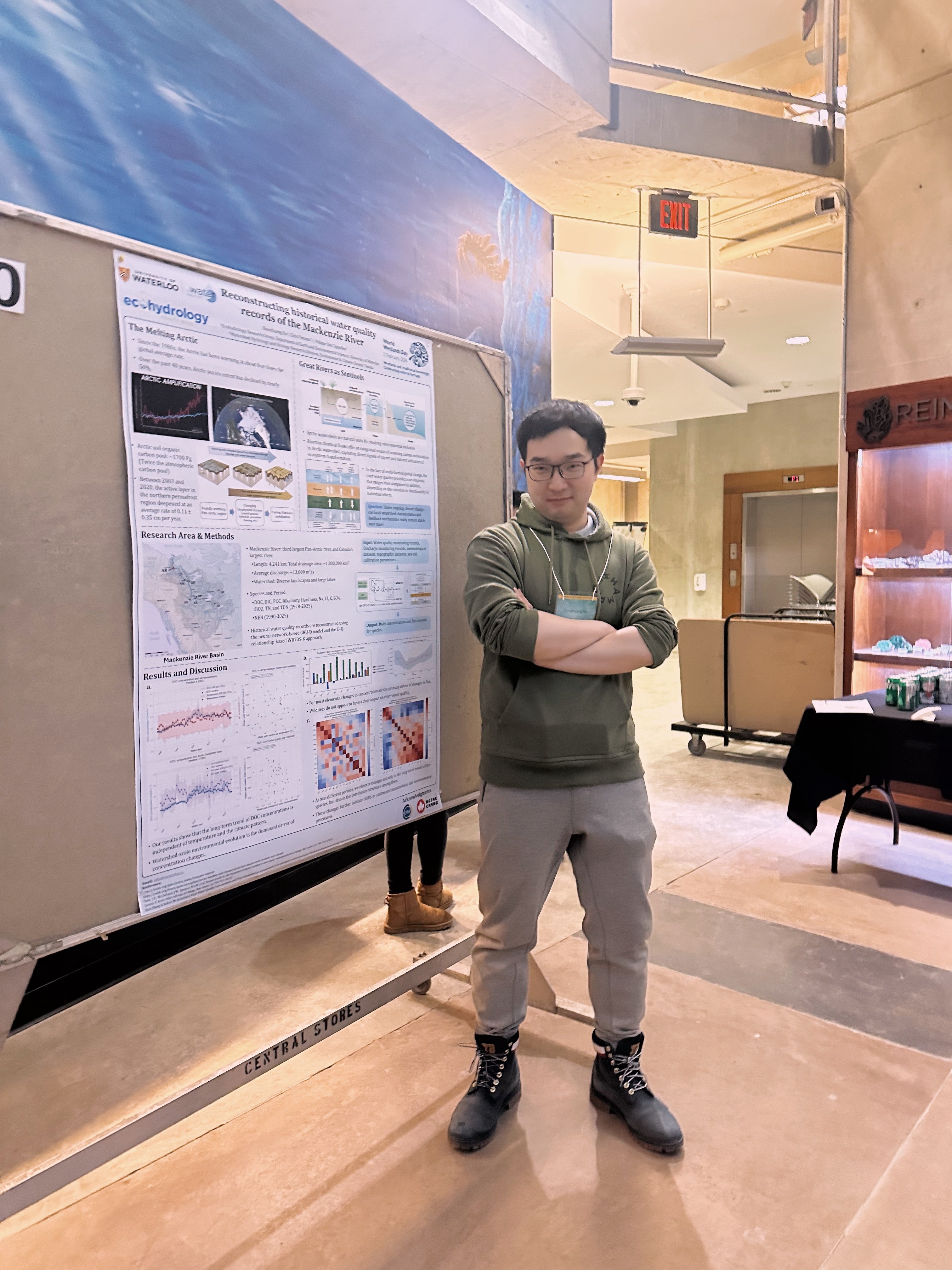
Xiaochuang Bu - Reconstructing historical water quality records of the Mackenzie River
Blue Dot Stewards - Exploration of Youth Citizen Science Contributions to the NSERC Alliance Missions - GHG Storm Water Ponds Research Project
Acknowledgements
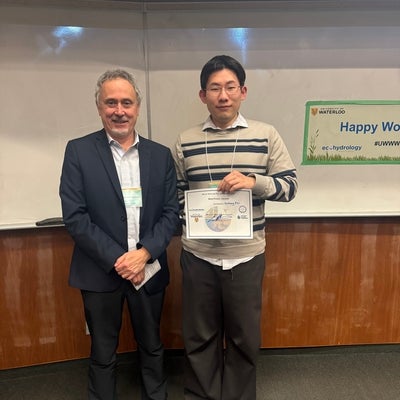
We gratefully acknowledge the support of the University of Waterloo community, including the Faculty of Environment, the Faculty of Science, and the Water Institute. We also extend a special thank you to Aquanty for sponsoring the event and fully covering the graduate student poster prize, and to Natural Resources Solutions Inc. for sponsoring and fully covering the undergraduate student prize.