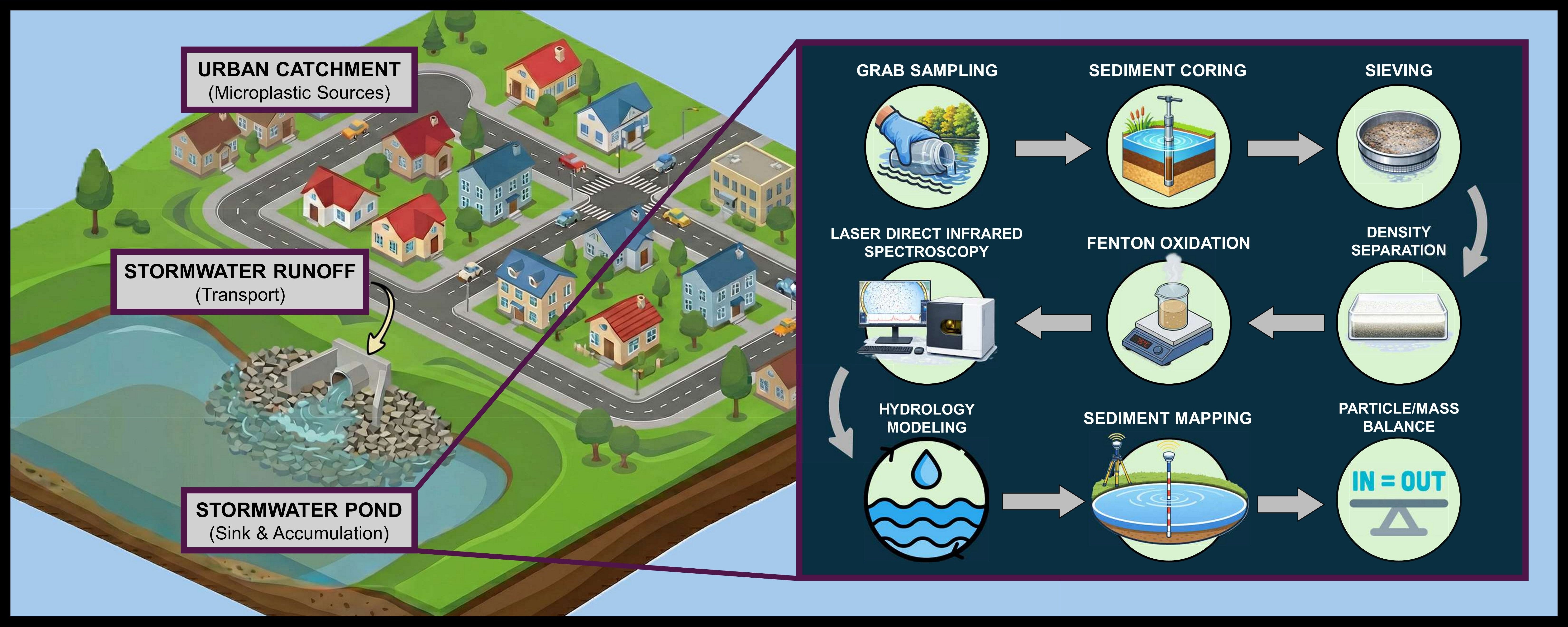
New publication quantifies microplastic sources, catchment yields, and land use drivers in urban stormwater runoff
In a recent publication in the journal of Water Research, ERG members of the Microplastics Fingerprinting Project presented findings on the contribution of stormwater catchments to microplastic (MP) loads and yields in urban areas. The study integrated sampling from five stormwater ponds in Kitchener, Ontario, with laser direct infrared imaging, hydrological modeling, land use characterization, and sediment mapping to investigate the extent of urban MP yields to downstream areas via stormwater runoff.
Findings indicate a substantial difference between catchments of various land uses and identify strong correlations between MP loads and yields with sediment yield, traffic, human activity, and the impervious surface area of the catchments. Notably, general categories of land use alone did not account for the differing levels of MP yields observed across the sites. Plastic polymers such as polyamide and polyethylene were among the most abundant types identified in the urban stormwater, signaling the role of traffic and single-use plastics as major sources in line with previous research.
This study represents the first comprehensive effort to quantify MP yields and loads in urban stormwater catchments, specifically those representative of Canadian urban areas. More information can be found in the open-access article published at the journal of Water Research: https://doi.org/10.1016/j.watres.2026.125804