Just transitions require reframing relationships, not just technical solutions
Just Transitions Technical Reports

This is a centrepiece in which all participants in a community circle are invited to contribute before beginning a round of sharing. November 2024, Phoenix, Arizona.

Lunch offered at George Brown College as part of the Indigenous Curriculum Specialists Network Gathering. August 2025, Toronto, Ontario.
Banner image: This is the Just Transitions Collective joining with the Protect Ha'Kamwe Water Ceremony. November 2024, Prayer Camp Gathering off Cholla Canyon Ranch Road, Arizona.
The words “just transitions” are sometimes used to emphasize the need for fairness within an otherwise technical process of shifting to clean, renewable energy (Miller, 2022). Yet, as global greenhouse gas emissions keep rising (Crippa et al., 2025; World Bank, 2021), and governments actively roll back environmental protections, shorten community consultations, and create special economic zones for corporate wealth extraction (Alook et al., 2023), it is clear that just transitions require much more than confronting the technical dimensions of climate complexity (Kulisz et al., 2026). They require shifts in power relations.
We therefore designed our Just Transitions project to move beyond the language of top-down energy transitions, towards a broader and deeper set of community-led visions for just transitions from the bottom-up. This reframing matters because it centres the leadership and knowledge of different frontline community organizing efforts, actively fighting against the narratives and actions of so-called world leaders sitting at the top of dominant systems of oppression.
Our project brings into relation three distinct contexts — Phoenix (USA), Bogotá (Colombia), and Toronto (Canada) — where migrant, settler and Indigenous communities are confronting displacement, extraction, environmental injustice, and the consequences of top-down policy in different ways. Phoenix shows the connections between water, land, migration, and Indigenous sovereignty; Bogotá reveals the nuance of territorial displacement, risk, water, and community resistance/autonomy; and Toronto expresses Indigenous resurgence, institutional relations, land/water, and continental solidarities. Building solidarity across these sites is an ongoing process of acknowledging fundamental differences, while learning about certain hidden connections that emerge along the way...
The accompanying Just Transitions from the Bottom-Up reports offer a closer look at what emerged through these exchanges. Rather than reducing the three sites to a single model of just transition, each follows distinct community practices, relationships, and struggles specific to each place, while also asking what becomes possible when organizers learn across those differences. We invite readers to think about just transitions not only as changes in energy systems or policy, but as changes in relationships – with land and water, between community members, and between communities and the institutions that shape their lives. Rather than a final answer, we hope readers come away with a better sense of the different frames through which struggles for just and sustainable futures are taking place. We do not offer these stories as a model to replicate. Rather, they showcase steps taken to reveal and strengthen solidarity across distinct - yet interconnected - histories, leaving visible the tensions and complementarities between different ways of knowing and being human.
Spanish version follows. A continuación, la versión en español.
Citations
Alook, A., Eaton, E., Gray-Donald, D., Laforest, J., Lameman, C., Tucker, B. (2023). The End of This World: Climate Justice in So-Called Canada. Toronto: Between The Lines Publishing.
Crippa, M., Guizzardi, D., Pagani, F., Banja, M., Muntean, M. et al. (2025). “GHG emissions of all world countries - 2025 Report” in Publications Office of the European Union, Luxembourg, 2025, doi:10.2760/9816914, JRC143227.
Kulisz, A., Paul, N., Kalist, J., Agawa S., Flus, M., Wexler, L, and Feagan, M. (2026, accepted). “Learning Otherwise: Holding Indigenous and Western Pedagogies in Relation.” In Journal of Awareness-Based Systems Change.
Miller, C. (2022). “Ethics and Justice in Energy Transitions.” Online Ethics Center. DOI:https://doi.org/10.18130/zgh8-s419. https://onlineethics.org/cases/oec-webinars/clark-miller-ethics-and-justice-energy-transitions.
World Bank. (2021) “Renewable Energy by Country (2021); 212 countries ranked; Global average: 29%.” Source: World Bank / IEA · Updated September 2026. https://statisticsoftheworld.com/renewable-energy-by-country
Las transiciones justas requieren replantear las relaciones, no solo soluciones técnicas
A veces se utiliza el término «transiciones justas» para enfatizar la necesidad de equidad dentro de un proceso que, de otro modo, sería técnico, como el de la transición a energías limpias y renovables (Miller, 2022). Sin embargo, a medida que las emisiones globales de gases de efecto invernadero siguen aumentando (Crippa et al., 2025; Banco Mundial, 2021), y los gobiernos revierten activamente las protecciones ambientales, acortan las consultas con la comunidad y crean zonas económicas especiales para la extracción de riqueza corporativa (Alook et al., 2023), queda claro que las transiciones justas requieren mucho más que afrontar las dimensiones técnicas de la complejidad climática (Kulisz et al., 2026). Requieren cambios en las relaciones de poder.
Por ello, diseñamos nuestro proyecto de Transiciones Justas para ir más allá del discurso de las transiciones energéticas impuestas desde arriba, hacia un conjunto más amplio y profundo de visiones comunitarias para transiciones justas desde la base. Este replanteamiento es importante porque pone en el centro el liderazgo y el conocimiento de las distintas iniciativas de comunidades de primera línea, que luchan activamente contra las narrativas y acciones de los «líderes mundiales» que se encuentran en la cima de los sistemas dominantes de opresión.
Nuestro proyecto relaciona tres contextos distintos —Phoenix (EE. UU.), Bogotá (Colombia) y Toronto (Canadá) — donde las comunidades migrantes, colonizadoras e indígenas se enfrentan de diversas maneras al desplazamiento, la extracción de recursos, la injusticia ambiental y las consecuencias de las políticas impuestas desde arriba. Phoenix muestra las conexiones entre agua, tierra, migración y soberanía indígena; Bogotá revela los matices del desplazamiento territorial, el riesgo, el agua y la resistencia/autonomía comunitaria; y Toronto expresa el resurgimiento indígena, las relaciones institucionales, la relación tierra/agua y las solidaridades continentales. Construir solidaridad en estos lugares es un proceso continuo de reconocimiento de las diferencias fundamentales, al tiempo que se descubren ciertas conexiones ocultas que emergen en el camino.
Los informes adjuntos de «Transiciones Justas desde la Base» ofrecen una mirada más profunda a lo que surgió de estos intercambios. En lugar de reducir los tres sitios a un único modelo de transición justa, cada uno sigue prácticas comunitarias, relaciones y luchas específicas de cada lugar, al tiempo que se pregunta qué es posible cuando los organizadores aprenden de esas diferencias. Invitamos a los lectores a reflexionar sobre las transiciones justas no solo como cambios en los sistemas energéticos o las políticas, sino como cambios en las relaciones: con la tierra y el agua, entre los miembros de la comunidad y entre las comunidades y las instituciones que dan forma a sus vidas. Más que una respuesta definitiva, esperamos que los lectores comprendan mejor los diferentes marcos desde los que se desarrollan las luchas por futuros justos y sostenibles. No presentamos estas historias como un modelo para replicar. Más bien, muestran los pasos dados para revelar y fortalecer la solidaridad a través de historias distintas, pero interconectadas, dejando visibles las tensiones y complementariedades entre las diferentes formas de conocer y ser humanos.
Citas
Alook , A., Eaton, E., Gray-Donald, D., Laforest, J., Lameman, C., Tucker, B. (2023). El fin de este mundo: Justicia climática en el llamado Canadá . Toronto: Entre La editorial Lines.
Crippa, M., Guizzardi, D., Pagani, F., Banja, M., Muntean, M. et al. (2025). “Emisiones de GEI de todos los países del mundo - Informe 2025” en Oficina de Publicaciones de la Unión Europea, Luxemburgo, 2025, doi:10.2760/9816914, JRC143227.
Kulisz , A., Paul, N., Kalist , J., Agawa S., Flus, M., Wexler, L. y Feagan, M. (2026, aceptado). “Aprender de otra manera: relacionar las pedagogías indígenas y occidentales”. En Journal of Awareness-Based Systems Change.
Miller, C. (2022). “Ética y justicia en las transiciones energéticas”. Online Ethics Center. DOI:https ://doi.org/10.18130/zgh8-s419. https://onlineethics.org/cases/oec-webinars/clark-miller-ethics-and-justice-energy-transitions.
Banco Mundial. (2021) “Energía renovable por país (2021); 212 países clasificados; promedio mundial: 29 %”. Fuente: Banco Mundial / AIE · Actualizado en septiembre de 2026. https://statisticsoftheworld.com/renewable-energy-by-country
Transiciones Justas desde la Base
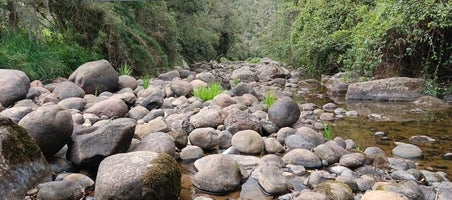
A river passing through an ecological restoration area near Usme, Bogotá, Colombia.
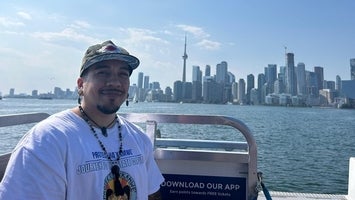
This is DJ Portugal, a community organizer from Phoenix, travelling to the Toronto Islands as part of our story-sharing process with Indigenous curriculum specialists. August 2025, Toronto, Ontario.