Faculty of Engineering
Research project description
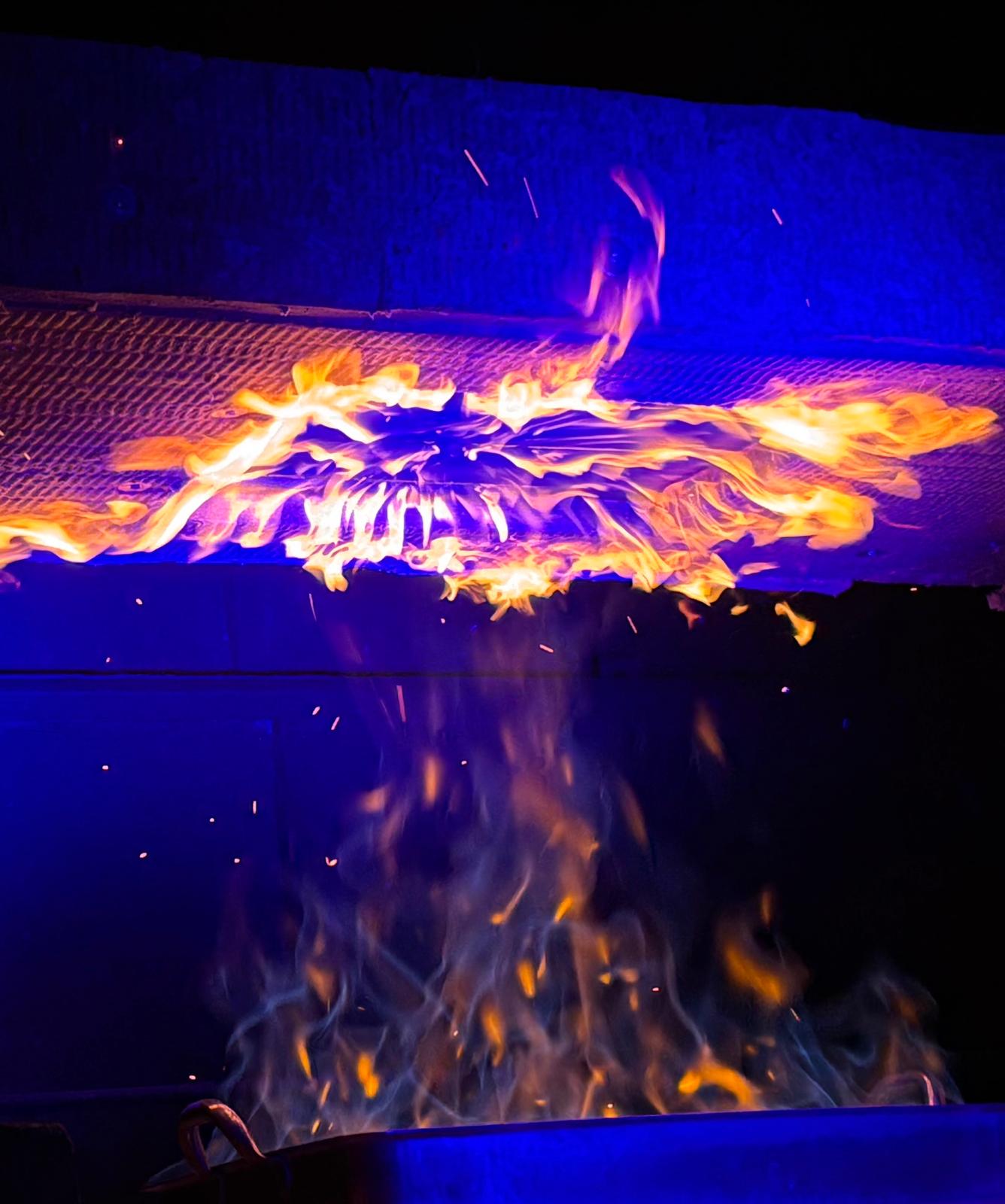
External flaming through openings such as windows is a critical parameter in fire safety design, essential for mitigating the risk of vertical fire spread between floors in a building. This risk has classically been managed through architectural features such as non-combustible spandrels or physical barriers. Mass timber is rapidly being introduced as a primary construction material in modern buildings in Canada due to its sustainability drivers and their ease of construction as a means to address the housing crisis. This form of construction introduces compartments with exposed timber surfaces, thereby significantly increasing the fuel loading, burning duration, and total heat release rate. The additional fuel load has been shown to result in external flames with lengths and heat exposures imposed onto the building façade that are well beyond the limits of existing models. The prevalence of timber facades in tall buildings further complicates the risk of vertical fire spread, underscoring the need for precise and universally applicable models to quantify heat loading from timber compartments. Therefore, the additional contribution from exposed mass timber in compartment fires to the external flame must be quantified to provide a robust fire-safe design for timber buildings.
This research project will utilize an existing experimental set-up at the University of Waterloo's Fire Research Facility to develop medium-scale compartment fire experiments. The compartment walls will be lined with varying levels of exposed mass timber to increase the fuel loading. The external flaming through the doorway of the model compartment will be measured using a variety of probe- and optical- based sensors to quantify the heat solicitation of the flames onto an inert model facade that has recently been built. Results will be used to develop an engineering design model to quantify thermal exposure from external flaming in mass timber lined compartments.
This project is part of the NSERC NextGen Timber Alliance. The candidate will form a critical part of the UW Fire Research Facility team and will benefit from collaborations and discussions with partner institutions and industry within the mass timber construction and fire safety engineering sector in Canada.
Fields of research
- Fire safety engineering
- Fire dynamics
- Experimental fluid mechanics
- Sensors
- Sustainable construction
Qualifications and ideal student profile
Prospective graduate student researchers must meet or exceed the minimum admission requirements for the programs connected to this opportunity. Visit the program pages using the links on this page to learn more about minimum admission requirements. In addition to minimum requirements, the research supervisor is looking for the following qualifications and student profile.
- A Bachelor’s (MASc position) or Master’s (PhD position) degree (or equivalent) in fire engineering, civil engineering, mechanical engineering, aerospace engineering, chemical engineering, applied physics, or a related field
- Practical experience with experimental design, machining, CAD, arduinos, and instrumentation
- Background in experimental methods and thermo-fluids
- Programming skills using Matlab, Python and Labview
- Strong communication skills, report writing skills, and ability to work in a multidisciplinary environment
- Willingness to travel abroad to present findings at conferences and workshops
Faculty researcher and supervisor
- Vinny Gupta
Assistant Professor, Mechanical and Mechatronics Engineering
View faculty profile →
Fire Research and Safety Website →
Graduate programs connected to this project
- Civil Engineering - Master of Applied Science (MASc)
- Civil Engineering (Water) - Master of Applied Science (MASc)
- Civil Engineering - Doctor of Philosophy (PhD)
- Civil Engineering (Water) - Doctor of Philosophy (PhD)
- Mechanical and Mechatronics Engineering - Master of Applied Science (MASc)
- Mechanical and Mechatronics Engineering (Nanotechnology) - Master of Applied Science (MASc)
- Mechanical and Mechatronics Engineering - Doctor of Philosophy (PhD)
- Mechanical and Mechatronics Engineering (Nanotechnology) - Doctor of Philosophy (PhD)
Important dates
External Flaming From Mass Timber Compartments is accepting expressions of interest for intake in the spring 2026 and fall 2026 terms.