Faculty of Engineering
Research project description
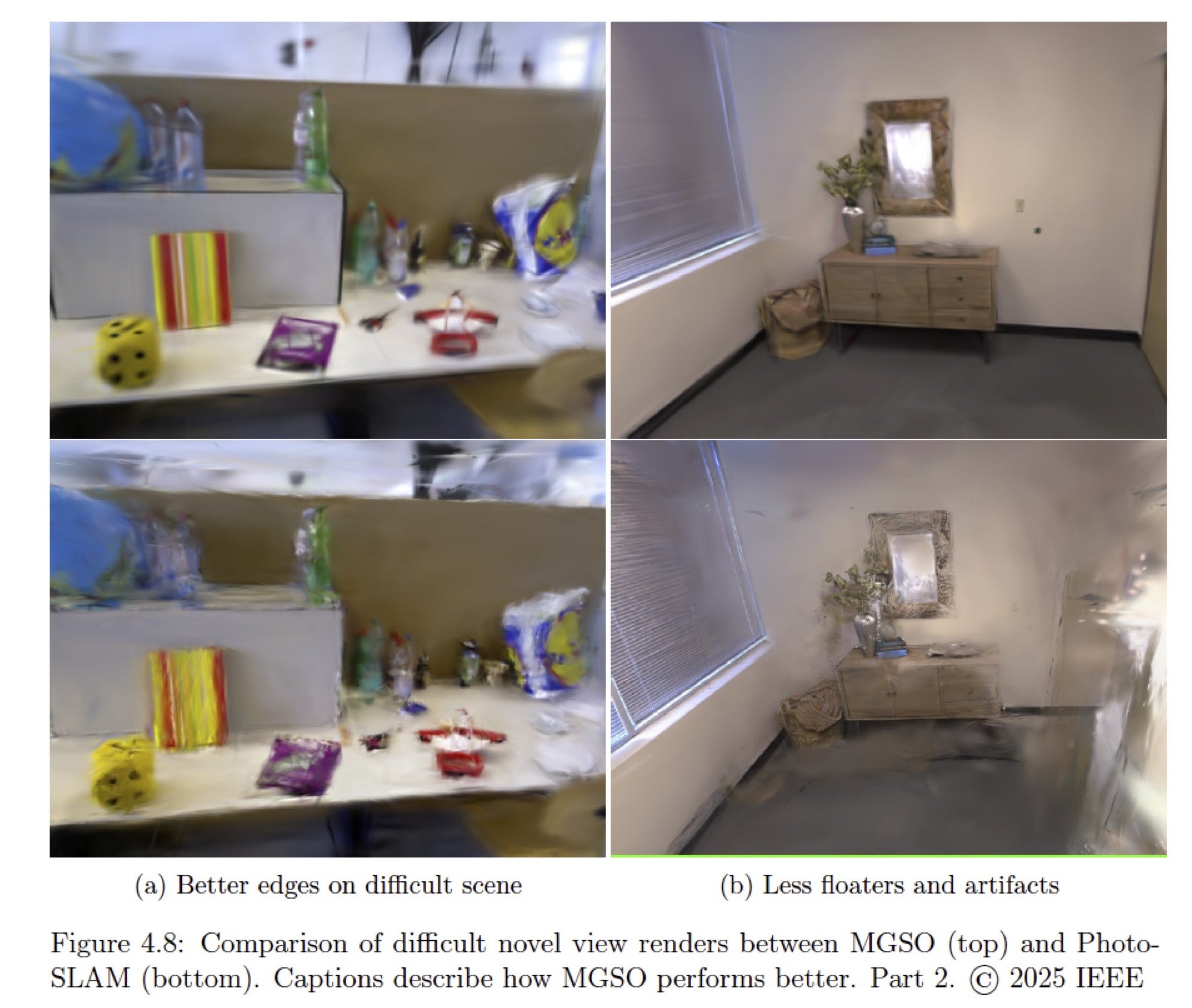
3D maps are essential for autonomous navigation by vehicles and drones as well as augmented reality applications. We have developed a robust real-time 3D SLAM mapping system that is also to render (using 3D Gaussian splatting) an environment to produce a realistic 3D environment that can be used in simulation in a physics engine for training vehicle control using Reinforcement learning. SLAM and other 3D reconstruction methods assume a relatively static environment while most environments are not.
We are exploring methods to deal with dynamic environments for building these maps. Other applications of interest include biomedical applications such as cacheters with camera-on-tip endoscopes, space, mining and any drone application.
Fields of research
- 3D computer vision
- Machine learning
- Photogrammetry
- Reinforcement learning
- Control
Qualifications and ideal student profile
Prospective graduate student researchers must meet or exceed the minimum admission requirements for the programs connected to this opportunity. Visit the program pages using the links on this page to learn more about minimum admission requirements. In addition to minimum requirements, the research supervisor is looking for the following qualifications and student profile.
- Experience in relevant background fields
- Published in high impact conferences such CVPR, ECCV, ICRA, IROS
- A+ student
Faculty researcher and supervisor
- John Zelek
Professor, Systems Design Engineering
View faculty profile →
Vision and Image Processing lab (VIP lab) website →
Graduate programs connected to this project
Important dates
Real-time 3D monocular camera map reconstruction and physics simulation is accepting expressions of interest for the winter 2027, spring 2027 and fall 2027 terms.