This year we’ve been rightly observing — and celebrating — the 50th anniversary of the Ontario Heritage Act. [1]
But, as a direct result of the Act or related to it, there are other half-century milestones to mark as well. The most notable is the 50th anniversary of the “new and improved” Ontario Heritage Trust.

The OHT, as most will know, was born the Ontario Heritage Foundation in 1967, Canada’s centennial year. Passed in June of that year, the Ontario Heritage Foundation Act established what was to become Ontario’s lead heritage agency. The Foundation, renamed the Trust in 2005, observed its golden anniversary in 2017. [2]
But the early Foundation was not the Trust we know now. With the proclamation of the Ontario Heritage Act in March 1975, the Foundation was “continued,” to use the Act’s technical term, but better terms might be reconstituted and enhanced. Part II of the new OHA became the governing legislation of the Foundation and gave it the significantly stronger and broader role it enjoys today.
In his history of the OHF William Kilbourne relates the impressive membership of the new Board of Directors:
The old [OHF] Board held its last meeting in February [1975] and the new one its first on April 9th. Its members included the four surviving original members of the OHF …, plus six more recent members: Professor Elizabeth Archer, an historian from Thunder Bay; Marian Bradshaw of North York, editor of a collector’s magazine; Kathleen Ryan of Ottawa; Stephen Otto, a Toronto business consultant who was to become the Foundation’s first executive director; Lancelot [Lance] Smith, F.C.A., who brought a fine business acumen to the position of Treasurer; and Dr. Keith Reynolds who had for some time occupied the most senior position in the office of the premier.
Since the Archaeological and Historic Sites Board [A.H.S.B., established in 1953] was now amalgamated with the Ontario Heritage Foundation, all its members were included on the new board, and other new members from across the province to make a total of thirty-two [compare this to the current OHT board of less than half the size]. The chairman was A.B.R. [Bert] Lawrence of Ottawa [who had recently retired as Minister of Health] … and the vice-chairman Professor Sydney Wise of Carleton University, who had been chairman of the A.H.S.B. [3]
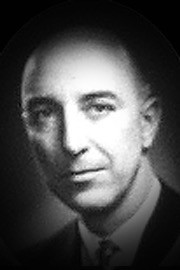
Bert Lawrence (1923-2007), first chair of the new OHF board
But something else was new. As Kilbourne goes on to recount:
Both before, and after the passing of the legislation, the essential structure, powers, and membership of the new body were worked out by its chairman, Bert Lawrence, and its executive director-to-be Stephen [Steve] Otto. In so doing they had the active involvement and support of a new ministry, Culture and Recreation, and its minister and deputy, Robert Welch and Malcolm Rowan. The Minister of Colleges and Universities, James Auld, who, as Minister of Tourism had launched the original O.H.F., piloted the legislation of the new O.H.F. through the legislature and then handed over responsibility for it to Ontario’s first Minister of Culture. Staff of the old O.H.F. had pretty much consisted of Larry Ryan and his secretary, though like the A.H.S.B. they had the cooperation and involvement of an increasing professional staff of historians, archaeologists, architects, and other experts in other relevant areas of the public service. Ryan remained in the new and enlarged post of executive secretary, and Otto and Ryan were able henceforth to draw on ministry staff and resources in a way not previously possible. [4]
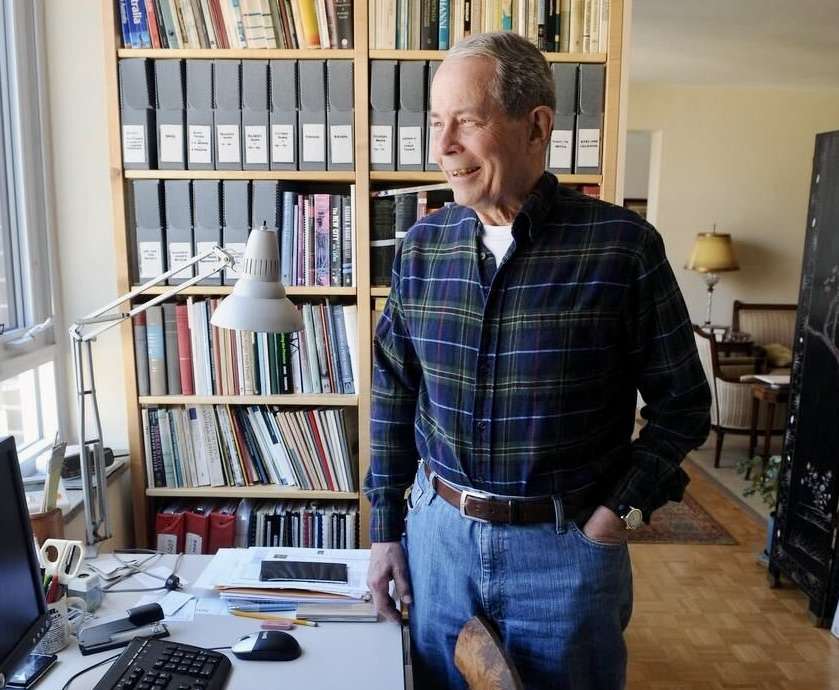
Steve Otto, CC, in 2010. Steve died in 2018.
Photo courtesy Toronto Star
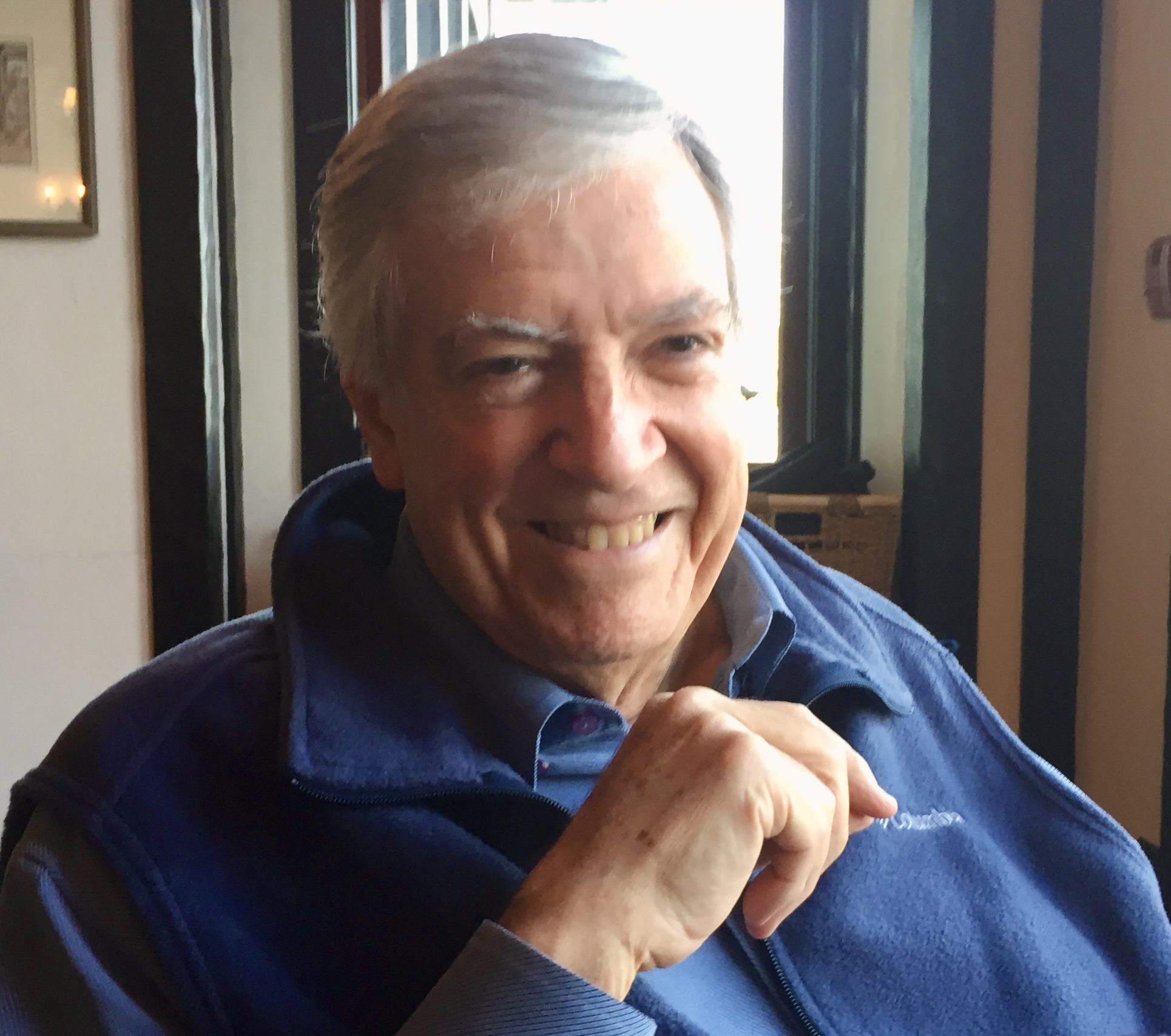
Larry Ryan in 2018. Larry died later that year.
Photo: Dan Schneider
The year 1975, then, also saw the creation of a new, standalone culture ministry, which included the heritage portfolio, and the formation of a close, symbiotic relationship between the ministry and the OHF, which endured for almost half a century… until responsibility for heritage became part of another ministry, Citizenship and Multiculturalism (MCM). [5]
So, if I have this right, “heritage” — in the sense of a heritage department within the province’s ministry structure — is therefore also 50 years old this year.
Happy anniversary to the OHT and to the heritage folks at MCM! ✨🎂🥂 May you attend to your own history too. And the history you are making.
This article is dedicated to the memory of Brock Grant, K.C. (1941-2025). Brock was the first director of legal services of the new Ministry of Culture and Recreation from 1975 to 1980. He worked closely with Bert Lawrence, Steve Otto and Larry Ryan in setting up the “new and improved” OHF as well as handling its many property acquisitions such as the Elgin & Wintergarden Theatres in Toronto. He was also responsible for drafting the prototype heritage easement agreement used by the OHF, which became the model for the hundreds of heritage easements in Ontario since. [6]
Notes
Note 1: For the history of legislative developments leading to the passage of the Ontario Heritage Act in 1975, see Mark Osbaldeston’s “The Origins of Heritage Preservation Law in Ontario”.
Note 2: See ”At 150, looking back to 100” from June 2017.
Note 3: William Kilbourne, Ontario Heritage Foundation History, unpublished manuscript, 1983, pp. 22-23.
Note 4: Ibid., p. 23.
Note 5: In 2022, in a head-scratching move, the heritage area was separated from the culture division of what is now the Ministry of Tourism, Culture and Gaming and became part of the Ministry of Citizenship and Multiculturalism (MCM). Responsibility for the Ontario Heritage Trust was also transferred to MCM.
Note 6: For a history of easements in Ontario see the four-part series beginning with “Heritage easements 101 — Easements come to Ontario” from September 2016.
