News

Filter by:

Limit to news where the title matches:
Limit to items where the date of the news item:
Date range
Limit to news items tagged with one or more of:
Limit to news items where the audience is one or more of:
Friday, March 13, 2026

The Freedom to Learn Through PACS

by Jules Gravestock

The Peace and Conflict Studies (PACS) program at the University of Waterloo and Conrad Grebel University College prides itself on the flexibility that it offers students. The PACS401: Senior Research Seminar is one of the keys that allows PACS to offer such a range of subjects to its students. Fourth-year student Dylan-Paige Andres is a testament to this fact.  

Originally studying political science at Carlton University, Dylan-Paige transferred to the PACS program in her second year. She wanted a program that allowed her to pursue her  interest in human rights and World War II history more specifically and found that PACS would be a good fit.  

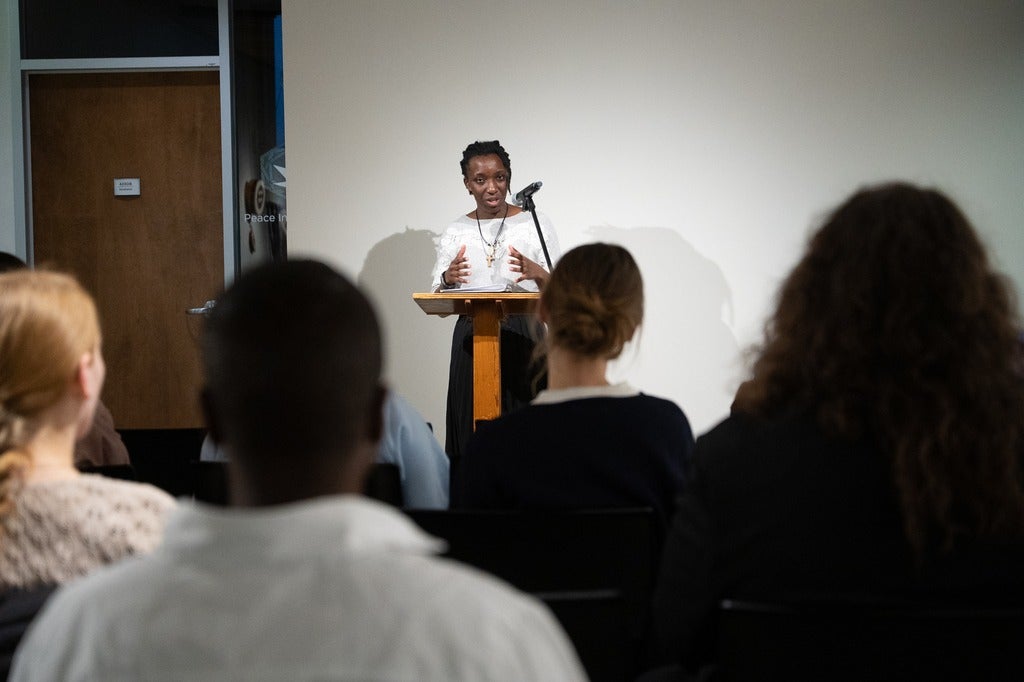
Thubelihle Mkwalula is in her second year of the MPACS program. She is originally from Eswatini and completed her undergraduate degree in global affairs in the United States. Following her undergrad, she applied directly to the MPACS program because she wanted to diversify her field of study. 

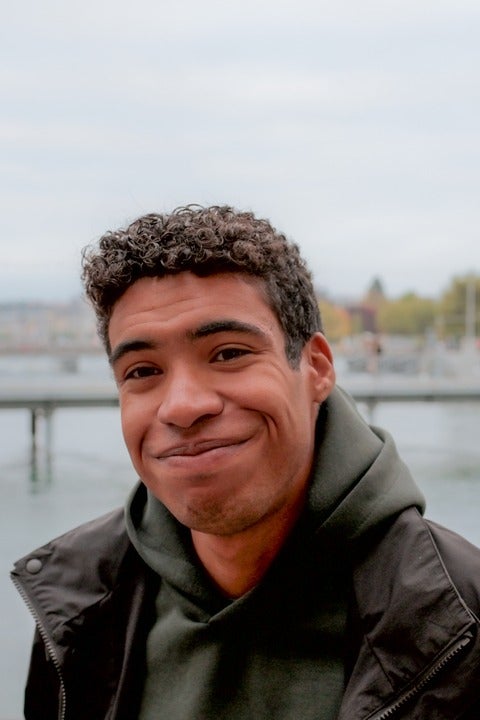
If there’s anyone who likes breaking down barriers and seeing what’s on the other side, it’s Benny Skinner (BA 2019, MA 2023). They are a human rights advocate, award-winning rugby player on an inclusivity-driven Premier League team, and Indigenous Research Advisor who positively affects the world through activism. Benny’s commitment to social justice was enhanced by Conrad Grebel University College’s Peace and Conflict Studies (PACS) program, the place where they learned how to challenge and change a society where injustice runs deep.

"It's hard to describe, but it hit me right in the heart. I just thought, sometimes things can look one way, but then with a little more context or information, it can completely change your perspective," reflected Nancy Williams(last to the right) on a statue she saw at the United Nations Headquarters in New York City during a multi-day student seminar hosted by Mennonite Central Committee. The statue, pictured on the left, was recovered from the 1945 Nagasaki bombing. "How can something look so perfect from one side but then on the other side, you know there's just absolute tragedy?" 

“I have this personal mantra, which is that information needs to serve for transformation,” says Lorena Rodriguez (‘15), a graduate of the Master of Peace and Conflict Studies (MPACS) program. Specializing in peacebuilding communication in humanitarian and development contexts, this mantra serves her well: the transformative power of outreach, advocacy and public policy to create meaningful change in complex environments and vulnerable communities is precisely what drives Lorena’s work.

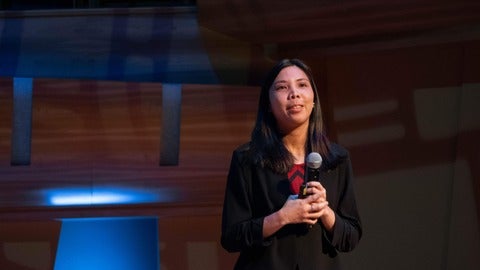
Nuhu Abdulmalik will graduate from the Masters of Peace and Conflict Studies (MPACS) program in April 2024, but his mission to build a more peaceful world is only beginning. Inspired by the ideas of building connection through storytelling and bridging cultural gaps through technology, the MPACS program has opened doors for him to take action on his peacebuilding aspirations and make a difference. 

On May 27, Fiona Li earned the second-place prize at the Map the System Canada competition in Calgary, Alberta. As the winner of the University of Waterloo’s Map the System campus finals, Fiona’s achievement on the national stage not only brought awareness to the over-representation of Indigenous women in Canadian prisons, but it also highlighted how programs like Peace and Conflict Studies are crucial in furthering education on how to research, understand, and present these critical issues.

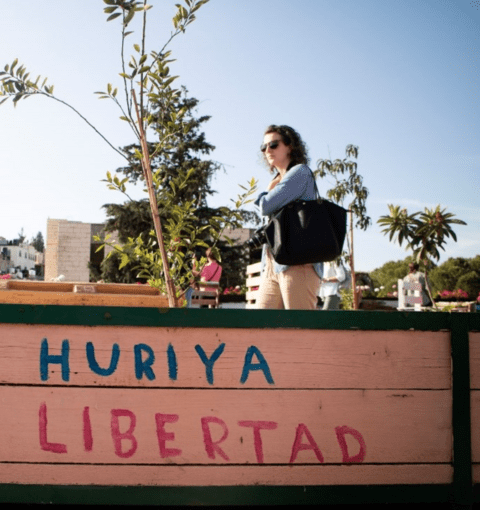
“When I was in Hebron, heading through checkpoints meant our Palestinian guide had to show his ID while I breezed through,” said Jessica Dyck, 2015 graduate of the Master of Peace and Conflict Studies (MPACS) program. “He wasn’tpermitted to walk down certain streets in his hometown while I could. I was struck by how this mirrored what I have read and learned about apartheid South Africa.” 


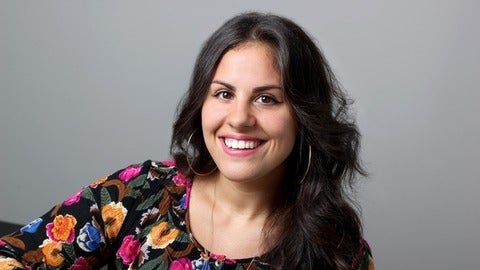
Her grandfather was forced to flee from Palestine. Religious persecution chased her father out of Cuba. Growing up in a refugee and immigrant faith community in Kitchener, discussion and tales of hardship became a recurring sound for MPACS graduate, Kaylee Perez. “Surrounded by these conversations growing up, I grew to love the aspects of cross-cultural communication,” she said of her upbringing, which led her down a path of peace work that spanned not only cultures, but continents.