Co-op students drive manufacturing innovation at Toyota
From quality engineering to mass production, Waterloo co-op students help advance efficiency and continuous improvement across the automotive giant's operations
At Toyota Motor Manufacturing Canada (TMMC), innovation doesn’t start and end in a lab — it happens every day on the manufacturing floor. For more than three decades, University of Waterloo co-op students have played an important role in making that innovation possible.
TMMC’s partnership with Waterloo’s co-op program has welcomed hundreds of students into engineering, quality and operations roles across the organization. Today, the majority of TMMC’s co-op students come from Waterloo, drawn by a shared commitment to continuous improvement, hands-on learning and real-world impact.

Waterloo is home to the world’s largest co-op program at a research-intensive university, with more than 70 per cent of students gaining up to two years of paid work experience before graduating. For manufacturers like Toyota, that experience translates into students who are ready to contribute from day one.
“Waterloo students bring a mix of technical knowledge, curiosity and a ‘let’s get it done’ attitude that fits perfectly with Toyota’s culture. They don’t just observe, they contribute right away, helping improve quality, test new processes and explore innovative solutions.” — Buchanan
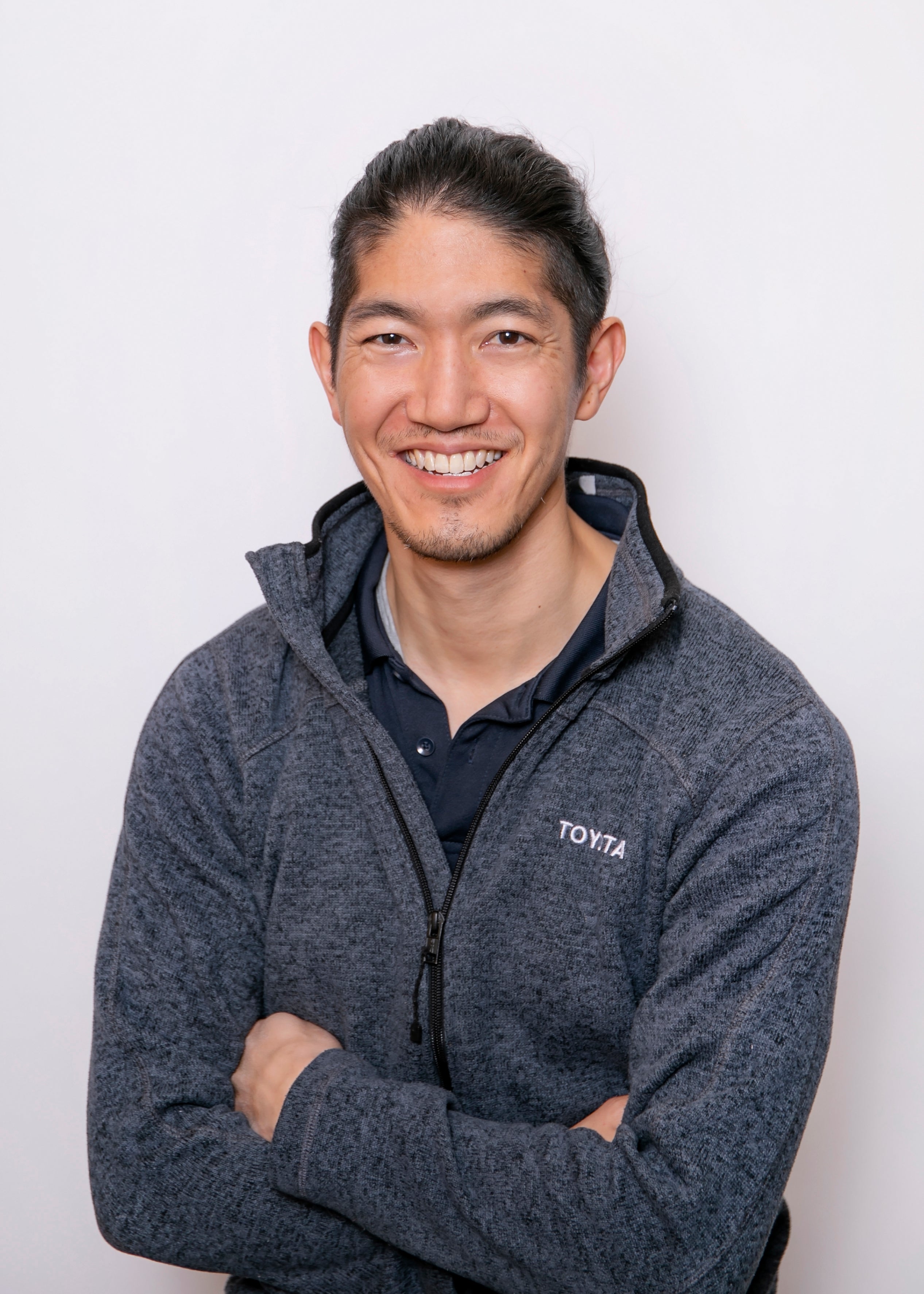
“My role has been closely connected to co-op students throughout my career,” he says. “Many of our full-time team members, including myself, started as co-op students, so we understand the value of providing meaningful learning opportunities and real responsibility.”
In Sugiyama’s department, Waterloo co-op students take on work similar to that of full-time engineers. Depending on the role, students support mass production or new model development, investigate quality issues, run experiments, analyze data, and work directly with assembly teams, suppliers and design partners.
“Our work is very hands-on,” he says. “Typically, about 40 per cent of the role is desk-based, while the other 60 per cent involves running experiments, driving vehicles and testing results on the shop floor or at test facilities. Waterloo students adapt quickly to that environment.”
That adaptability can lead to tangible, lasting improvements. Sugiyama recalls Systems Design Engineering co-op student Joyce Min, who worked on interior quality control during the trial phase of the new RAV4.
Min took ownership of a long-standing quality concern related to the fit between the headliner and rear weatherstrip, designing a structured experiment and conducting minimum and maximum condition studies. Based on the findings, she developed a countermeasure and worked directly with a supplier to test and implement the solution.
“The trial was successful and the design team agreed to implement the change,” he shares. “Today, that countermeasure has been incorporated into mass production parts.”
For Buchanan, stories like this highlight why Waterloo co-op students continue to be such a strong fit for Toyota, and why the partnership remains a key part of TMMC’s long-term talent strategy.
“Waterloo co-op students help keep our culture of innovation and continuous improvement alive,” Buchanan says. “Their fresh perspectives and energy make TMMC a better, more innovative place every day.”
TMMC expanded their impact on Waterloo students in 2019, when they made a $2.1 million contribution to the Faculty of Engineering. In recognition of their financial support, a wing on the third floor of Pearl Sullivan Engineering (formerly Engineering 7) for faculty and student research was renamed the Toyota Additive Manufacturing Wing. The investment also fuelled other initiatives including the Toyota Engineering Innovation Challenge, which brings students together to work on real-world problems facing the manufacturing sector.
Overall, the partnership offers Waterloo students an opportunity to see how engineering principles translate into real products used by customers across North America.
“When co-op students are given the opportunity to take ownership of a project and work hands-on with experienced team members, they develop skills that prepare them for their future careers,” Sugiyama says. “That connection between the University of Waterloo and TMMC has been very beneficial for both the students and our organization.”
As manufacturing evolves, the impact of Waterloo co-op students at Toyota shows how experiential education can drive innovation, not just theory, but on the production line itself.
Related stories

Co-op student delivers corporate sustainability for Purolator

Hoang Do
Undergraduate student, Faculty of Environment
> Co-op and experiential Education
Growing up in Vietnam, Hoang Do was interested in economic development in developing countries, and the need to combine economic considerations with environmental issues.