Electric planes approved for Canadian pilot training
Canada certifies first electric training aircraft, supported by Waterloo research
Transport Canada has approved the first electric planes for training purposes thanks in large part to years of research and flight testing led by the Waterloo Institute for Sustainable Aeronautics (WISA) and its national partners. The Pipistrel Velis Electro and its related training aircraft now have validated type certificates, meaning Canadian pilots and pilots-in-training will begin learning to fly electric planes, another step in the right direction for the future of sustainable aviation.
The milestone follows a regulatory update in July 2025 that permitted electric aircraft to be used for pilot training in Canada. WISA’s research program, led by Paul Parker, Mehrdad Pirnia and Suzanne Kearns, contributed key evidence to both the regulatory update and the recent certification decision.
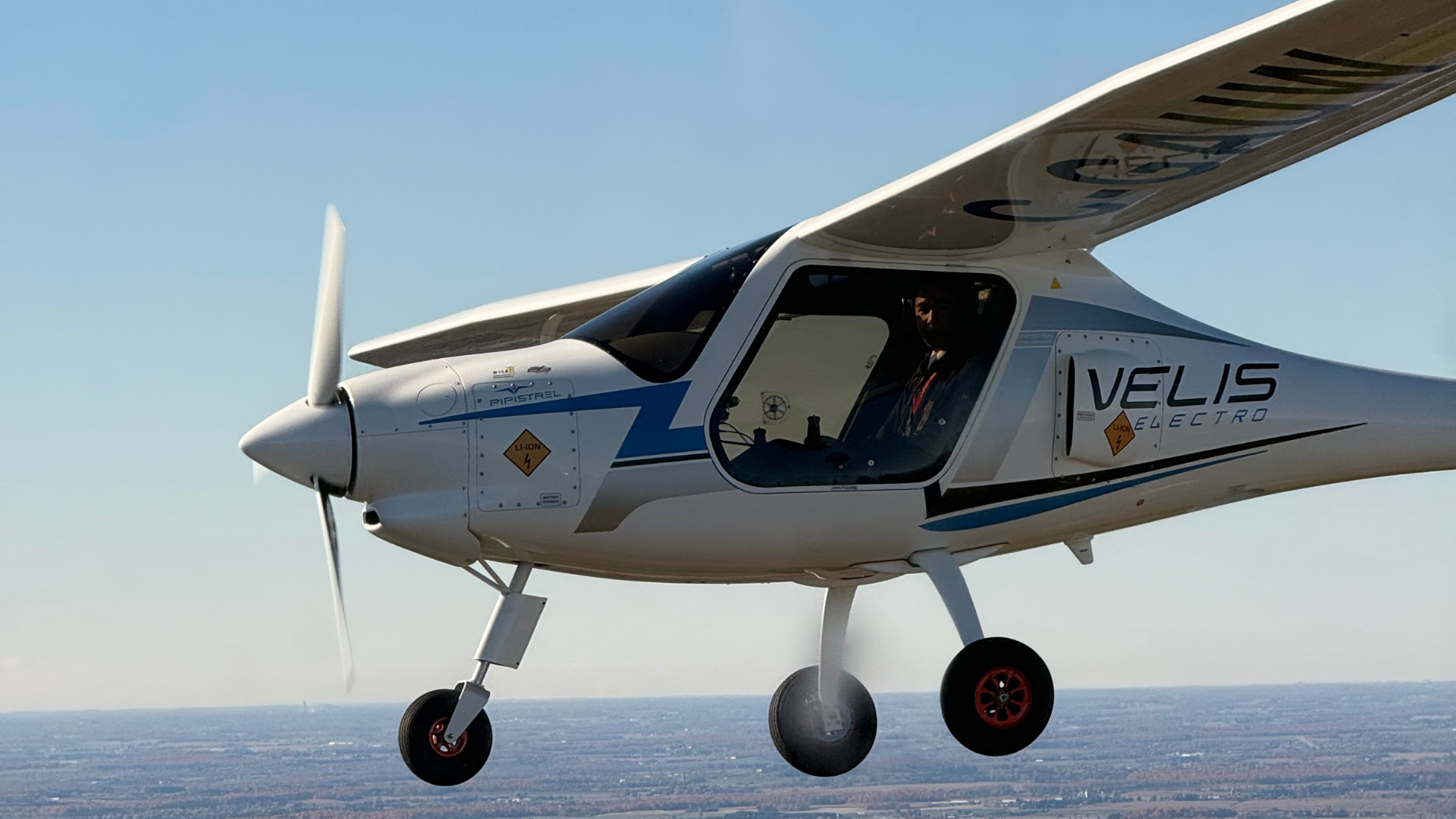
The Velis Electro is the first type-certified electric aircraft designed for pilot training with zero emissions, quiet operation, and low maintenance.
WISA’s journey with electric planes began in 2022 when WISA and the Waterloo Wellington Flight Centre received Canada’s first Velis Electro. Operating from the Region of Waterloo International Airport, the aircraft became the centrepiece of a living lab that integrated a major research university with one of Canada’s largest pilot training programs. Through this partnership, student pilots serve as pilot research assistants who fly, monitor, and document flight operations. This model has created a nationally distinctive research environment and one of the most comprehensive Canadian data sets on electric aviation.
“Waterloo played an important role by operating one of North America’s first certified electric aircraft,” says Dr. Suzanne Kearns, Founder and Director of WISA. “The information gathered here helped Transport Canada prepare for electric aviation and gave regulators a clearer understanding of how these aircraft perform in real Canadian conditions.”
The recent certification covers the Velis Electro, the Velis Club and the Explorer aircraft models. Validation allows flight schools and private operators to purchase and operate these aircraft in Canada. For training organizations, approval creates a pathway to adopt low-cost, zero-emissions aircraft for early pilot education. The Velis Electro operates at approximately 60 decibels and produces no direct greenhouse gas emissions, making it well-suited to repetitive circuit training.
As interest in electric flight expands across the country, WISA will continue to support a sustainable future for aviation. This work demonstrates how University of Waterloo research can translate into national impact, shaping how Canadians learn to fly and supporting a cleaner future for aviation.