March 19, 2026
Reducing the environmental cost of lab work
Chemical engineering labs cut waste, save water and share virtual tools for free — earning Green Lab Gold for a second straight year
Chemical engineering labs cut waste, save water and share virtual tools for free — earning Green Lab Gold for a second straight year
A dedicated team at the University of Waterloo has implemented award-winning greener lab practices that prove a top-class education doesn’t have to come at the planet’s expense.
By making sustainability an integral part of how experiential learning is designed and delivered, the Department of Chemical Engineering’s undergraduate teaching labs in the Douglas Wright Engineering Building have earned Green Lab Gold Certification for the second year in a row, improving their previous score by five points.
The team achieved this recognition thanks to three innovative initiatives that build year on year.
Regenerating, recycling and reusing chemicals and solvents
For the past decade, John Zhang, lab director, and his team have designed experiments in such a way that students recover and reuse expensive chemicals and solvents rather than discard them.
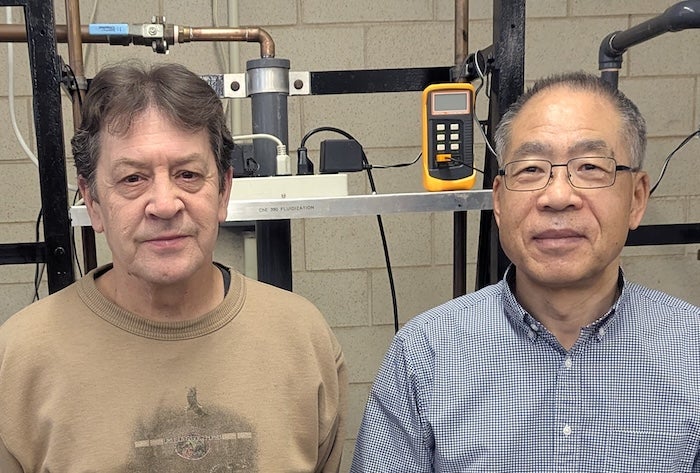 Richard Hecktus (left), mechanical technician and John Zang, lab director.
"We prioritize regenerating costly chemicals to minimize expenses and model sustainable practices for students," Zhang says.
Students learn to treat chemical recovery as a core skill. It’s not only cost-effective, but it also shows them what sustainable chemical engineering looks like in practice.
“A lot of the time, working in a lab can seem like endless waste disposal — single use gloves, disposal of contaminated pipette tips, samples that have served their purpose,” Aidan Ryan, a second-year chemical engineering student, says. “While some of our coursework focuses on large-scale industrial practices, these environmentally conscious and cost-effective sustainability measures lend an interesting perspective on the power that chemical engineers have to make industry greener."
Expanding virtual labs and open educational resources
The department's most innovative move has been integrating virtual labs and open educational resources into courses at every level. With support from eCampus Ontario, the team built a 360-degree virtual tour of its continuous distillation pilot plant — the only one of its kind in the province.
The interactive tool blends virtual reality, process simulations and multimedia so students can explore complex operations before they set foot in a physical lab. That means less trial-and-error, fewer wasted chemicals and more focused in-person lab time on experiments that are essential to their projects. This approach not only improves learning outcomes but significantly reduces chemical use, energy consumption and utility demand. The resource is free and chemical engineering programs worldwide use it.
Over the past two years, the department has also collaborated with the Centre for Extended Learning to develop three open modules on energy storage processes. Fourth-year students access the learning modules on LEARN, Waterloo’s web-based learning management system and instructors can manage activities, assessments, assignments and course materials outside the physical classroom.
Saving water through smart recirculation systems
A new reverse osmosis system installed in the undergraduate teaching labs last year purifies water without chemicals. The team also modified existing equipment to recirculate and reuse utility water, cutting municipal water consumption significantly.
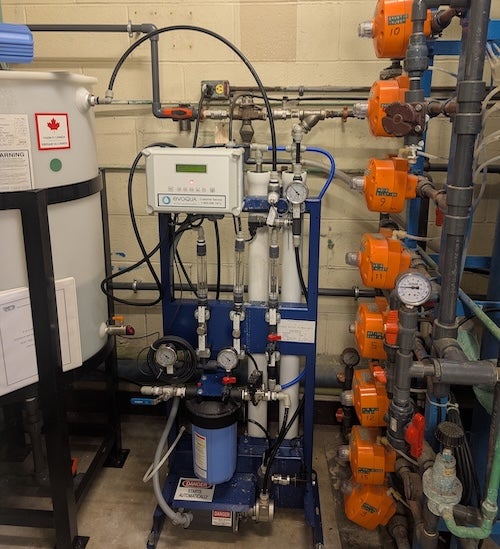 Reverse osmosis system installed in the undergraduate teaching labs.
Based on the total water consumption over the past ten years, the two units with the new water circulation system are expected to save approximately 250 cubic meters of water per year.
"I am thrilled to see Chemical Engineering integrate sustainability into labs," Mat Thijssen, Waterloo's Director of Sustainability, says. "Labs are areas of high resource intensity, and the team has identified meaningful activities for operational improvement."
For Dr. Mario Ioannidis, chair of the Department of Chemical Engineering, the certification reflects a deeper commitment. "We are reimagining what sustainability education for engineers can look like," he says, “following an approach that goes beyond curricular changes at the graduate and undergraduate level to touch every aspect of student experience.”
The Green Lab Gold Certification is part of the University’s Green Labs program. It evaluates how the labs manage chemicals, utilities and everyday operations. The program encourages continuous improvement in lab practices, looking at lab work through the lens of sustainability.
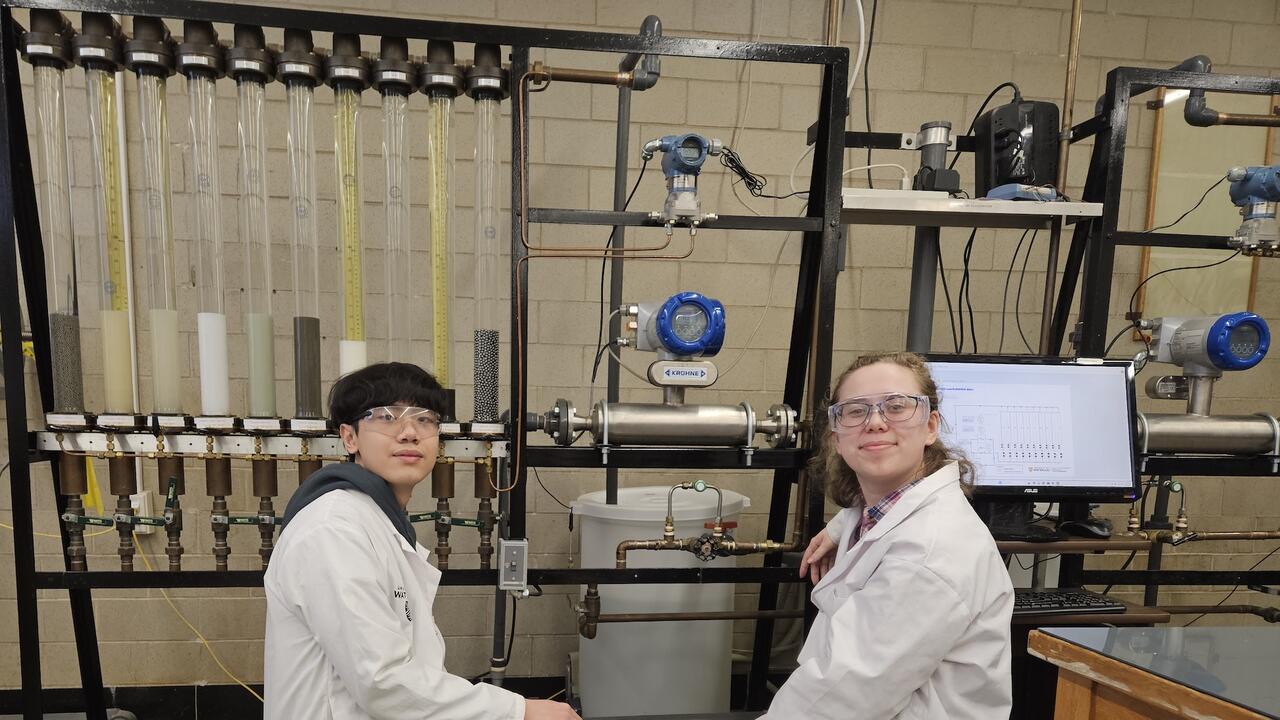
Feature image: Sy Nguyen Tran (left) and Aidan Ryan, both chemical engineering students, in front of the fluidized beds and water circulation system. Photo credit: Sima Alekberova.