March 22, 2013
Protecting the future of the Grand River:
Waterloo professor leads a partnership that aims to make watersheds more sustainable
Waterloo professor leads a partnership that aims to make watersheds more sustainable
The Grand River watershed will soon be home to a living lab where new technologies in water and wastewater will be researched, developed, demonstrated and exported globally, says David Rudolph, professor in the Department of Earth and Environmental Sciences and member of the Water Institute at the University of Waterloo.
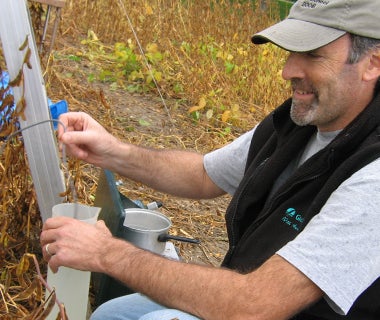 David Rudolph, professor in the Department of Earth and Environmental Sciences and member of the Water Institute at the University of Waterloo.
The activities are being facilitated through a collaborative partnership known as the Southern Ontario Water Consortium (SOWC)
“We need to be able to hand the watershed to the next generation intact,” Rudolph says.
The consortium brings together researchers from eight universities led by Waterloo, along with three levels of government and innovative water companies. Among its many components, the arrangement gives private firms and university researchers access to various facilities in southern Ontario communities including municipal wastewater infrastructure in Guelph and London, where emerging technologies and research ideas can be evaluated.
Sensors will track ecosystem health
Integrated hydrologic monitoring systems deployed throughout the watershed will provide unprecedented data streams that will be available for SOWC partners to support water management decisions. These sensor networks are linked with advanced water analysis systems and monitoring infrastructure designed to track ecosystem health.
As lead of the watersheds initiative within SOWC, Rudolph coordinates activities within the Alder Creek watershed within the Regional Municipality of Waterloo. The common goal is to make watersheds more sustainable.
Work underway includes:
Watershed makes ideal lab
Rudolph says the Grand River Watershed makes an ideal setting for watershed research because it: