Research

Sunday, June 28, 2015

Physicists shatter stubborn mystery of how glass forms

by Media Relations

Their simple theory is expected to open up the study of glasses to non-experts and undergraduates as well as inspire breakthroughs in novel nanomaterials.

The paper published by physicists from the University of Waterloo, McMaster University, ESPCI ParisTech and Université Paris Diderot appeared in the prestigious peer-reviewed journal, Proceedings of the National Academy of Sciences (PNAS).
Sunday, June 28, 2015

Physicists shatter stubborn mystery of how glass forms

by Media Relations

Their simple theory is expected to open up the study of glasses to non-experts and undergraduates as well as inspire breakthroughs in novel nanomaterials.

The paper published by physicists from the University of Waterloo, McMaster University, ESPCI ParisTech and Université Paris Diderot appeared in the prestigious peer-reviewed journal, Proceedings of the National Academy of Sciences (PNAS).
Monday, June 22, 2015

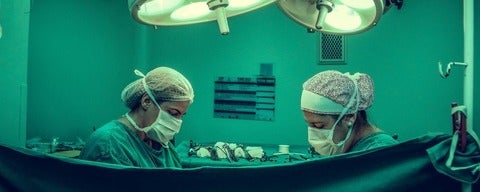
Hands-free system puts surgeons in control of their operating rooms

by Julie Stauffer, Faculty of Engineering

March 2011. Sunnybrook Hospital, Toronto. A surgical oncology team is working to remove a complex tumour entwined around the patient’s adrenal glands and pancreas.

At one point in the delicate procedure, Dr. Calvin Law puts down his scalpel, turns to a computer screen displaying an image of the tumour and, without touching anything, makes a gesture with his gloved hands. The image rotates, and three Waterloo Engineering grads in the operating room exhale in unison.

Monday, June 22, 2015

Creating mini devices for maximum biomedical impact

by Brian Caldwell, Faculty of Engineering

Systems design engineering professor John Yeow is driven to solve real-world problems that lie deep within the human body. As the Canada Research Chair in Micro and Nanodevices, much of his work focuses on technology aimed at diagnosing and treating diseases like cancer. And the smaller the technology, the better.

The Natural Sciences and Engineering Research Council of Canada (NSERC) selected seven researchers from the University of Waterloo to receive a funding boost to further their transformational and potentially groundbreaking research.

The Discovery Accelerator Supplement (DAS) recipients named by NSERC today are among more than 120 Waterloo researchers who have received more than $21 million to further their research through programs such as Discovery grants and grants for equipment.

Wednesday, June 17, 2015

Waterloo’s $10M dream facility for smarter, greener cars

by Christian Aagaard, Marketing and Strategic Communications

Out with the old tech, in with the new.

In April, construction crews began stripping down an old laboratory tucked among the engineering buildings on the University of Waterloo campus.

They are creating a research facility with three different labs, or cells, working toward a common objective: smarter, more energy-efficient automobiles, with reduced emissions.

National and international biophysicists will gather at the University of Waterloo for the first Annual Meeting of the Biophysical Society of Canada.

Biophysical techniques and discoveries have revolutionized research and technological developments, allowing for the advancement of materials research, bio- and nano-technologies, biosensing, medicine and pharmaceutical research.

Media are invited to attend an event marking the announcement of funding for researchers at the University of Waterloo, Wilfrid Laurier University and Perimeter through the Early Researcher Awards and Ontario Research Fund.

Nineteen University of Waterloo researchers will receive Early Researcher Awards – more awards than any other institution that applied – with total funding exceeding $2.6 million. Waterloo is receiving funding for 36 projects overall, Wilfrid Laurier will receive funding for six projects and Perimeter Institute are funded for two projects.