


Ecotoxicology Research
Research in our lab focuses on ecotoxicology and integrated water resources management, with an emphasis on understanding the impacts of contaminants on aquatic ecosystems.
Our current work evaluates the exposure and effects of emerging contaminants (e.g., endocrine disruptors, pharmaceuticals, and drugs of abuse) in the environment arising from municipal, industrial, and agricultural activities. We use integrated field, laboratory, and analytical approaches to link contaminant exposure to biological responses across multiple levels of organization, from molecular and physiological changes to impacts on fish populations and communities. A major focus of our work is understanding the effects of complex contaminant mixtures and how these are influenced by environmental conditions and watershed processes.
We develop and apply new tools and approaches for risk assessment to support effective management and remediation strategies, including methods to identify chemicals responsible for observed biological effects and to predict exposure across environmental gradients. Our research also includes the development and testing of novel water treatment technologies and mitigation strategies. A long-term goal of our program is to support cumulative effects assessment and management at the watershed scale, accounting for natural variability and multiple stressors.
During the COVID-19 pandemic, our team pivoted to support Public Health Units through wastewater-based surveillance of SARS-CoV-2 (see COVID-19 Research).


News
Chiral pharmaceutical research featured on the cover of Analyst
Many pharmaceuticals and drugs of abuse released from wastewater treatment plants are chiral compounds. As our research expanded to include drugs of abuse in wastewater, we identified a unique analytical challenge: the enantiomers of tramadol and O-desmethylvenlafaxine overlap and cannot be adequately separated using conventional approaches. In collaboration with the Hopkins Lab in Chemistry at the University of Waterloo, a new two-dimensional chiral LC × DMS mass spectrometry method was developed to successfully separate and analyze these compounds. This collaborative work was featured on the cover of Analyst.
CTV News reports on studies finding fish near wastewater plants contain trace contaminants, including opioids and antidepressants.
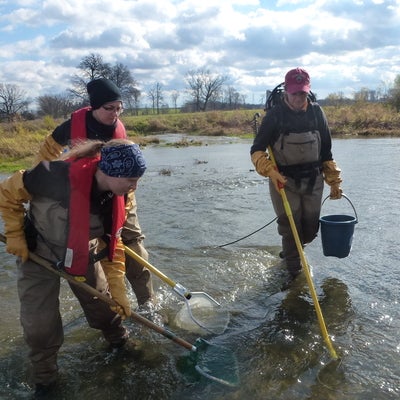
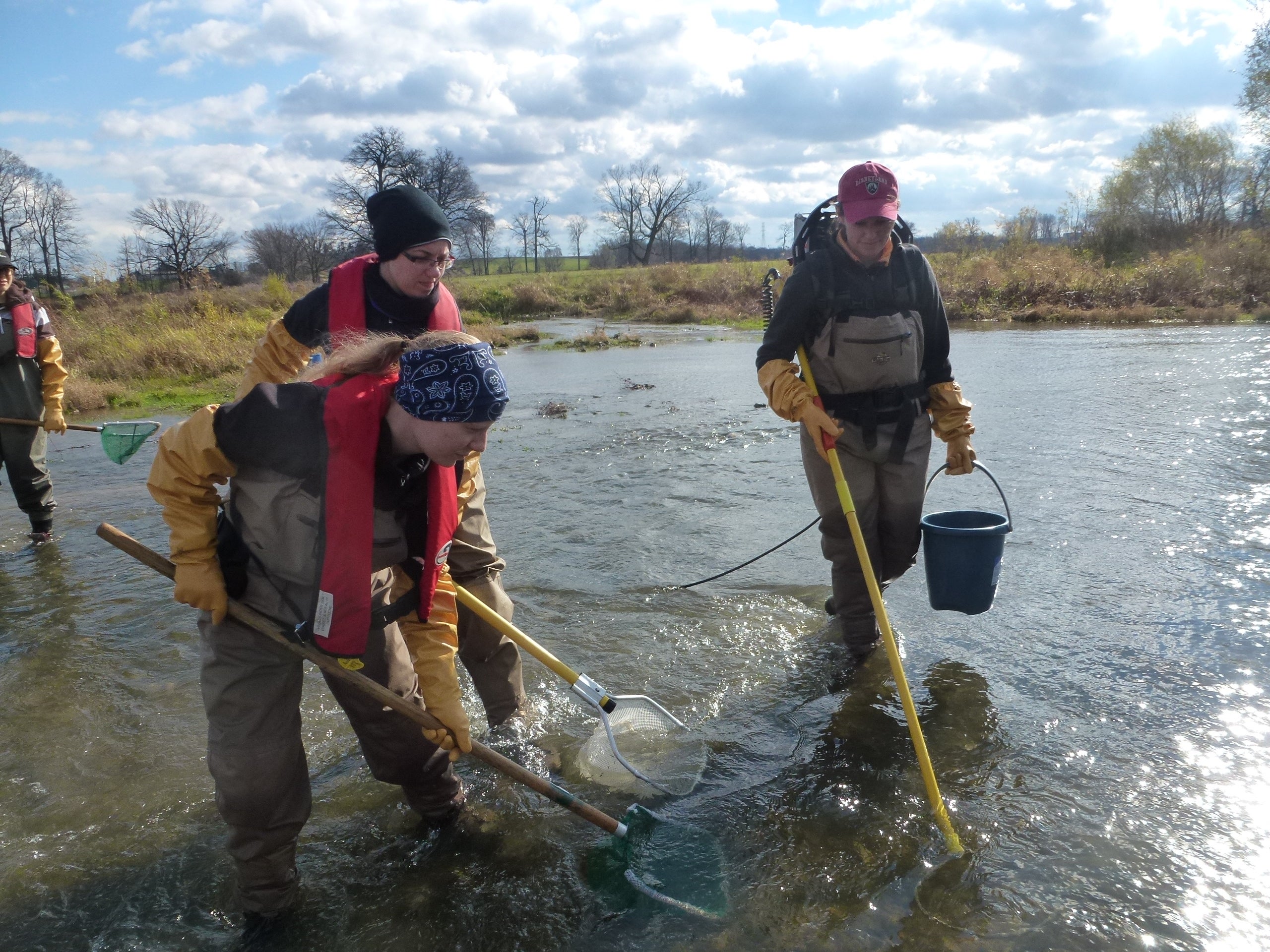
CTV’s Karis Mapp joined our team on the river as we conducted electrofishing surveys for darters downstream of wastewater treatment plants, part of ongoing research into how trace contaminants, including opioids, may affect fish in the wild.
New study on pharmaceutical accumulation in fish featured on CBC Radio
CBC Radio’s The Morning Edition – K‑W highlighted recent research showing that opioids and antidepressants are accumulating in freshwater fish downstream of wastewater treatment plants. The segment explores how these pharmaceuticals enter aquatic environments and what the findings mean for fish health and ecosystem management.
The full interview is available to stream through CBC Radio.