Hillary Quinn-Austin
Research Interests
Hillary completed her MSc in Biology at the University of Waterloo after finishing her undergraduate degree in Environmental Biology at Queen’s University. Co-supervised by Dr. Rebecca Rooney, her research focused on the ecology and management of Lake Erie walleye (Sander vitreus), the largest commercial and recreational fishery in the Great Lakes. Her work contributed to efforts aimed at understanding and sustaining the complex, multi-stock structure of this important fishery, with a particular focus on the Grand River population in Lake Erie’s eastern basin.
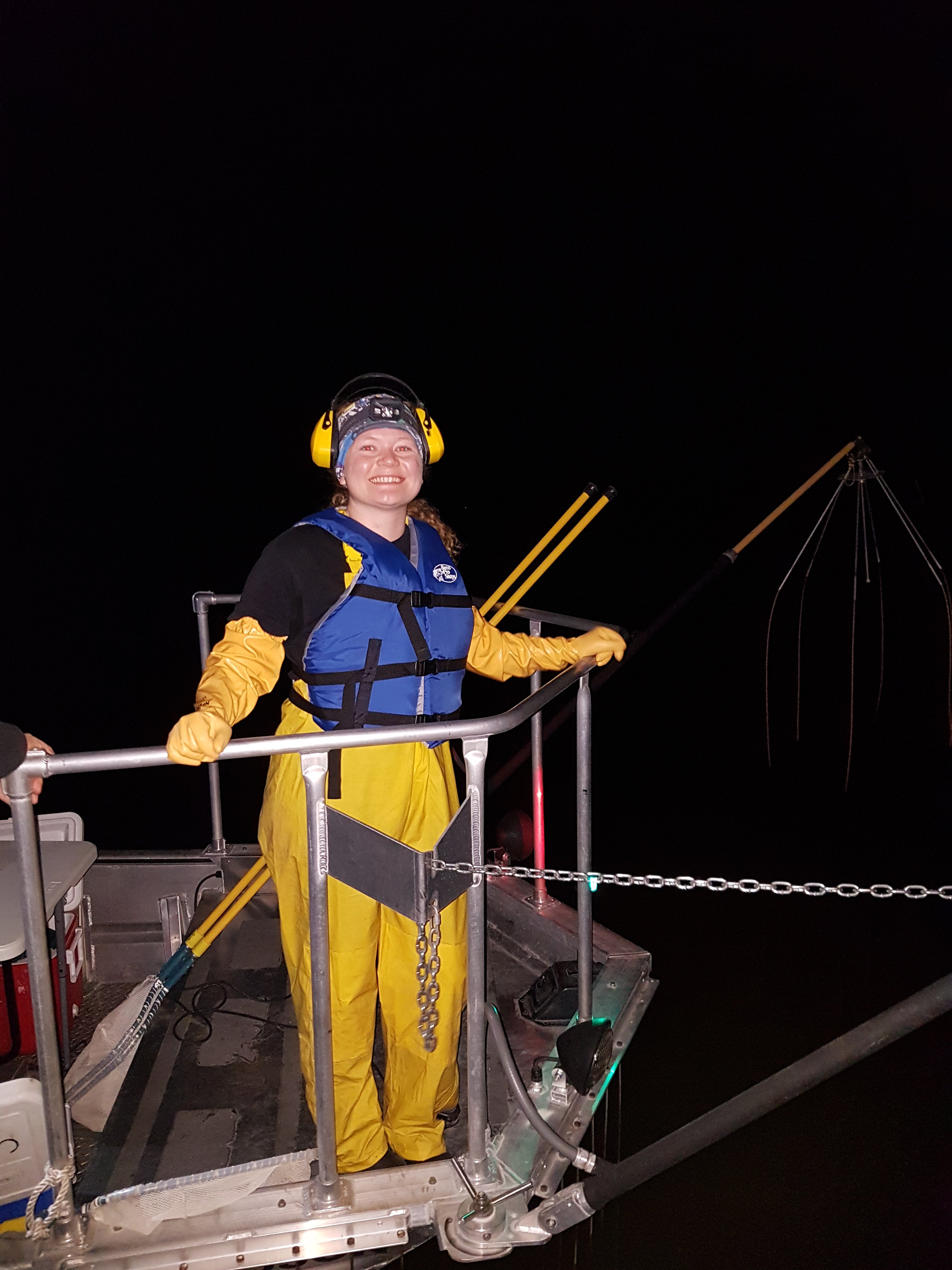
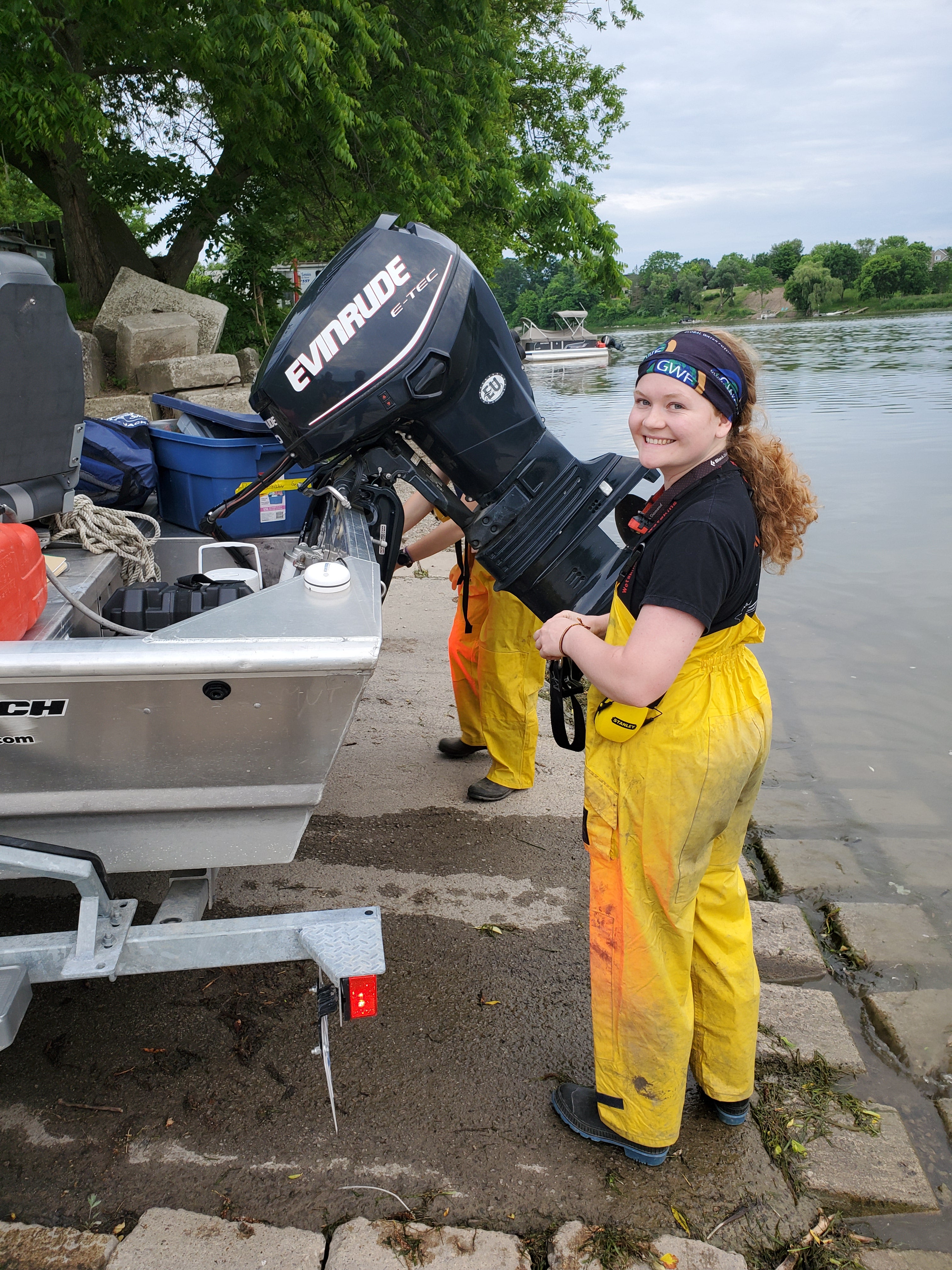
Her research examined how movement barriers and habitat conditions influence both adult and early life stages of walleye in the Grand River. Using acoustic telemetry, she tracked mature walleye during spawning migrations to assess movement patterns, habitat use, and the effects of the Dunnville Dam. Her results showed that adults migrated 20–40 km upstream to reach spawning habitat, and that the dam influenced movement behaviour and likely restricted connectivity within the system.
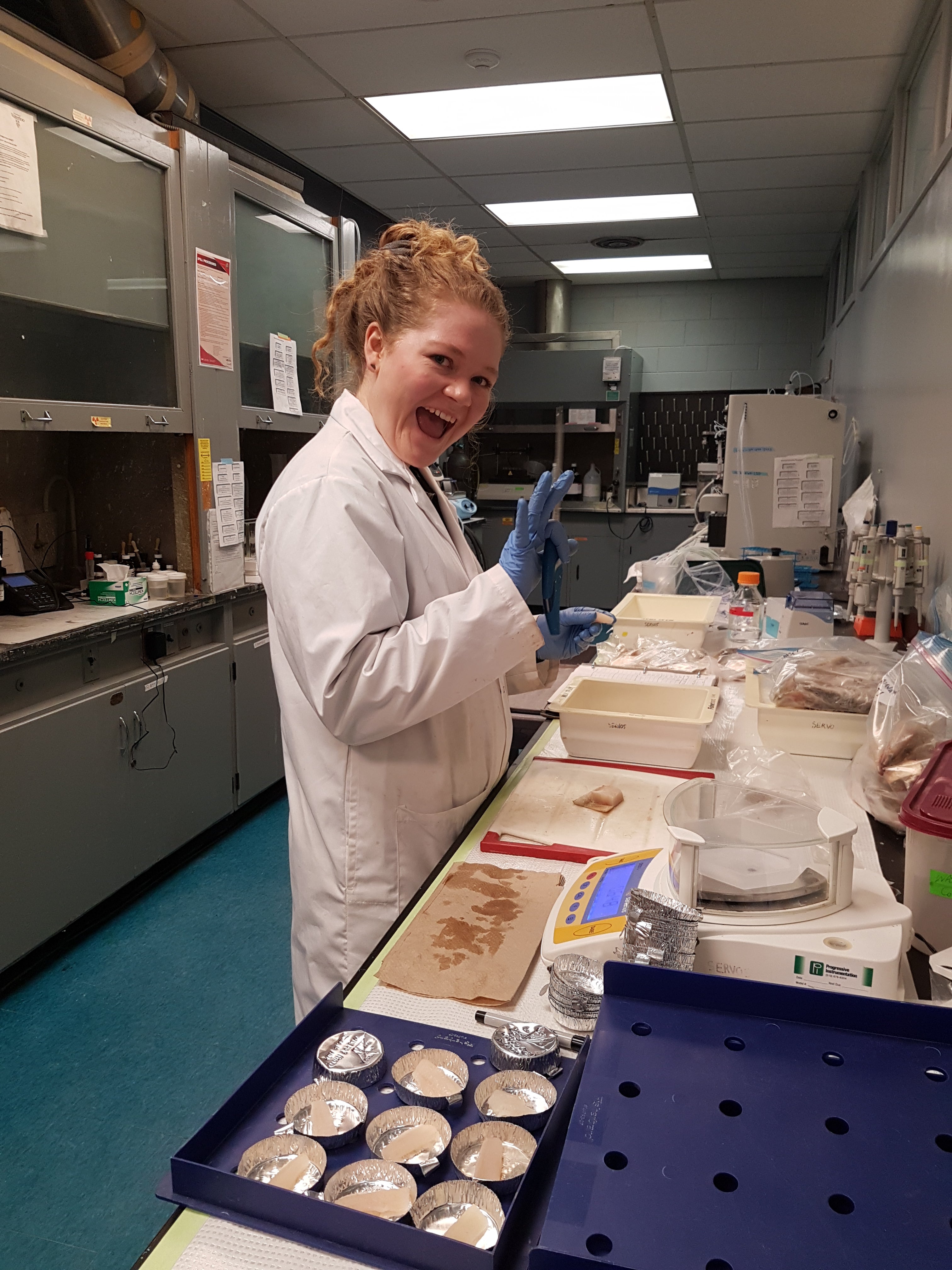
She also investigated young-of-the-year (YOY) walleye using stable isotope analysis of carbon and nitrogen to assess habitat use and spatial patterns across the river. These analyses revealed differences in isotope signatures among sampling locations, suggesting variation in habitat use and environmental conditions. YOY condition was highest near the river mouth, indicating potentially more favourable growth conditions in that area.
Overall, her work demonstrated that the Dunnville Dam acts as a partial barrier to movement and may influence spawning access and recruitment dynamics in the Grand River walleye population. These findings highlighted the importance of habitat connectivity and provided evidence to support potential management actions such as dam removal or fish passage improvements to enhance recruitment and sustain the fishery.
Hillary is currently working as a Fisheries Biologist with Trinity Consultants Canada in British Columbia.