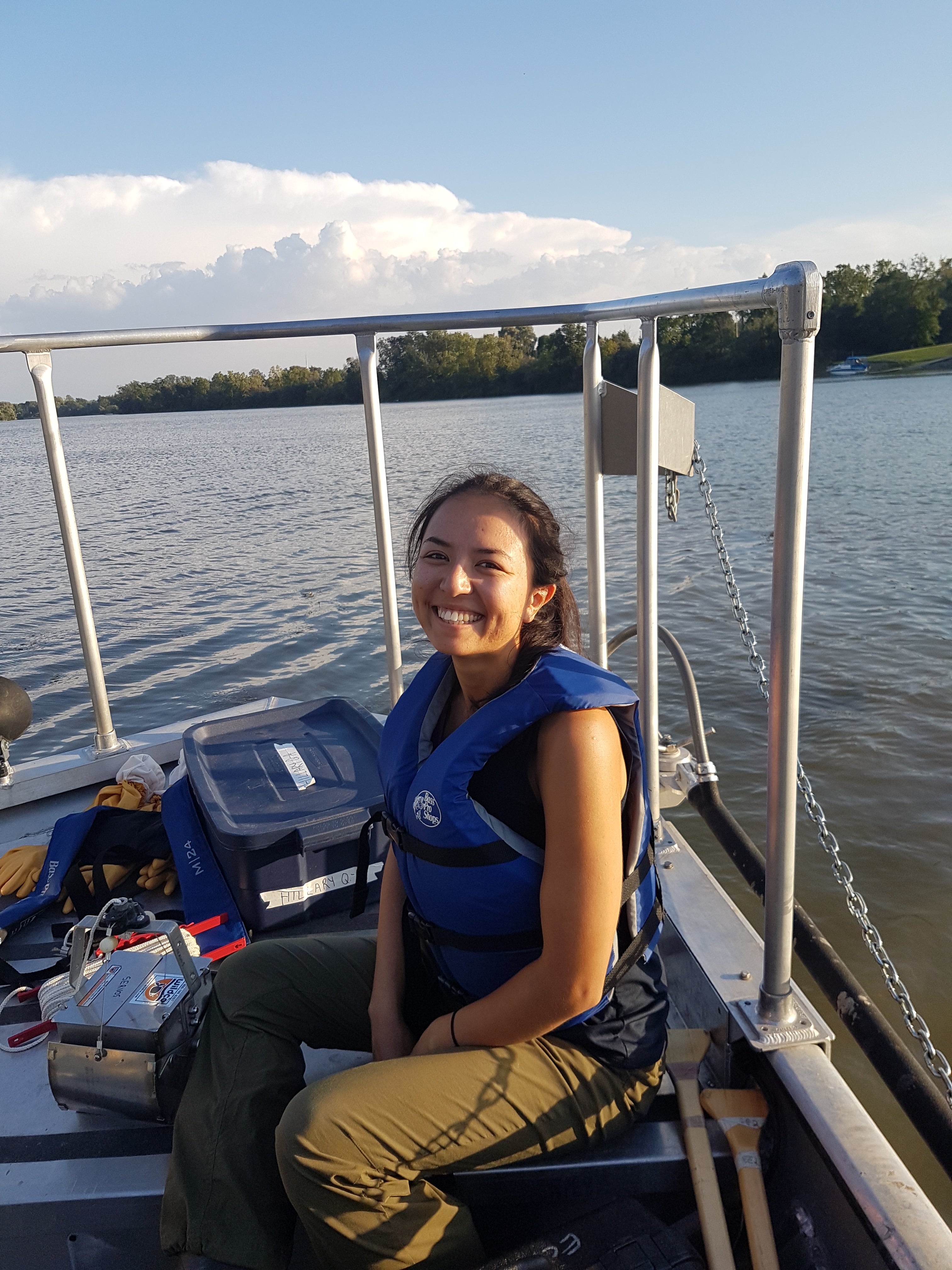
Jacqueline Peters
Research Interests
Jaki completed an interdisciplinary MSc project co-supervised by Dr. David Rudolph in the Department of Earth and Environmental Sciences. Her research focused on understanding how surface water and groundwater interactions influence the movement, persistence, and detection of brook trout environmental DNA (eDNA) in the Grand River watershed. Using a combination of field sampling and laboratory analyses, she investigated how seasonal changes in hydrology affect eDNA transport and detection, with the goal of improving our understanding of how climate change may influence the use of eDNA as a tool for species identification and biomonitoring.
As part of this work, Jaki explored the fate and transport of synthetic DNA tracers in streams as a novel approach for studying hydrological pathways and eDNA behaviour. Unlike traditional salt or dye tracers, synthetic DNA tracers are non-toxic, highly sensitive, and can be uniquely coded, allowing multiple tracers to be used simultaneously. Through field experiments, she demonstrated that free DNA can persist and travel considerable distances downstream, providing important insights into how eDNA signals are distributed within aquatic systems.
Her research helped advance our understanding of the environmental factors that influence eDNA detection and highlighted the potential of synthetic DNA tracers as tools for both hydrological investigations and ecological monitoring. The findings contribute to the growing application of eDNA technologies in fisheries management, biodiversity assessments, and watershed studies.
Jaki is currently a Physical Science Officer with Environment and Climate Change Canada, where she continues to apply her expertise in environmental monitoring and aquatic science.