Research Interests
Sarah began building experience in the Servos Lab through an initial co-op placement working with the engineering team on titanium dioxide nanoparticles for the removal of pharmaceuticals and personal care products (PPCPs) from water. In between co-op terms, she worked as a work-study student, further strengthening her experience in environmental chemistry and analytical workflows. She later completed an eight-month co-op focused on COVID-19 wastewater surveillance, where she supported sample processing, RNA extractions, and analysis of SARS-CoV-2 in wastewater.
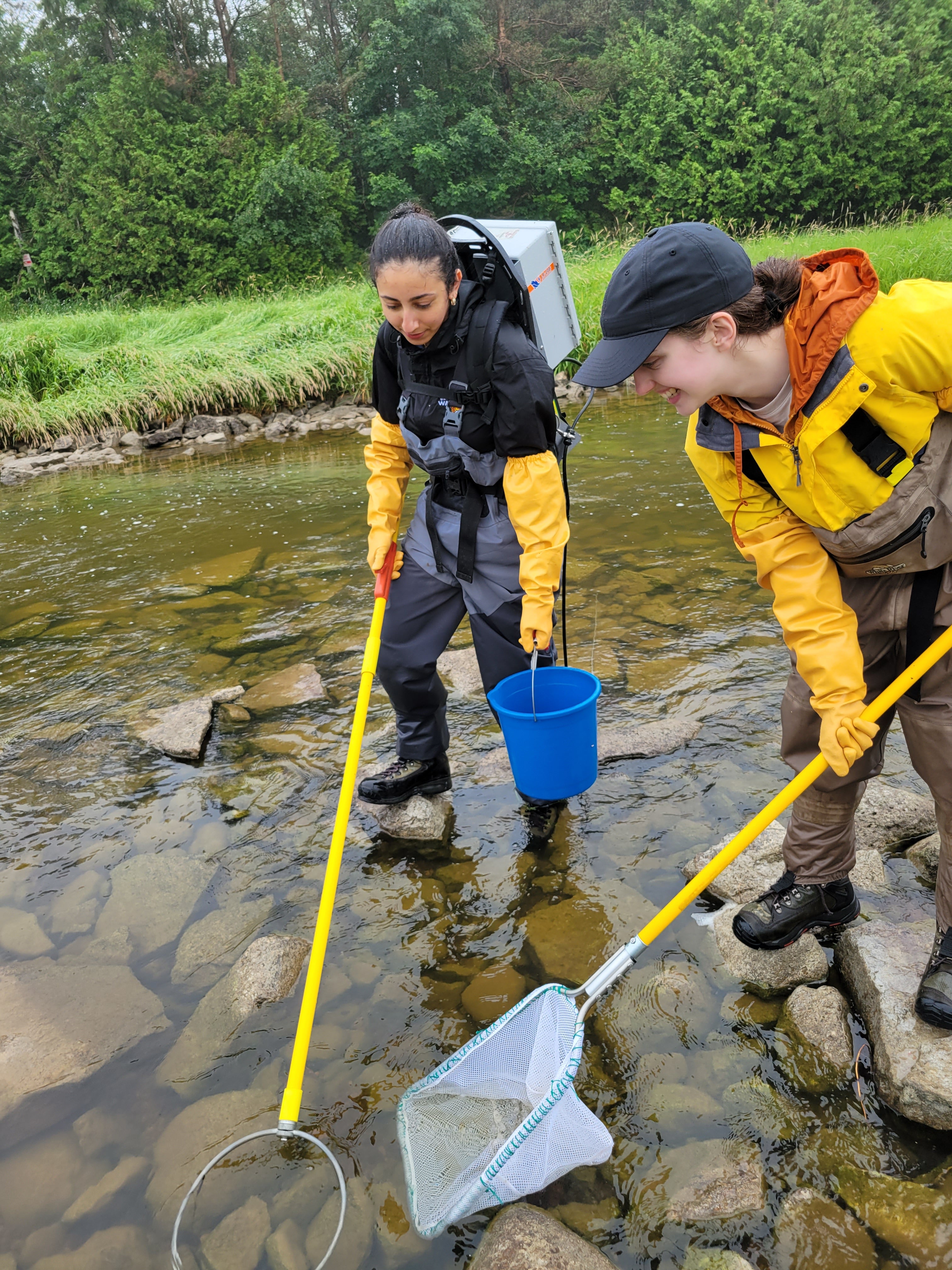
She also completed an undergraduate honours research project in the Servos Lab focused on developing methods for the extraction of chiral pharmaceuticals in fish. Before beginning her MSc, she worked as a technician on a large-scale exposure study investigating the effects of venlafaxine and its R- and S-enantiomers on rainbow darters (Etheostoma caeruleum), supporting experimental work on pharmaceutical uptake in small-bodied fish. Together, these experiences provided the technical and experimental foundation that formed the basis of her MSc research.
Her MSc research focused on chiral pharmaceuticals as aquatic contaminants that enter the environment primarily through wastewater effluent, with particular attention to venlafaxine (VEN) and its metabolite O-desmethylvenlafaxine (desVEN), which persist through treatment and are detected globally in surface waters.
Her work examined how enantiomer-specific chemical properties can influence bioaccumulation. To investigate this, she developed and validated an optimized extraction and analytical method for individual R- and S-enantiomers of VEN and desVEN in fish tissue. This included optimization of accelerated solvent extraction (ASE), cleanup using aluminum oxide and solid-phase extraction (SPE), and evaluation of matrix effects to ensure no enantiomeric bias, achieving good detection limits.
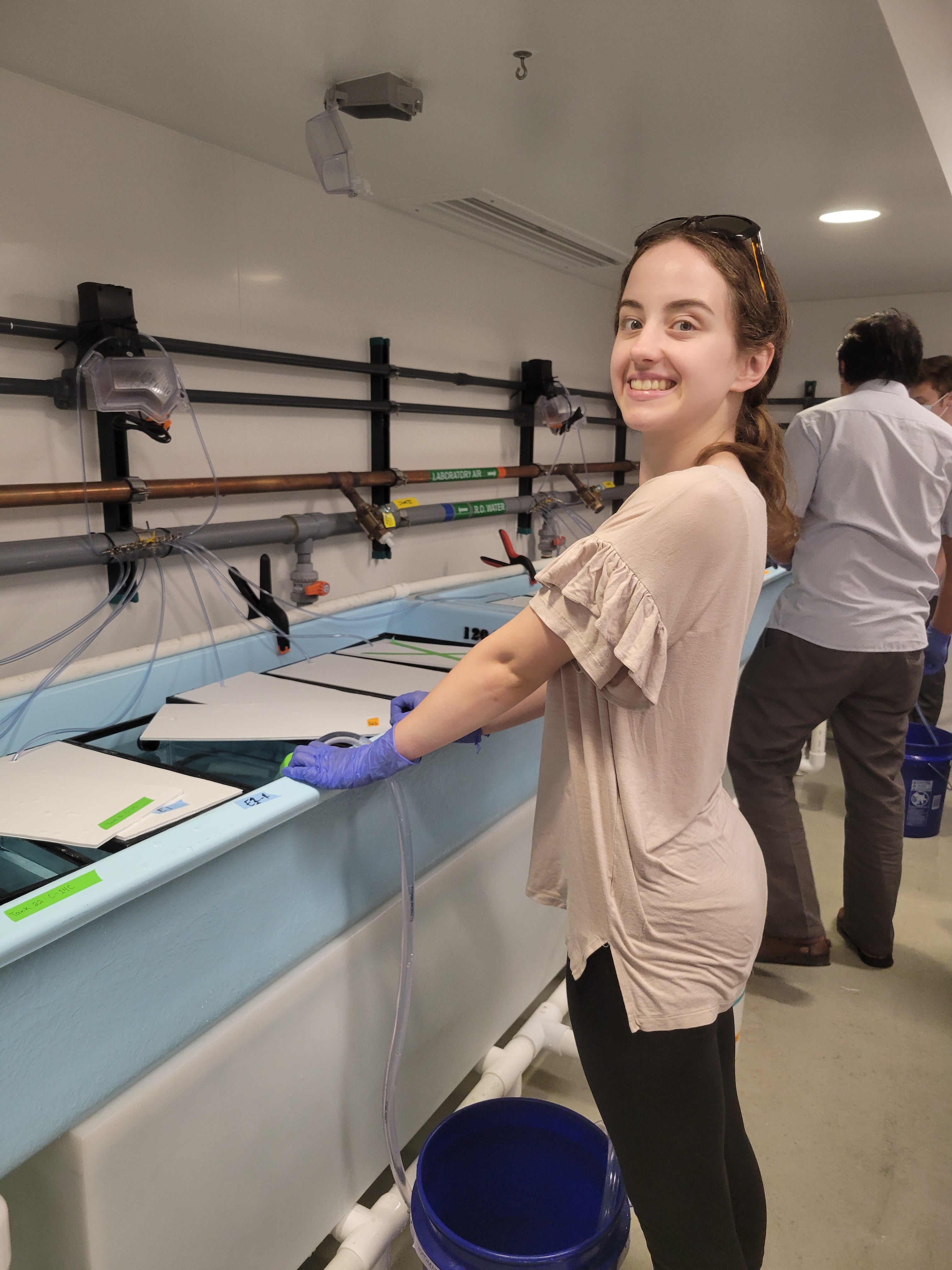
Her MSc research also included an in-lab exposure study using male rainbow darters (Etheostoma caeruleum) exposed to either R- or S-venlafaxine. The results showed greater bioaccumulation of S-venlafaxine compared to R-venlafaxine, along with detection of S-desVEN in exposed fish, indicating enantioselective metabolism. Overall, her work highlights subtle but important differences in enantiomer-specific uptake and transformation, reinforcing the need to incorporate chirality into environmental risk assessment of pharmaceuticals.
She is currently pursuing her PhD at Wilfrid Laurier University under the supervision of Prof. Mike Wilkie.

Publications
Sarah's publications are on Google Scholar.