News
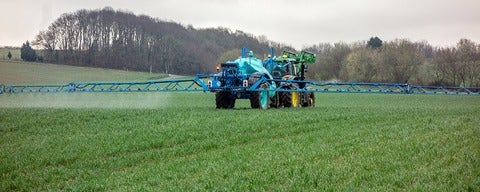
War-induced fertilizer shortage may be reducing soil and water pollution
New research from University of Waterloo and Penn State researchers suggests that fertilizer shortages linked to global conflict may be having an unexpected effect on water quality.
The researchers found that in nutrient-rich agricultural systems, farmers may be able to tap into legacy nutrient reserves already stored in the soil, reducing the need for additional fertilizer and decreasing nutrient runoff into rivers, lakes and streams.

Join the ripple effect with Two Row by the Grand
This summer, a new collaboration will bring together members of the University of Waterloo and members of Six Nations to share a journey along the Grand River. Two Row by the Grandis a five-day, reconciliation-focused bicycle tour following the river from Cambridge to Port Maitland, taking place July 15 to 19, 2026, alongside the annual Two Row on the Grand, a paddling event that brings together over 75 participants over 10 days each July.

Ocean conservation needs strong relationships, not just targets
Ocean conservation efforts are often guided by ambitious global targets, from protecting 30 per cent of marine and coastal areas to advancing the United Nations Ocean Decade goals. But new thinking co-authored by Water Institute member Derek Armitage and published in The Conversation argues that targets alone are not enough to ensure meaningful progress.
Events
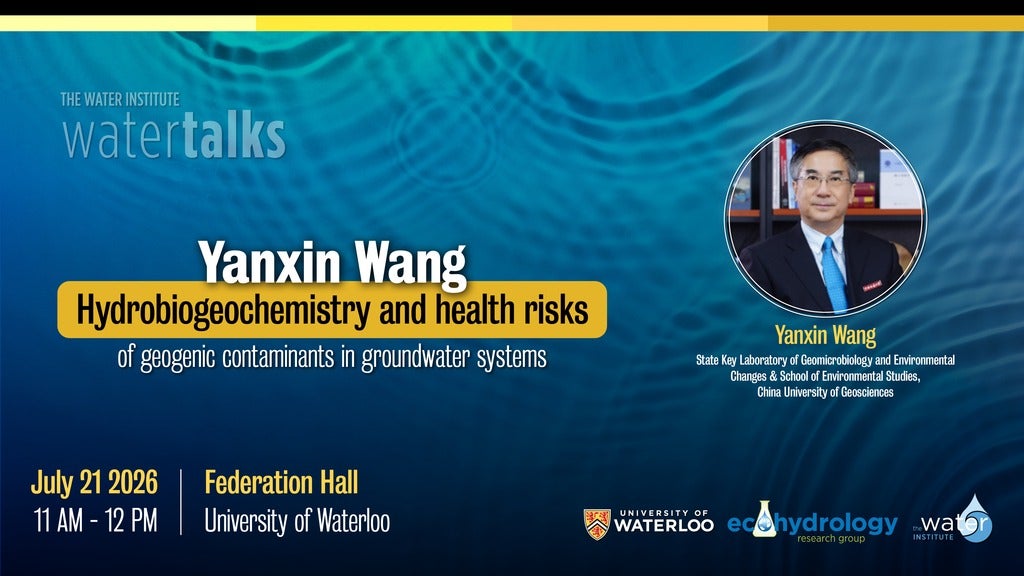
Hydrobiogeochemistry and health risks of geogenic contaminants in groundwater systems
The Water Institute and the Ecohydrology Research Group are pleased to present the WaterTalk: Hydrobiogeochemistry and health risks of geogenic contaminants in groundwater systems, presented by Yanxin Wang, Professor State Key Laboratory of Geomicrobiology and Environmental Changes & School of Environmental Studies, China University of Geosciences..
This event will be held in person at Federation Hall, University of Waterloo.